
Misrepresentation RBT credentials is an ethics and consumer-protection topic tied to how a person describes certification status, training, competency, behavior analysis, or service outcomes. The key question is simple: does the public statement accurately match the person’s current BACB status and role? This guide separates active certification, application or training status, and inactive status; gives practical wording checks; and explains what to do when a statement is inaccurate without turning the article into an individualized ethics or legal decision.
Table of Contents
- What misrepresentation RBT credentials means
- Why certification status and training status are different
- How to check the wording of a public statement
- Where misrepresentation can appear
- What to do when a statement is inaccurate
- When to verify or report
- Common mistakes to avoid
- Frequently asked questions
- Official sources and scope
RBT Ethics Code task guide
Misrepresentation RBT Credentials: How to Represent Your Status
Separate active certification, applicant status, and inactive status before you describe yourself publicly.
Misrepresentation RBT credentials is an ethics and consumer-protection topic tied to how a person describes certification status, training, competency, behavior analysis, or service outcomes. The key question is simple: does the public statement accurately match the person’s current BACB status and role?
The topic appears in the RBT Test Content Outline 3rd edition under Ethics task F.6, which includes public statements about professional activities and misrepresentation of professional credentials, behavior analysis, and service outcomes. This guide separates status categories, gives wording checks, and explains a careful response path without turning the article into an individualized ethics or legal decision.
What misrepresentation RBT credentials means
Credential misrepresentation occurs when a statement creates a false or misleading impression about a person’s certification, training, authorization, role, or professional results. It can be obvious, such as claiming an active RBT certification when the person is not certified. It can also be subtler, such as using a job title or phrase that makes clients believe a training milestone is the same as an active credential.
BACB’s public guidance focuses on accurate representation of certification status. The RBT mark belongs to the BACB certification program; a person should not use it in a way that suggests an active certification when the person is only applying, has completed training, has completed a competency assessment, or is inactive.
This is not a vocabulary puzzle. The same words can create different impressions depending on where they appear, who sees them, and what other information surrounds them. A resume, client email, billing authorization, social-media profile, classroom introduction, and employer directory can all communicate professional status.
Why certification status and training status are different
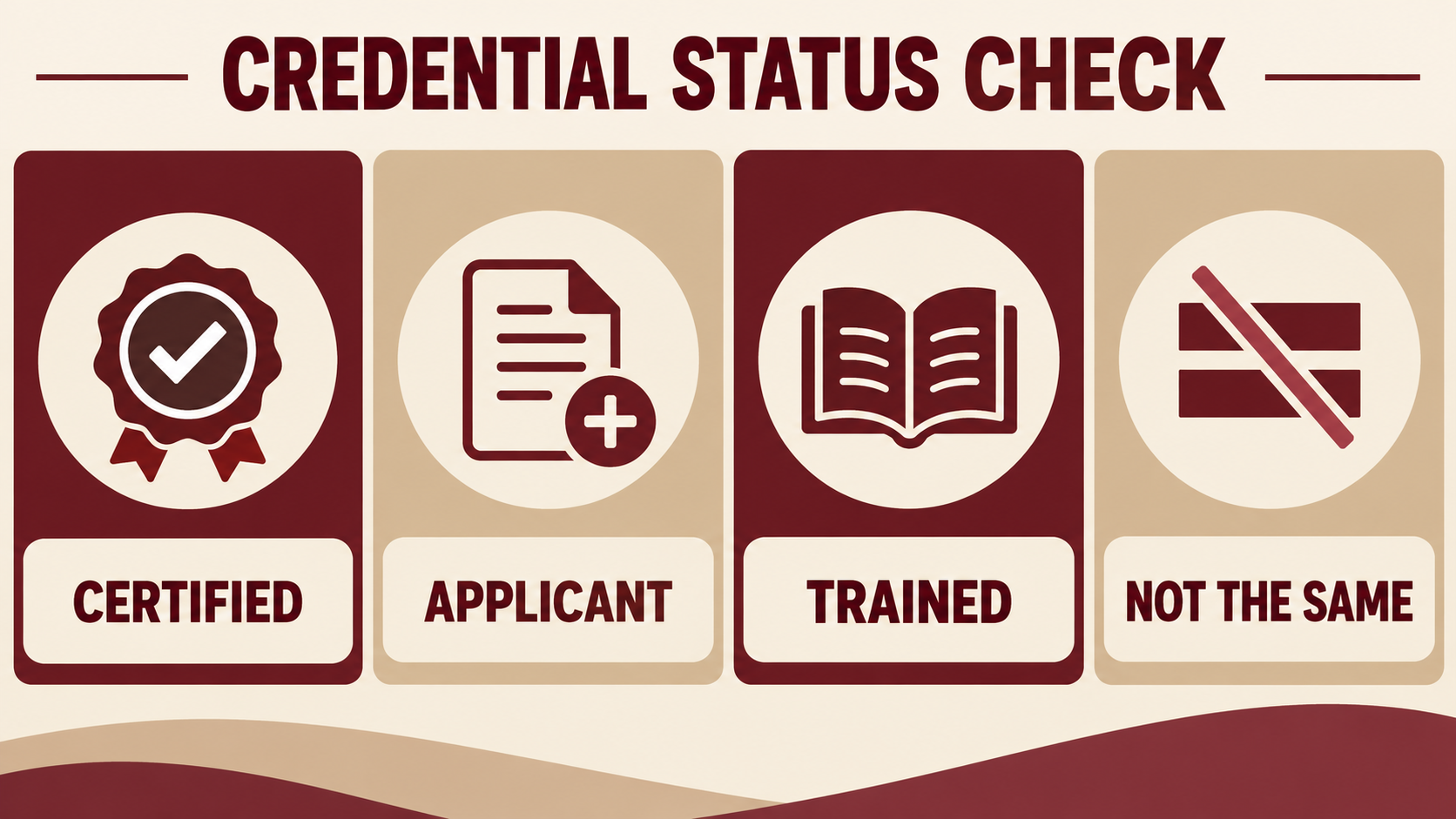
Before reviewing wording, identify the underlying status. BACB’s guidance separates at least three practical situations:
- Active certification: an active certificant may accurately represent themselves as an RBT, subject to current BACB requirements and the limits of the role.
- Applicant or person working toward certification: completing steps toward certification does not make the person an active RBT. Descriptions should not imply that the credential has already been awarded.
- Inactive status: an inactive certificant should not represent themselves as holding an active RBT certification. The reason for inactive status and the current BACB instructions control the next step.
Training and competency are important, but they are not interchangeable with certification. BACB’s consumer-protection guidance has specifically warned against treating phrases such as “RBT eligible,” “RBT in training,” “RBT-trained,” “40-hour trained RBT,” or “competency-assessed RBT” as permission to use the certification mark like an active credential. The safest approach is to name the actual milestone without attaching an inaccurate title.
How to check the wording of a public statement
Use a four-question review before publishing or sending a credential statement:
- What is the exact status? Check whether the person is active, applying, inactive, expired, or not certified.
- What would a reasonable reader infer? A client may read a short title as a promise of certification even if the writer intended it as shorthand for training.
- Does the statement add authority that is not present? Phrases about certification, clinical expertise, guaranteed outcomes, or BACB affiliation can overstate the person’s role.
- Is the statement current and supported? Use the BACB Certificant Registry or appropriate account information when verification is needed, and update old bios or templates.
Accuracy also applies to service outcomes. An RBT should not turn one learner’s progress, one session, or one testimonial into a universal promise. Describe what was observed and what the responsible professional or organization has authorized. Avoid suggesting that an RBT independently diagnosed a condition, designed a treatment, or guaranteed a result when that is not the person’s role.
Where misrepresentation can appear
Credential statements often travel farther than the writer expects. Review the places where a title or badge might be read:
- Resumes and job applications: distinguish completed training, application steps, and an awarded active certification.
- Job titles and email signatures: do not let an internal role label imply a BACB certification that is not active.
- Client correspondence: use the accurate title when introducing yourself to families, schools, or service partners.
- Billing or authorization materials: check that the name, credential, and service description match the actual record and role.
- Social media and websites: update bios, profile headers, advertisements, and old posts when status changes.
- Classroom or training materials: do not present a learner, employee, or guest speaker as an RBT merely because they completed a course.
These settings do not all have the same legal or organizational rules. The point is to notice how a public statement could confuse a consumer or colleague, then check the current BACB source and the applicable workplace process.
What to do when a statement is inaccurate
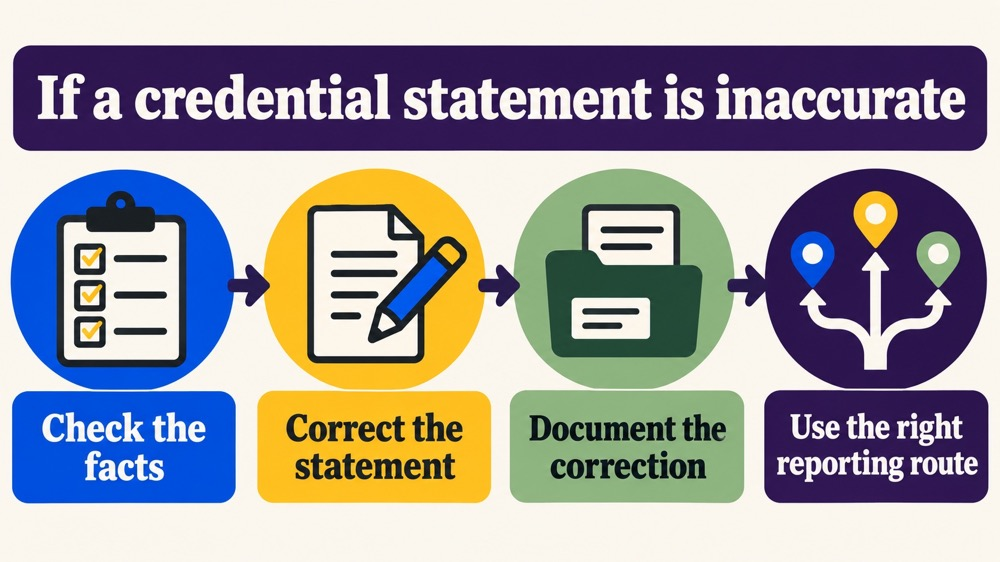
BACB’s public guidance describes a practical response when a person realizes they have misrepresented their status: correct the error if possible, then consider the appropriate reporting or consultation route if the issue persists or requires formal attention.
- Check the facts. Verify the certification status, the date, the exact statement, and where it appeared. Do not rely on a screenshot without checking the underlying record.
- Correct the statement. Update the resume, profile, job title, email signature, advertisement, or message. If a client or employer received the inaccurate statement, use a clear correction rather than silently changing one web page.
- Document the correction. Keep a brief record of what was changed, when it was changed, and who was notified. Follow workplace privacy and record-retention rules.
- Use the right reporting route. A suspected non-certified person misrepresenting BACB certification or misusing BACB intellectual property may belong with the Falsified Credentials reporting route. A suspected ethics violation by a BACB certificant follows the applicable ethics and code-enforcement process.
When to verify or report
The BACB Certificant Registry is the primary public resource for quickly verifying an individual’s certification status. Use verification when a hiring, referral, client, or professional decision depends on whether a person is currently certified.
BACB’s Falsified Credentials and/or Misrepresentation page describes a reporting form for evidence that a non-certified individual is representing BACB certification or that someone is misusing a certificant’s information or BACB intellectual property. BACB also states that this form should not be used to report ethics violations by BACB certificants. Those concerns use the applicable code-enforcement route.
Reporting is not the same as deciding that a violation occurred. Provide accurate facts, preserve relevant material, avoid public accusations, and let the responsible process review the issue. If there is an immediate client-safety or workplace concern, follow the organization’s urgent escalation procedure as well.
Common mistakes to avoid
- Equating training with certification: the 40-hour course is not the same as an active RBT credential.
- Using “candidate” as a credential: a person working toward certification should not present the word as though it were an awarded title.
- Leaving old bios online: a former title can continue to mislead after status changes.
- Assuming an employer title controls BACB status: workplace labels do not override the Registry or the current BACB requirements.
- Reporting through the wrong form: distinguish suspected falsified credentials from an ethics concern involving a BACB certificant.
- Making a public accusation: use the responsible route and stick to verifiable facts.
- Overstating outcomes: do not attach an RBT title or service-outcome promise to a statement that the evidence cannot support.
Frequently asked questions
Does completing the RBT 40-hour training make someone an RBT?
No. Training is one part of the pathway. It does not by itself authorize a person to represent an active RBT certification.
Can an applicant call themselves an RBT candidate?
Use care. BACB’s public guidance warns against representing an applicant as an awarded certification. Describe the actual stage of the process accurately and follow the current BACB wording guidance.
Where can I verify an RBT’s status?
Use the BACB Certificant Registry, which BACB identifies as the primary resource for quickly verifying certification status. Check the current record rather than relying on a profile, badge, or old resume.
Is every inaccurate phrase an ethics violation?
Not every wording error can be classified from a general article. Context, intent, correction, audience, and the applicable BACB rules matter. Correct the information and use the appropriate consultation or reporting route when a concern remains.
What is the difference between the Falsified Credentials form and an ethics report?
BACB describes the Falsified Credentials route for suspected non-certified misrepresentation or misuse of BACB intellectual property. It says that form should not be used for ethics violations by BACB certificants, which follow the applicable code-enforcement process.
Official sources and scope
This guide was checked against the RBT Test Content Outline 3rd edition, BACB’s guidance on representing certification status, the Falsified Credentials page, the Certificant Registry verification page, and the current RBT ethics resources. Rules and reporting instructions can change, so use the live BACB sources for current decisions.
Ready to practice the RBT concepts you just reviewed?
Try an independent, original RBT practice resource with exam-style questions, scoring, and answer explanations.
References
- Behavior Analyst Certification Board. RBT Test Content Outline, 3rd edition.
- Behavior Analyst Certification Board. RBT Handbook.
- Behavior Analyst Certification Board. RBT Ethics Code.