
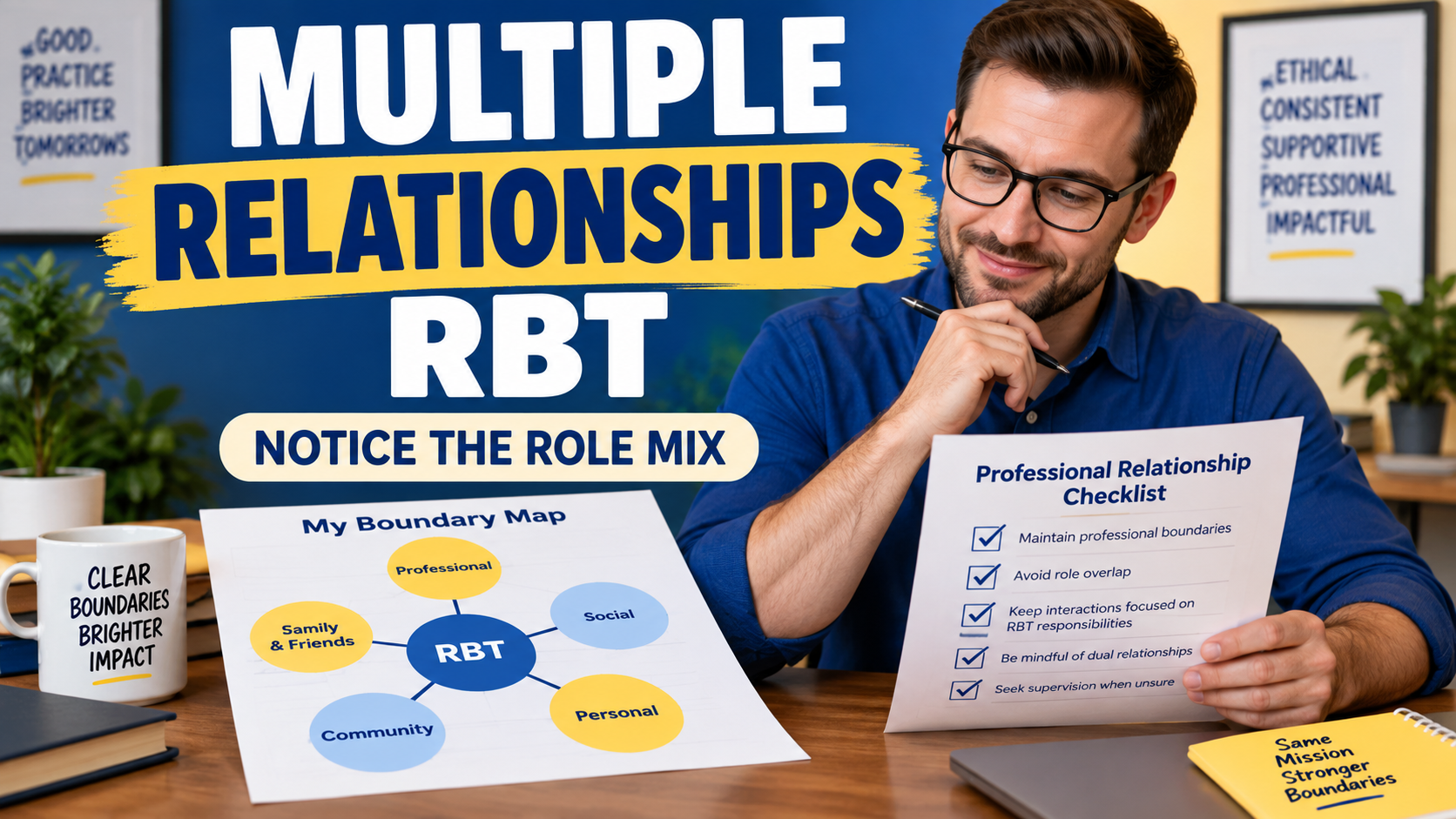
Multiple relationships RBT concerns arise when an RBT has two or more roles with a client, stakeholder, coworker, supervisor, or someone closely associated with the client.
Table of Contents
- Multiple relationships RBT: quick answer
- What a multiple relationship is
- Why role overlap creates risk
- Common examples for RBTs
- Gifts and financial boundaries
- Romantic and sexual relationship rules
- How to notice a developing concern
- What to do when roles overlap
- Documentation and confidentiality
- When the supervisor is part of the concern
- Frequently asked questions
- Official source note
Role boundaries, conflicts of interest, gifts, personal relationships, disclosure, and supervisor support
Multiple Relationships RBT: How to Recognize and Manage Role Overlap
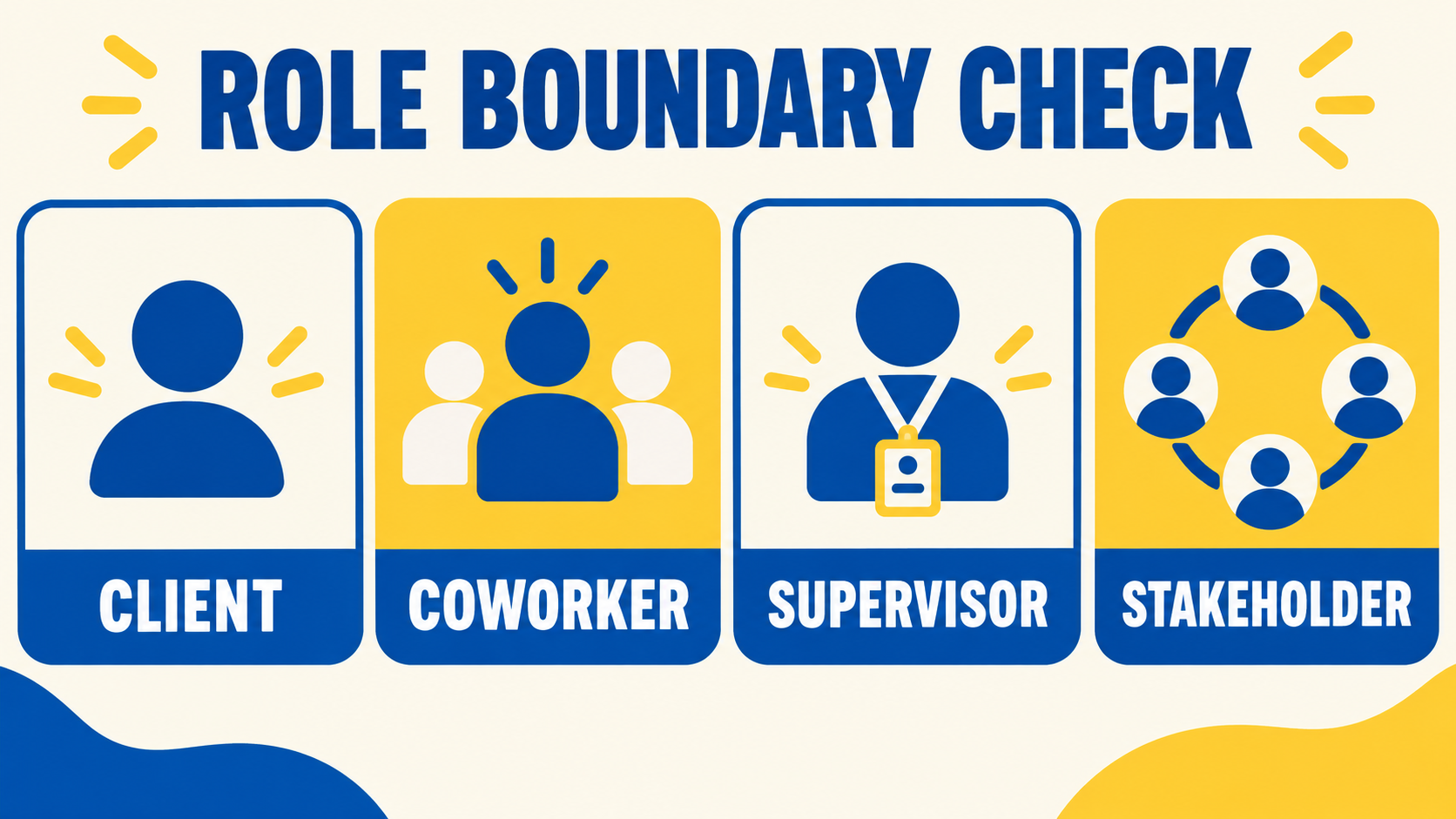
Multiple relationships RBT concerns arise when an RBT has two or more roles with a client, stakeholder, coworker, supervisor, or someone closely associated with the client. A family friend may become a client’s technician. A supervisor may also be a relative. A coworker may ask for a personal favor that affects professional judgment. This guide explains how to notice the risk, disclose it, seek direction, and document the response.
Multiple relationships RBT: quick answer
The RBT Ethics Code (2.0) says RBTs avoid multiple relationships with clients, coworkers, and supervisors. A multiple relationship is a mix of two or more roles—such as professional and personal—that may create a conflict of interest or risk harm to the client. If one develops, inform the supervisor immediately, work to resolve it, and document the actions. If the supervisor is involved, report to the supervisor’s manager or another appropriate entity, such as human resources or the BACB.
The goal is not to label every friendly interaction as an ethics violation. The goal is to identify when a second role could affect judgment, access, confidentiality, expectations, payment, boundaries, or the client’s welfare. Early disclosure gives the organization a chance to change assignments, clarify limits, or create a plan.
What a multiple relationship is
A professional relationship exists because the RBT provides behavior-technician services within a defined role. A personal relationship may involve friendship, family, romance, social activities, financial exchange, community membership, or another connection. When the same people are connected in both ways, the roles may overlap.
The overlap itself is the signal to examine, not proof that harm has already occurred. Ask whether the personal role could influence the service, make it harder to say no, create special access, change expectations, or pressure the client or stakeholder. The Code’s glossary describes a conflict of interest as an incompatibility between private and professional interests that creates risk or potential risk to services or the professional relationship.
Some relationships are unavoidable in a small community, school, clinic, or family network. Avoidance is still the starting principle, but a circumstance that cannot be immediately avoided requires disclosure, supervisor direction, and risk mitigation. Do not keep the overlap private because it feels harmless or because you believe you can manage it alone.
Why role overlap creates risk
Multiple roles can change the information people share and the choices they feel able to make. A caregiver who is also a neighbor may feel unable to complain. An RBT who is a family friend may be tempted to offer extra time. A supervisor who is a relative may find it difficult to provide objective feedback or manage a performance concern.
The risks commonly include:
- conflicted judgment: personal loyalty or financial interest influences a service decision;
- unequal access: one family receives favors, extra contact, or information not available to others;
- confidentiality pressure: a personal connection invites conversations outside the approved channel;
- boundary confusion: a client or stakeholder is unsure when the professional role begins or ends;
- retaliation or discomfort: someone feels unable to refuse a request or give honest feedback; and
- documentation distortion: the RBT minimizes, omits, or changes a record to protect a relationship.
These risks can exist even when everyone has good intentions. The ethical response is to make the situation visible and let the responsible supervisor or organization decide what safeguards are needed.
Common examples for RBTs
Examples can occur with clients, stakeholders, coworkers, and supervisors:
- An RBT is assigned to a child whose parent is a close personal friend.
- An RBT provides services to a cousin, roommate, partner, or someone in the RBT’s household.
- A caregiver invites the RBT to a private social event or asks the RBT to provide babysitting outside the service.
- An RBT and a caregiver begin a business, financial, or recurring exchange unrelated to the authorized service.
- An RBT’s supervisor is a relative, former romantic partner, close friend, or person with another conflicting role.
- A coworker asks the RBT to keep a service error or client detail secret because of their personal friendship.
- An RBT uses a client relationship to promote a personal business, fundraiser, product, or online audience.
Context matters. A school employee, neighbor, or community member may be a stakeholder without creating a prohibited relationship by default. The question is whether the combined roles could create a conflict or risk of harm and whether the organization can manage it safely.
Gifts and financial boundaries
The Code addresses gifts because an exchange can create an expectation, obligation, or multiple relationship. Under standard 1.11, an RBT does not give or accept gifts from clients, stakeholders, or supervisors with a monetary value above $10 US dollars or the equivalent purchasing power in another currency. An occasional expression of gratitude may be acceptable when it does not create financial benefit, but an employer may have a stricter rule.
Value is not the only question. A small gift can still be problematic if it is repeated, personal, secret, tied to a service outcome, or used to obtain special access. Do not accept cash, ongoing discounts, personal loans, or a “thank-you” arrangement without checking the policy and supervisor direction. If a gift is offered unexpectedly, respond politely, pause the decision, and ask how the organization wants it handled.
Financial boundaries include more than gifts. Avoid borrowing from a client or stakeholder, selling a personal product through the service relationship, or accepting a private job because you already have access to the family. Keep service fees, billing, and employment questions in the approved route.
Romantic and sexual relationship rules
Standard 1.12 prohibits romantic or sexual relationships with current clients, stakeholders, or supervisors. The Code also addresses former clients or stakeholders, former supervisors, and receiving supervision from someone with whom the RBT had a past romantic or sexual relationship. The specific timeframes matter: the Code states a minimum of two years for former clients or stakeholders, requires professional duties with a former supervisor to have ended before a relationship, and requires at least six months after a past relationship ends before receiving supervision from that person.
Do not try to decide that a relationship is “private” because the service hours are over. Contact the supervisor, manager, human resources, or another appropriate entity for direction, and follow any stricter workplace or legal rule. If the supervisor is the person involved, use the alternate reporting route.
How to notice a developing concern
Watch for changes in language, access, or expectations. A concern may be developing when someone says “keep this between us,” asks for a special favor, offers repeated gifts, contacts you through personal channels, expects you to work outside the plan, or implies that your friendship should affect a professional decision.
Ask yourself four questions:
- What are my separate roles with this person?
- Could either role affect my judgment, access, confidentiality, or ability to give honest feedback?
- Would the client or stakeholder be harmed or pressured if the roles were known?
- Who should know about this so the risk can be managed?
You do not need to make a final legal or ethical finding before asking for help. Describe the observable facts and the roles involved. Avoid diagnosing someone’s motive or accusing them in a personal message.
What to do when roles overlap
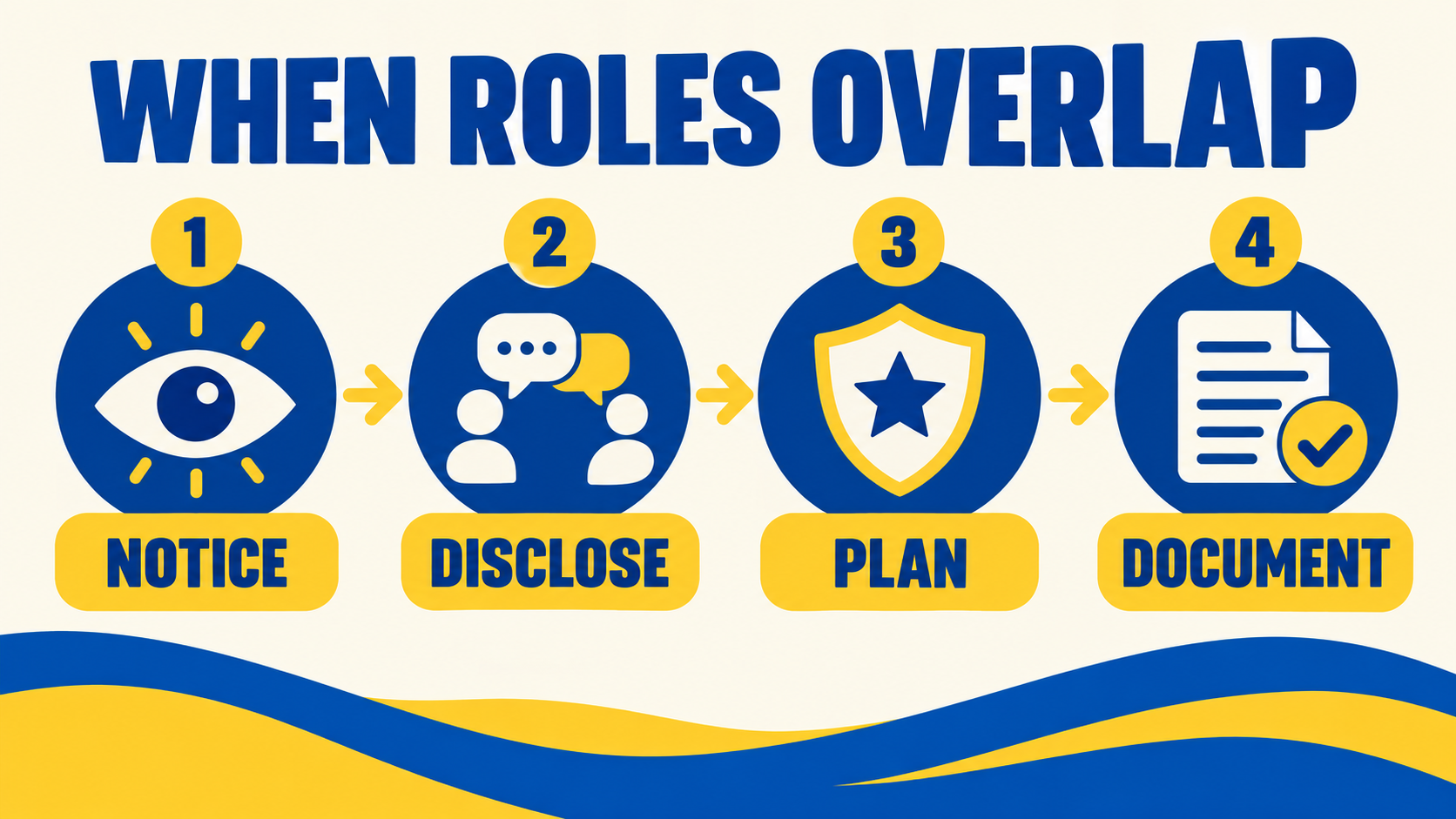
Start with disclosure to the responsible supervisor or organization contact. Say what the relationship is, when you became aware of the overlap, whether any service or communication has already been affected, and what decision you need. A neutral message might be: “I learned that the caregiver and I belong to the same small business network and have a recurring financial connection outside the service. I have not changed the plan or shared additional information. Please advise whether the assignment should change and what I should document.”
Follow the direction you receive. Possible safeguards may include reassignment, a second supervisor, a communication boundary, a gift decision, a written conflict plan, or ending the nonprofessional relationship. Do not promise the client or stakeholder that the arrangement will continue before the organization reviews it.
Continue protecting the client while the concern is reviewed. Use approved channels, avoid private favors, do not alter data, and seek urgent direction if there is immediate risk. If the issue cannot be resolved with the supervisor, follow the appropriate employer, licensing, regulatory, or BACB route.
Documentation and confidentiality
Document the actions taken, relevant dates, parties involved, and outcome through the approved system. Keep the entry factual and limited to the information needed to manage the risk. Do not place unnecessary client or family details in a personal text or public document.
A useful record might state: “On May 6, the caregiver offered a recurring paid tutoring arrangement outside the service. I declined the arrangement, notified the supervisor through the agency channel, and requested direction about future contact. The supervisor assigned a manager to review the conflict.” It should not include unrelated judgments about the caregiver’s character.
If the relationship involves the supervisor, document the communication to the supervisor’s manager, human resources, BACB, or other appropriate entity. Preserve the relevant policy, messages, and response according to the organization’s retention rules. Do not create a secret duplicate file or share the concern with coworkers who do not need to know.
When the supervisor is part of the concern
The Code specifically says that when a multiple relationship involves the supervisor, the RBT should report it to the supervisor’s manager or another appropriate entity. The RBT still has a duty to protect the client, maintain accurate records, and use the organization’s chain of command. An RBT should not be forced to choose between client safety and loyalty to a supervisor.
If the concern involves immediate danger, abuse, coercion, or a legal reporting duty, follow the emergency or mandated-reporting procedure first. If the issue concerns an unresolved RBT Ethics Code matter, use the current BACB reporting and self-reporting instructions. The BACB does not replace emergency services, legal counsel, the employer’s incident route, or a state licensing authority when those are the correct resources.
Frequently asked questions
Is every friendship with a caregiver a multiple relationship?
Not automatically. The relationship should be disclosed and evaluated when the personal connection could create a conflict of interest or risk harm. The supervisor or organization determines how to manage the situation.
Can an RBT accept a small gift?
The Code has a $10 limit for gifts from clients, stakeholders, or supervisors, and an occasional expression of gratitude may still be inappropriate under a stricter employer policy or because of the context. Ask before accepting when unsure.
Can an RBT work with a family member?
Do not assume that family work is acceptable or prohibited without review. Disclose the relationship before assignment and follow supervisor, employer, payer, state, and legal direction.
What if I notice a multiple relationship after services have started?
Inform the supervisor immediately, protect the client, avoid expanding the personal role, follow the resolution plan, and document the actions and outcome. If the supervisor is involved, use the alternate reporting route.
Official source note
This educational guide was checked against the BACB RBT Ethics Code (2.0), especially standards 1.10–1.12 and the glossary definitions of conflict of interest and multiple relationship, retrieved September 28, 2026. Employer, payer, state, legal, licensure, and workplace requirements may add requirements or differ.
Role boundary: This article is general education, not individualized ethics, legal, employment, or clinical advice. Disclose the concern and follow the current Code, supervisor direction, employer process, applicable law, and required reporting route.
Ready to practice the RBT concepts you just reviewed?
Try an independent, original RBT practice resource with exam-style questions, scoring, and answer explanations.
References
- Behavior Analyst Certification Board. RBT Test Content Outline, 3rd edition.
- Behavior Analyst Certification Board. RBT Handbook.
- Behavior Analyst Certification Board. RBT Ethics Code.