
Public statement vs professional credential RBT questions are easier when you separate what you are communicating from what your credential verifies.
Table of Contents
- Public statement vs professional credential RBT: the difference
- What a public statement can do
- What a professional credential verifies
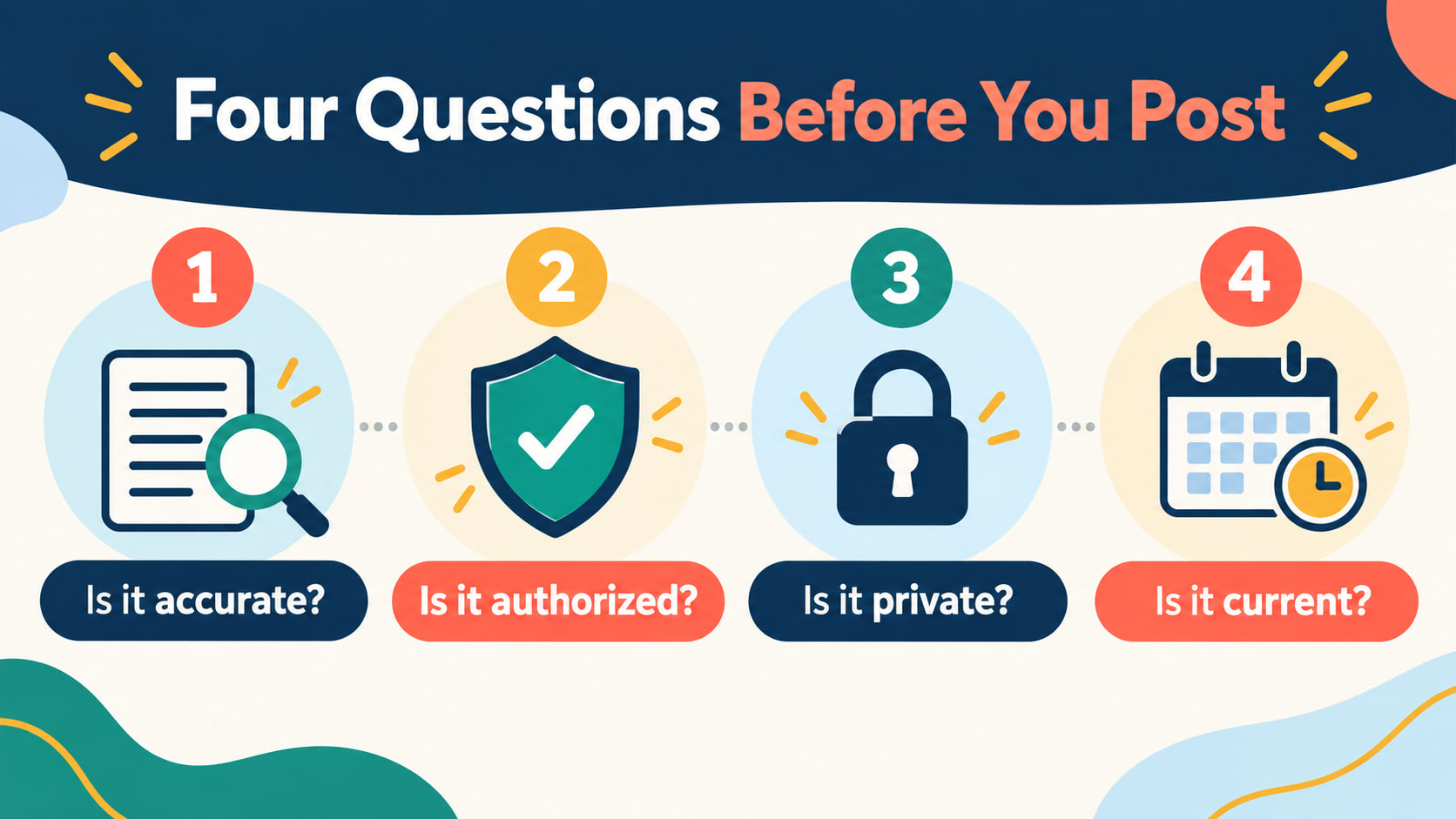
- Four questions before you post
- Keep authority and privacy visible
- Public statement examples
- Review and update the message
- Common mistakes
- Frequently asked questions
- References
RBT COMMUNICATION · CREDENTIAL CLARITY
Public Statement vs Professional Credential RBT: What to Say
Separate communication from credential verification so public information stays accurate, private, and within role boundaries.
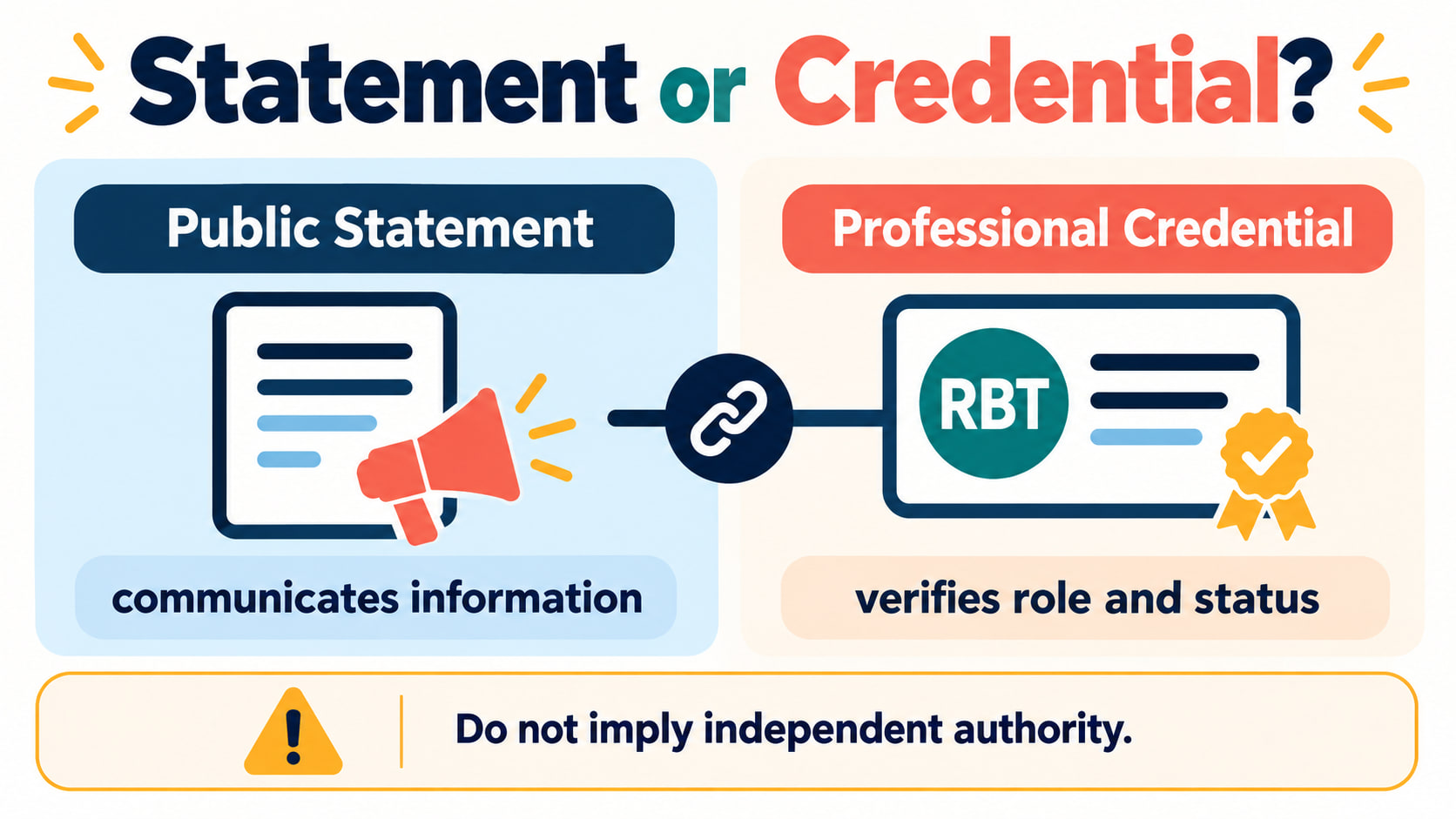
Public statement vs professional credential RBT is a useful distinction because the two ideas answer different questions. A public statement communicates information to an audience. A professional credential verifies a role, status, or qualification through an applicable official or organizational process. A statement should not be used as a substitute for verification, and a credential should not be used to imply authority beyond the role.
An RBT may encounter this distinction in a profile, staff biography, email signature, social post, presentation, résumé, employer website, or conversation with a family. The safest language is accurate, current, authorized, privacy-aware, and proportionate to what the speaker actually knows.
The audience matters as well. A message written for students may need different context from a staff biography or a reply to a family. Before sharing, consider what a reasonable reader could infer, whether the wording leaves out an important limitation, and whether the message could be copied without the surrounding explanation.
Use the current official record, employer policy, approved wording, supervision, and applicable requirements for decisions about your specific setting. This article is an educational framework, not individualized legal, clinical, employment, or credentialing advice.
When in doubt, save the draft, ask a focused question, and wait for approved wording.
Public statement vs professional credential RBT: the difference
A statement is something you say or publish. It may explain your role, describe a training experience, share a general educational point, or direct readers to an approved resource. Its accuracy depends on the words used, the information available, the audience, the authorization to speak, and the privacy of the material.
A credential is a formal status or qualification recognized through a defined process. The credential may have a current status, a verification source, renewal conditions, and specific role boundaries. A profile sentence can describe a credential, but it does not create, renew, or independently verify that credential.
What a public statement can do
A useful public statement can explain what an RBT does in general terms, point readers to current official information, or communicate an authorized organizational message. For example, an RBT may describe implementing assigned behavior-analytic services under supervision and collecting information according to the approved procedure.
Keep a statement separate from individualized advice. A general explanation about data collection is different from telling a particular person which intervention to use. If a reader asks for case-specific guidance, route the question through the approved channel rather than diagnosing, changing a plan, or offering a private workaround.
What a professional credential verifies
A credential description should use the actual current title and status. Verify the relevant record before publishing that the credential is active, renewed, or otherwise current. Do not rely on an old screenshot, copied biography, or informal claim from another person.
Credential representation also has a scope boundary. An RBT should not present the RBT credential as a BCBA, licensed, diagnostic, supervisory, or independent clinical credential. Experience and enthusiasm do not change the title or authorize activities reserved for another role.
Four questions before you post
- Is it accurate? Can you support the wording with what you observed, completed, or verified?
- Is it authorized? Are you permitted to speak for the organization, use its materials, or share the information?
- Is it private? Does the message omit unnecessary client, family, coworker, or case details?
- Is it current? Are the credential status, policy reference, title, and links up to date?
If any answer is uncertain, pause and ask the appropriate person. A short delay is better than correcting a public statement after it has been copied or misunderstood.
Keep authority and privacy visible
Use role language that shows decision ownership. “I implement the assigned plan under supervision” is different from “I design treatment plans.” “I can share a general study resource” is different from “I can tell you what to do in your child’s case.” Clear wording protects the audience from assuming authority that is not present.
Privacy applies even when a story feels positive. Do not share identifying details, photographs, screenshots, distinctive schedules, or recognizable progress stories without the required authorization and approved process. Removing a name may not remove the risk of identification.
Public statement examples
Role explanation: “I am an RBT who implements assigned services under supervision and records session information according to the current procedure.” This describes the work without inflating the title.
Educational post: “A general definition of reinforcement can help students study; current program decisions should follow the written plan and supervisor direction.” This gives context without offering individualized treatment advice.
Credential statement: “My current RBT status can be verified through the applicable official record.” This directs readers to verification instead of treating a profile as proof.
Risky version: “I am a behavior analyst who can guarantee progress.” This may misstate the credential, imply unauthorized authority, and promise an outcome.
Review and update the message
Review public and professional wording after a renewal, status change, employer change, role change, policy update, or correction request. Check résumés, profiles, email signatures, biographies, staff pages, and saved templates. If another person controls the page, request the correction through the approved route.
Keep a simple review note with the date, source checked, and wording approved when appropriate. Do not store unnecessary protected information. If the message involves a complaint, safety issue, privacy concern, or request to misrepresent a credential, use the designated escalation route.
Common mistakes
- Treating a post as verification: a public sentence is assumed to prove a credential.
- Using an inflated title: a higher-sounding label replaces the actual RBT title.
- Giving case advice publicly: a general post becomes an individualized instruction.
- Sharing a recognizable success story: privacy is treated as solved because a name is omitted.
- Leaving old wording online: a credential or role changes but the profile does not.
- Speaking for an organization without authorization: personal opinion is presented as official policy.
Frequently asked questions
Is a public statement the same as credential verification?
No. A statement communicates information; verification comes from the applicable official or organizational source.
Can an RBT share educational information online?
General education may be appropriate when authorized and accurate, but it should not disclose private information or become individualized clinical advice.
Can I use “therapist” in my profile?
Use the approved title for your setting. If the word could imply a qualification or authority you do not hold, use the accurate RBT title and ask for direction.
What should I do if a profile is inaccurate?
Request an update through the responsible person or organization, document the request when required, and use accurate wording in future materials.
Source note: Review current BACB materials, credential records, organizational policy, authorization, privacy requirements, and supervisor direction for your setting. This article is educational and does not provide individualized legal, clinical, employment, or credentialing advice.
Ready to practice the RBT concepts you just reviewed?
Try an independent, original RBT practice resource with exam-style questions, scoring, and answer explanations.
References
- Behavior Analyst Certification Board. RBT Test Content Outline, 3rd edition.
- Behavior Analyst Certification Board. RBT Handbook.
- Behavior Analyst Certification Board. RBT Ethics Code.