

The 40-hour training requirements are a required foundation for a new Registered Behavior Technician applicant.
Table of Contents
- Quick answer: what is required?
- The 5–180 day timing window
- What the training must cover
- Delivery and learning activities
- Trainer and provider requirements
- Certificate and records
- What happens after the 40-hour training?
- How to evaluate an RBT 40-hour course
- Common mistakes to avoid
- Frequently asked questions
RBT certification preparation
RBT 40-Hour Training Requirements: 2026 Checklist
The RBT 40-hour training is a required foundation for a new Registered Behavior Technician applicant. This checklist explains what the training must cover, how the 5-to-180-day timing window works, what to verify about the provider, and what the training certificate does—and does not—allow you to do next.
Quick answer: what is required?
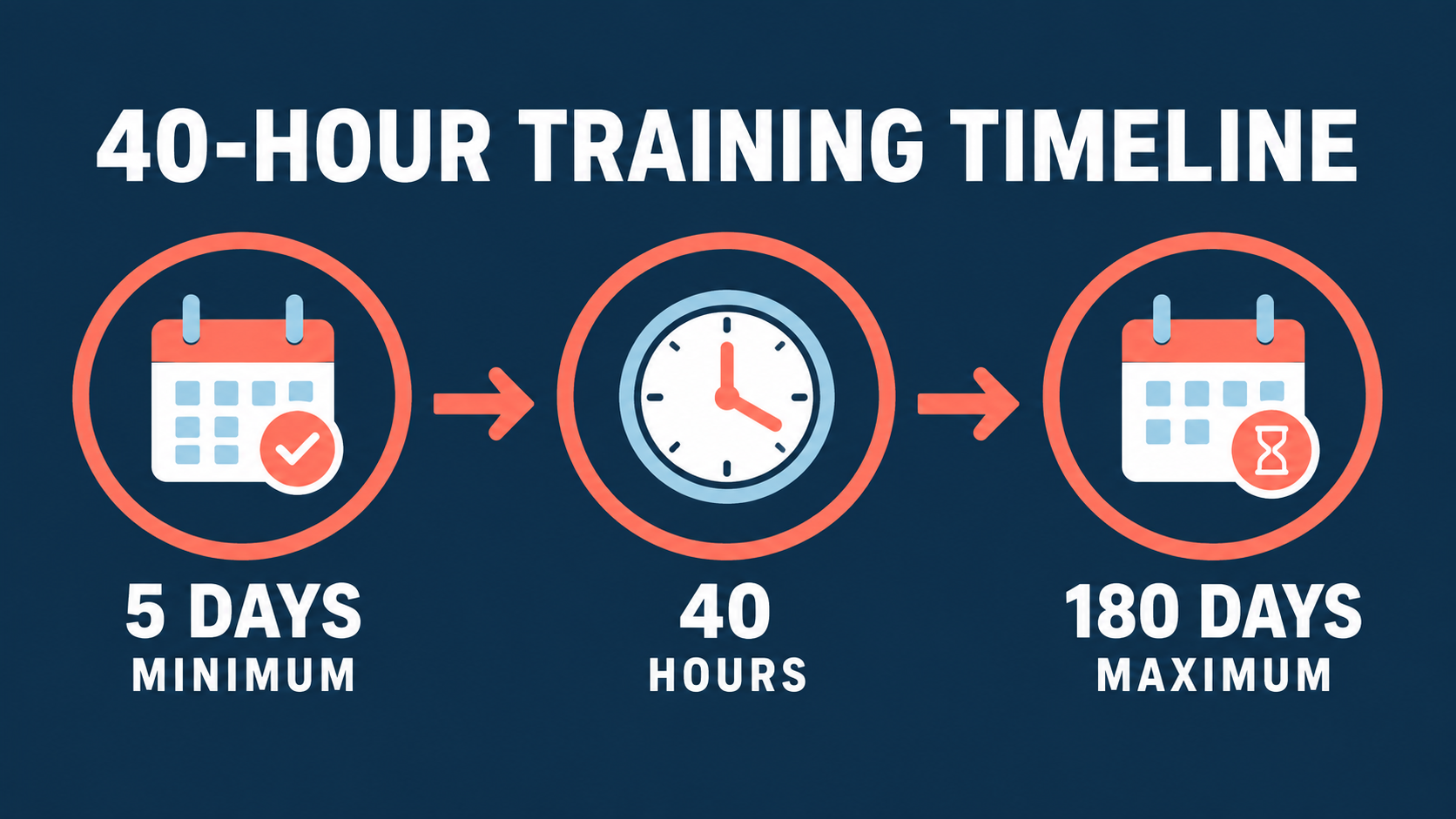
For applicants who begin the RBT application process under the current requirements, the training must include at least 40 hours of instruction completed over no fewer than five days and no more than 180 days. The training must follow the BACB’s current RBT 40-Hour Training Curriculum. A provider may deliver the course in person, online, or through a permitted combination, but a course should demonstrate meaningful instruction and practice rather than simply assigning reading.
Completing the course is one step in the application pathway. It does not by itself make someone an RBT, authorize practice, or replace the initial RBT Competency Assessment. The applicant still needs to follow the current BACB application process and meet the other requirements that apply.
The 5–180 day timing window
The timing requirement is easy to misread. Forty hours cannot be compressed into a single weekend if doing so would violate the minimum five-day requirement. At the other end, a course cannot remain open indefinitely: the current requirement sets a maximum of 180 days for completion. Count the training period from the provider’s documented start date to the documented completion date, and keep the schedule or attendance record that supports it.
The 180-day limit is not a suggestion to wait until the last week. A slower schedule may be reasonable for someone working full time, but leaving modules, role-play, or quizzes until the deadline creates avoidable risk. Ask the provider how it records the start date, completion date, attendance, make-up work, and any changes to the schedule.
What the training must cover
The course should be built around the current BACB curriculum rather than a generic introductory ABA class. The curriculum organizes learning around the knowledge and practical skills an entry-level RBT needs, including measurement, assessment support, skill acquisition, behavior reduction, documentation, and professional conduct. Exact topic labels and hours should be checked against the current curriculum version because the BACB may revise materials.
A useful course makes the connection between a concept and an RBT task visible. For example, measurement content should lead to practice selecting and recording data; teaching content should connect to prompting, reinforcement, and accurate implementation; ethics content should connect to confidentiality, boundaries, and reporting concerns. The purpose is not to memorize vocabulary in isolation. It is to prepare for supervised, competency-based work.
Assigned readings may support learning, but reading alone is not a substitute for the required training duration or interactive instruction. If a provider advertises “40 hours” but most of the time is only passive reading with no verifiable instructional activity, ask for clarification before paying.
Delivery and learning activities
The current requirements allow online and in-person delivery, subject to the applicable BACB rules. Strong training normally combines several methods: didactic teaching, demonstrations or modeling, video examples, role-play, feedback, quizzes, interactive activities, and discussion. These methods matter because an RBT must do more than recognize a definition; the technician must implement procedures accurately and accept supervision.
Before enrollment, check whether the course has a clear way to confirm participation. Examples include module completion records, attendance logs, quiz results, discussion activity, and documented role-play or practice feedback. A provider should be able to explain how it handles identity, missed sessions, technology failures, and incomplete work without inventing its own shortcut around the BACB requirement.
Trainer and provider requirements
Review who is responsible for the course. Under the current requirements, the Responsible Trainer must meet the BACB’s credential and training qualifications, including being a BCaBA, BCBA, or BCBA-D and having completed the required 8-hour supervision training. An Assistant Trainer may have an RBT credential or a higher credential, but the provider must follow the applicable relationship, employment, and oversight restrictions.
Do not evaluate a provider only by its logo, testimonials, or price. Ask for the Responsible Trainer’s name and credential, the curriculum version, the course schedule, the assessment of participation, and the exact certificate issued at completion. The BACB does not turn a commercial marketing claim into an endorsement simply because a provider says “BACB compliant.”
Certificate and records
At completion, the provider should issue documentation showing that the required training was completed. Keep the certificate, receipts, attendance or completion records, course dates, and any correspondence about make-up work. Check the spelling of your name, the completion date, the total hours, the trainer information, and the provider’s identifying information before you move to the next step.
A certificate is evidence of completed training; it is not an RBT credential. Do not use it to represent yourself as an RBT, accept RBT assignments, or bill as an RBT before the BACB process is complete and the credential is active.
What happens after the 40-hour training?
After training, the applicant normally moves toward the initial RBT Competency Assessment and the BACB application. The assessment must be completed by a qualified assessor under the current rules, and it is a separate competency step. Plan the order and deadlines carefully: finishing the course does not mean every later requirement has been satisfied.
Use the current RBT Handbook and application page as the controlling checklist. Confirm the required assessment timing, application documents, background-check or other screening requirements if applicable, fees, and any current transition rules. If your certificate contains an error, correct it with the provider before uploading or submitting documents.
How to evaluate an RBT 40-hour course
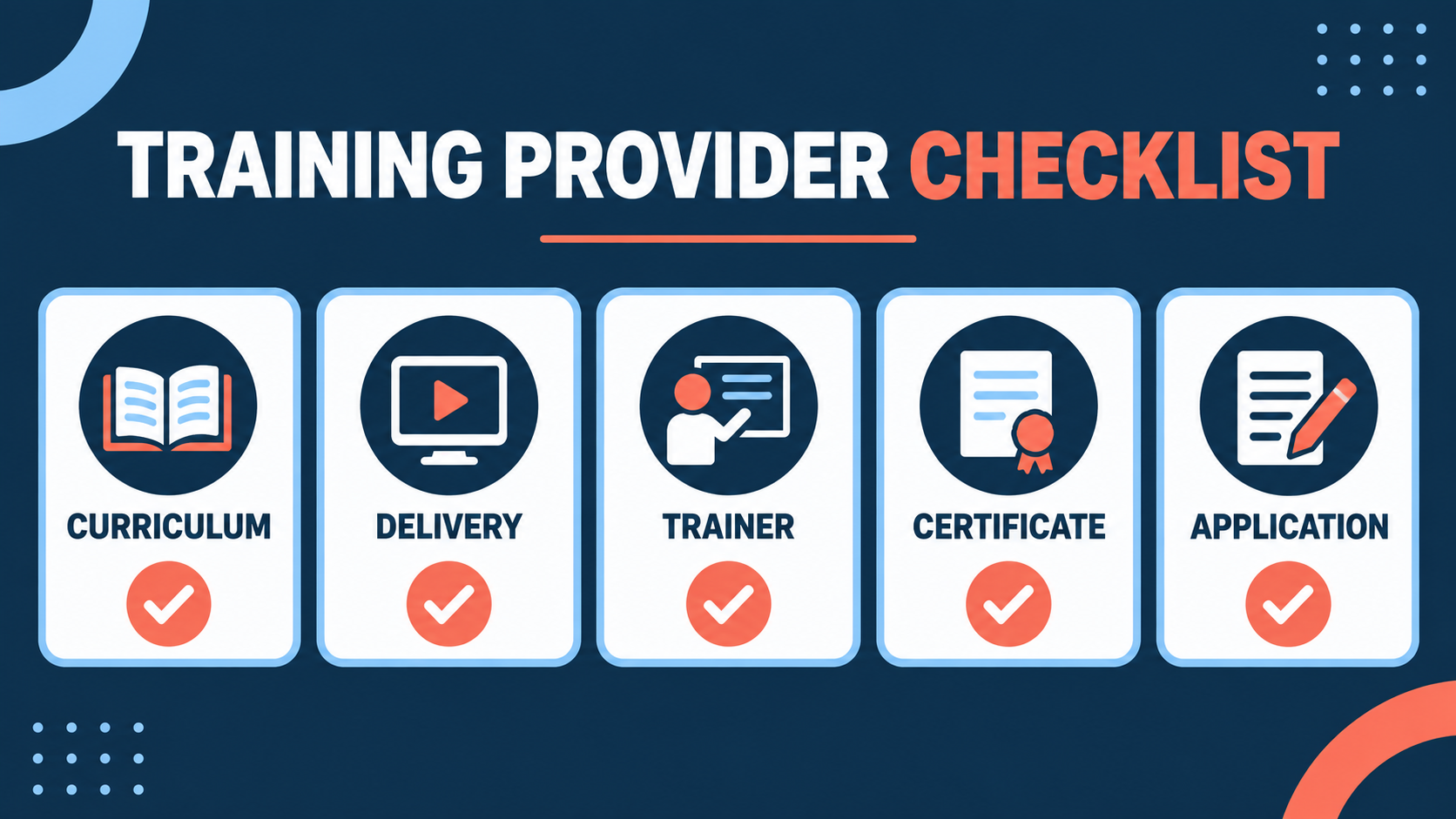
- Confirm the version: Is the course mapped to the current BACB RBT 40-Hour Training Curriculum?
- Check the schedule: Does it total at least 40 hours, span at least five days, and finish within 180 days?
- Inspect delivery: Are there demonstrations, practice, feedback, quizzes, and discussion—not only reading?
- Verify trainers: Can the provider identify the Responsible Trainer and explain assistant-trainer oversight?
- Ask about evidence: What certificate and completion records will you receive?
- Plan the next step: Does the provider clearly distinguish training from the competency assessment and application?
Common mistakes to avoid
- Choosing a course because it is cheap without verifying the curriculum version.
- Assuming a certificate automatically grants RBT status.
- Completing 40 hours in fewer than five days.
- Waiting more than 180 days to finish scattered modules.
- Ignoring role-play and feedback requirements because the course is online.
- Uploading a certificate with a wrong name, date, or hour total.
- Using an old handbook or application page after the BACB has published an update.
Frequently asked questions
Can I finish the training in five days?
Yes, five days is the minimum duration, but the course still must contain at least 40 hours and meet the current curriculum and delivery requirements.
Can RBT training be online?
Online delivery may be permitted when the course follows the current requirements. Check how the provider delivers practice, feedback, participation records, and completion documentation.
Does the certificate mean I am an RBT?
No. The certificate documents training completion. You still need the remaining application and competency steps, and you must wait until the credential is active before representing yourself as an RBT.
Do assigned readings count as the 40 hours?
Readings can support the course, but the current requirements state that assigned readings do not count toward the required training duration by themselves.
What if the course takes longer than 180 days?
Ask the provider and check the current BACB requirements before relying on the certificate. A course that exceeds the allowed completion window may not satisfy the requirement as expected.
Official sources: BACB RBT 40-Hour Training Requirements; 2026 RBT 40-Hour Training Curriculum; RBT Handbook; BACB RBT application resources. Retrieved September 27, 2026. Verify the current versions before enrolling.
Ready to practice the RBT concepts you just reviewed?
Try an independent, original RBT practice resource with exam-style questions, scoring, and answer explanations.
References
- Behavior Analyst Certification Board. RBT Test Content Outline, 3rd edition.
- Behavior Analyst Certification Board. RBT Handbook.
- Behavior Analyst Certification Board. RBT Ethics Code.