

RBT cannot work without supervision is a useful safety principle: an RBT provides services under the direction and close supervision required by the current BACB framework and the organization. The practical question is where to stop, what to report, and how to continue only after the required direction is clear.
Table of Contents
- RBT cannot work without supervision: the short answer
- Three supervision stop points
- Follow direction without guessing
- Document a supervision gap
- How to continue safely
- Before-action checklist
- Frequently asked questions
RBT supervision boundaries, stop points, communication, and documentation
RBT Cannot Work Without Supervision: Know the Stop Points
Learn when to pause, contact the supervisor, and continue only after the required direction is clear.
RBT cannot work without supervision is a useful safety principle because RBT services are delivered under the direction and close supervision required by the current BACB framework and the organization. The phrase does not mean a supervisor must stand beside the RBT every second. It means the RBT needs the required supervisory relationship, current program direction, access to support, and a clear route for reporting questions and concerns.
The current RBT Handbook, supervisor relationship, written program, employer policy, payer requirements, and applicable law control the actual arrangement. This article focuses on practical stop points. It does not invent a universal response time, percentage, physical-presence rule, or substitute for the current official requirements.
RBT cannot work without supervision: the short answer
Before providing a service, an RBT should be able to identify:
- the supervisor or RBT Requirements Coordinator responsible for the work;
- the current written program and procedure to follow;
- the data and documentation system;
- the approved way to ask questions and report barriers; and
- the urgent route for safety, privacy, or mandated reporting concerns.
If one of these is missing or unclear, do not quietly create a personal workaround. Pause at the appropriate point, contact the designated person, and document the relevant facts according to policy.
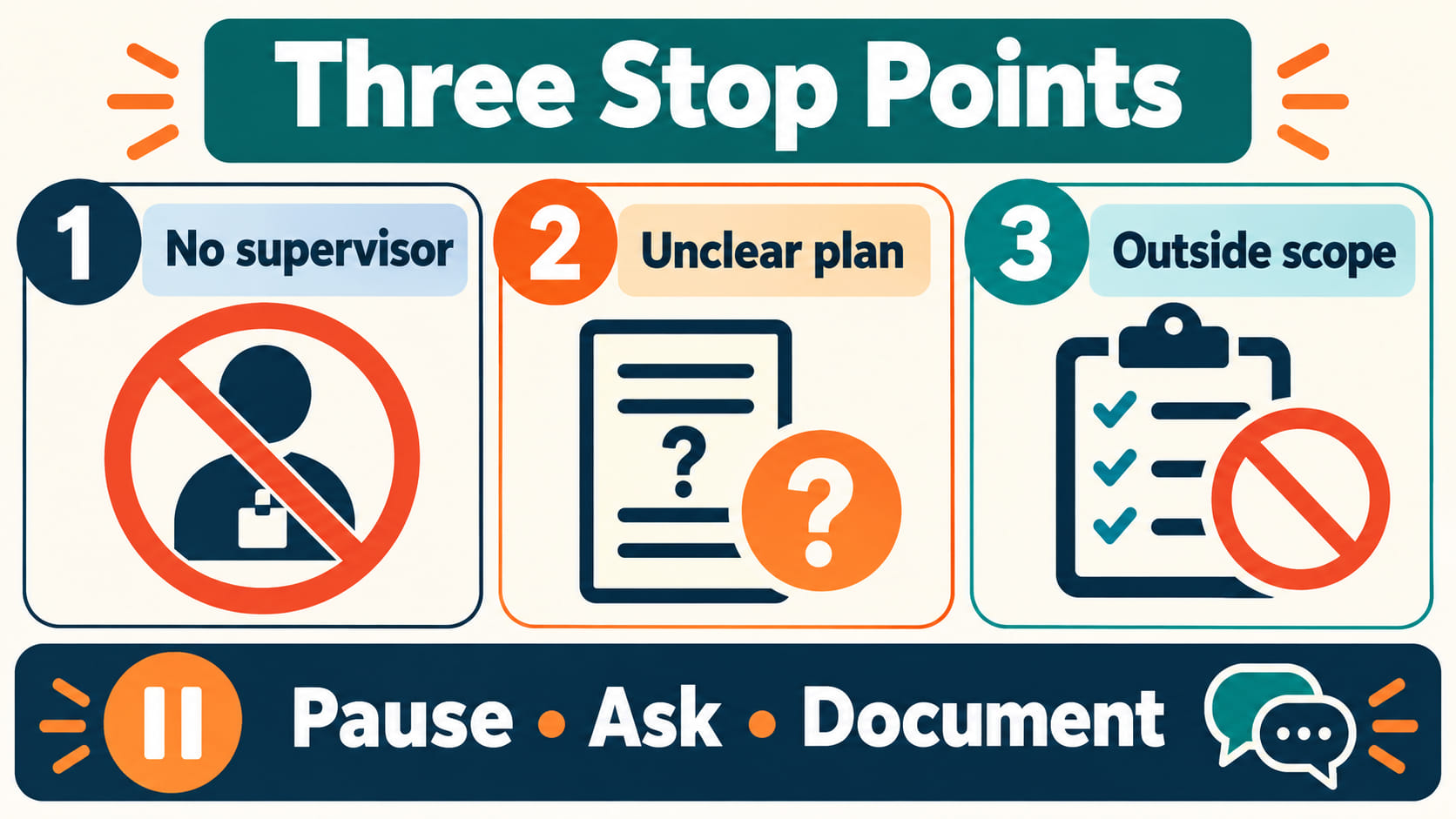
Three supervision stop points
No responsible supervisor or coordinator is available in the arrangement
An RBT should not begin or continue services as if fully independent when the required supervisor relationship is missing, ended, or unclear in the official record and organization process. Contact the employer or designated coordinator to confirm the status and next step. Do not assume that a former supervisor, a coworker, or a client’s family member can replace the required role.
The current plan or direction is unclear
Stop before improvising when the definition, prompt, measurement rule, reinforcement arrangement, safety step, or documentation field is unclear. A familiar routine is not permission to guess. Ask a focused question, record the barrier if required, and follow the supervisor’s direction once it is clarified.
The request is outside competence or scope
Pause when someone asks the RBT to diagnose, select a new assessment, redesign treatment, change a criterion, provide a clinical opinion, or implement a procedure that has not been trained and authorized. Explain what you can do within the current plan and ask who should make the additional decision.
Follow direction without guessing
Following direction is not the same as obeying every informal request. Direction should fit the written program, the RBT role, the supervisor’s authority, and the organization’s process. When a direction changes a procedure, ask for the updated instruction and documentation requirement rather than relying on memory.
A clear question is concrete: “The program says to record duration, but the timer was unavailable during one event. Should I mark it incomplete, and where should I document the interruption?” A vague message such as “What do I do?” may delay the answer and expose more client information than necessary.
If the supervisor gives a direction that appears inconsistent with a safety, privacy, or reporting policy, raise the concern respectfully and use the organization’s escalation route. Do not conceal the conflict, alter a record, or provide a new service while waiting for clarification unless an urgent procedure specifically directs what to do.
Document a supervision gap
A supervision gap should be described factually. Record the date or service period, the relevant task, what information or access was missing, the immediate action taken, the person contacted, and the direction received—only in the approved system and to the level required by policy.
Do not write a conclusion that cannot be supported, such as “supervision was illegal” or “the supervisor abandoned the case.” Write what you know: “The scheduled contact was not available at the start of the session. The RBT did not begin the new procedure, contacted the designated coordinator through the approved route, and documented the response.” The supervisor or organization can evaluate the compliance issue.
If the gap creates immediate safety risk, follow the urgent safety procedure first. If it involves privacy, do not send screenshots or full records through an unapproved channel while trying to get help. If it involves an allegation of misconduct, use the organization’s reporting route and any applicable official process.
How to continue safely
After direction is clarified, confirm the exact next step: which program to use, what data to collect, what procedure to implement, what to document, and when the supervisor will review the work. If training or observation is required first, wait for that step rather than treating a verbal explanation as a substitute for competence demonstration.
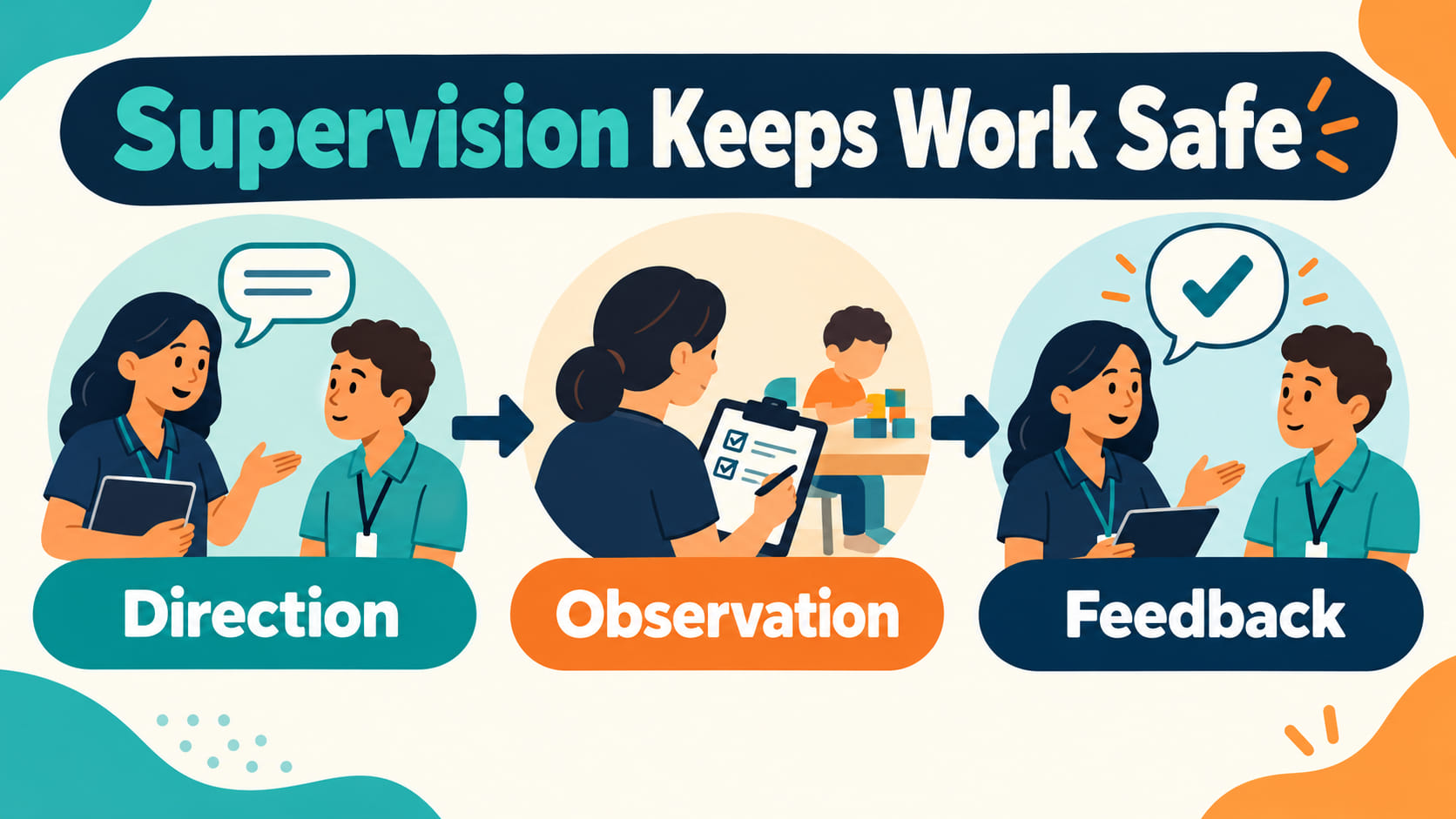
Supervision includes feedback and review, not only permission. Bring accurate data, objective notes, and questions to supervision. If an instruction cannot be followed because materials, timing, safety, or setting conditions differ, report the deviation rather than presenting the session as routine.
Remember that no immediate reply does not authorize independent clinical decisions. Follow any standing contingency plan that the organization has provided. If none exists, use the approved escalation route and document the delay or barrier.
Before-action checklist
- The responsible supervisor or coordinator and approved communication route are known.
- The current written program and data system are available.
- The RBT has the training and competence required for this task and context.
- The procedure, safety steps, and documentation fields are clear.
- No request requires an independent diagnosis, treatment change, or clinical decision.
- Questions, barriers, and missing data will be reported through the approved route.
- Urgent safety, privacy, and reporting procedures are known.
Frequently asked questions
Does an RBT need a supervisor physically present every minute?
Not necessarily. Do not invent a physical-presence rule from this article. The required supervision relationship and service conditions come from the current BACB Handbook, organization process, written program, and applicable requirements.
Can an RBT work if the supervisor does not answer immediately?
Follow any documented contingency instruction. If none applies, do not improvise a new clinical decision. Use the approved escalation route and document the barrier or delay.
Can a family member supervise an RBT?
A family member may provide relevant information or participate as authorized, but that does not automatically make the person the required RBT supervisor or coordinator. Confirm the official arrangement.
What should an RBT do when supervision is missing?
Pause the affected new or unclear work, contact the responsible supervisor or designated coordinator, follow urgent safety or reporting procedures when needed, and document the facts through the approved system.
Role reminder: This article is educational content, not individualized supervision, legal advice, or an emergency reporting protocol. Follow the current Handbook, written program, supervisor, employer, payer, and applicable law.
Official starting points: the RBT Handbook, BACB supervision and training resources, and the RBT Ethics Code (2.0).
Ready to practice the RBT concepts you just reviewed?
Try an independent, original RBT practice resource with exam-style questions, scoring, and answer explanations.
References
- Behavior Analyst Certification Board. RBT Test Content Outline, 3rd edition.
- Behavior Analyst Certification Board. RBT Handbook.
- Behavior Analyst Certification Board. RBT Ethics Code.