
If you are looking for an rbt checklist, begin with one important distinction: a study checklist helps you organize preparation, while the current BACB Handbook controls the certification process. A checklist on an independent website cannot approve an application, confirm eligibility, or replace an instruction shown in your BACB account. RBT Training is an independent study resource and is not affiliated with or endorsed by BACB.
Table of Contents
- rbt checklist: what it should and should not do
- Layer one: verify the current source
- Layer two: organize preparation records
- Layer three: map study topics to the outline
- Layer four: rehearse the examination frame
- After certification: keep the checklist alive
- Frequently Asked Questions
- References
Quick answer: Use an RBT checklist in four layers: verify the current official source, organize training and competency documentation, review exam concepts, and mark the supervision and role boundaries that apply after certification. Date your notes and revisit them when the Handbook or testing instructions change.
Study boundary: This is independent exam-preparation content, not an official BACB handbook, certification decision, task answer key, application determination, or source of secure exam material. The examples in this article are newly written for study. They are not official, recalled, leaked, or BACB-endorsed exam questions. Requirements and policies can change, so use the current BACB handbook and your supervisor or requirements coordinator for decisions about an individual application or client program.
rbt checklist: what it should and should not do
A useful checklist turns a large task into visible decisions. It does not turn every item into a permanent rule. For example, “read the current Handbook” is a durable preparation action, while a precise document, fee, or deadline may depend on the version in effect for a particular application. Keep those two types of notes separate so an old checklist does not look like a current BACB instruction.
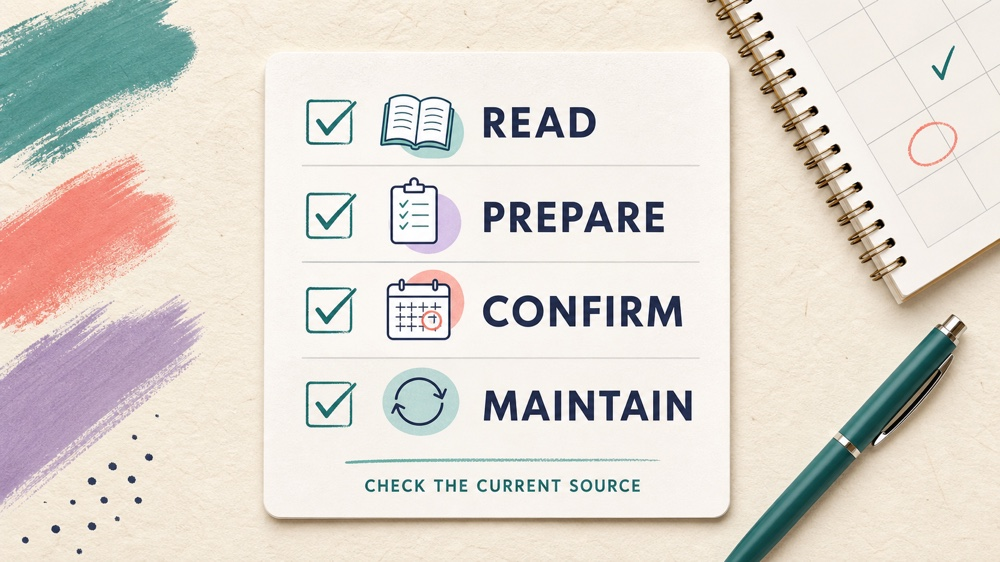
It is also helpful to label each line as read, prepared, submitted, or confirmed. A learner may have prepared a document without submitting it, or submitted an application without receiving an authorization to test. Those states should not be collapsed into a single green checkmark.
Layer one: verify the current source
- Open the current Handbook: Use the BACB source linked in the references and check its update date.
- Check the RBT resource page: Look for current application, examination, and maintenance links.
- Record the version: Put the source date beside your notes, not just in a browser bookmark.
- Escalate uncertainty: Ask BACB or the responsible requirements coordinator when an individual decision is involved.
- Separate provider guidance: Mark course advice as study support unless the official source confirms it.
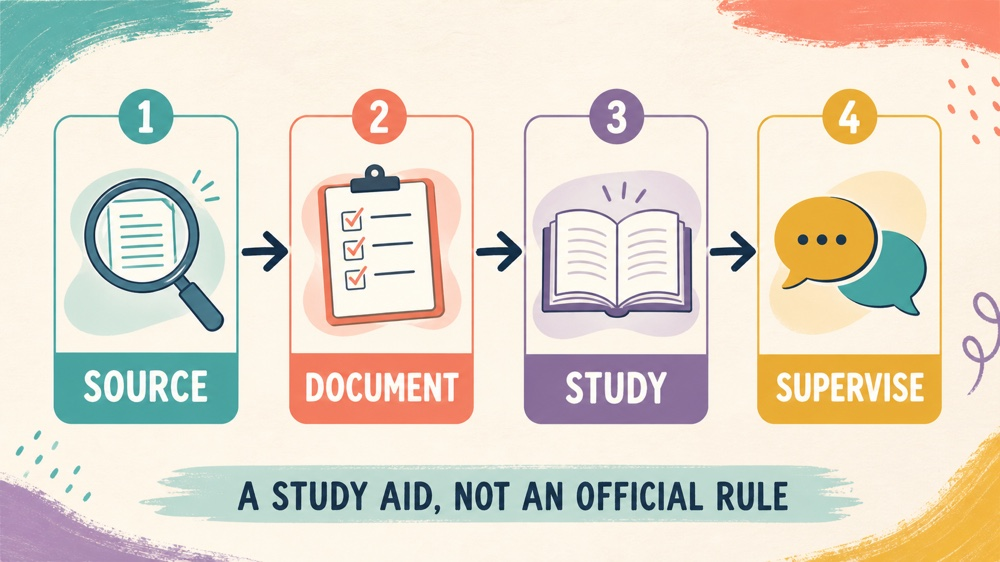
This first layer prevents a common mistake: treating a search result, course slide, or social-media summary as the authority for a changing requirement. A study site can explain terminology and practice retrieval, but the official process decides whether an applicant meets the applicable rules.
Layer two: organize preparation records
Use a private folder or approved record system for the documents your current process asks you to retain. Possible categories include training information, competency-related records, application correspondence, testing authorization, and renewal or supervision notes. Do not upload confidential client information into a study folder, and do not use someone else’s personal data in practice exercises.
For example: A learner finishes a training course and saves a completion record. The safe checklist status is “course documentation saved.” It is not “BACB certification complete.” The next line should point back to the current official application instructions and the person responsible for confirming what is still required.
Layer three: map study topics to the outline
The current RBT Test Content Outline (3rd ed.) can serve as a study map. For each task, write a plain-language definition, one observable example, one nonexample, and one role boundary. Measurement notes might compare frequency, rate, duration, latency, interval recording, and permanent product. Teaching notes might compare prompting, reinforcement, shaping, chaining, and generalization. Documentation notes should use observable language and protect privacy.
When a practice scenario contains an instruction to diagnose, infer a function, redesign a plan, or make a decision outside the written procedure, flag it as a supervision question. The purpose of the checklist is not to make a learner sound more authoritative; it is to make the next safe action easier to identify.
Layer four: rehearse the examination frame
Practice should include reading the stem carefully, identifying the defined behavior or measurement unit, eliminating answers that exceed the RBT role, and explaining why the selected answer fits the written procedure. Use original exam-style items rather than claiming access to secure or recalled questions. A correct study explanation should tell you what fact or boundary controlled the choice.
Current exam frame: The current RBT Test Content Outline (3rd ed.) applies beginning January 1, 2026. It describes 43 tasks across six content domains. The current examination format is 75 scored questions plus 10 unscored pilot questions, four answer choices per item, and a 90-minute testing period. These facts explain the study frame; they do not turn an independent guide into an official BACB resource.
The outline and examination frame support preparation, but a completed checklist cannot determine or promise an individual examination outcome. Use the current Handbook for application decisions and follow the testing provider’s current instructions when an authorization is issued.
After certification: keep the checklist alive
Certification is not permission to work without the required direction and supervision structure. An RBT may implement authorized procedures, collect data, document objectively, and communicate concerns when trained and directed to do so. Independent diagnosis, functional interpretation, treatment-plan changes, and decisions outside the approved procedure require appropriate professional direction.
- Keep supervision and communication records in the approved system.
- Review whether your current task matches your training and written plan.
- Report unclear definitions, safety concerns, data errors, and barriers promptly.
- Use de-identified examples when studying with peers.
- Recheck current official sources before relying on an older checklist.
Turn the checklist into practice
Use independent RBT-style questions to identify the task, measurement rule, and role boundary, then verify current requirements with official BACB sources.
Review the RBT resource →
Frequently Asked Questions
Is an rbt checklist an official BACB document?
Not automatically. An independent checklist is a study aid. The current BACB Handbook and official resources control application and certification information.
What belongs on an rbt checklist?
Source verification, preparation records, study topics, testing steps, supervision reminders, and a note showing which items still require official confirmation.
Does checking every item determine certification?
No. A checklist organizes work but cannot determine eligibility or an individual examination outcome.
Can an RBT checklist replace supervision?
No. An RBT works within required direction and supervision. A checklist cannot authorize independent clinical decisions.
Are the practice examples official BACB questions?
No. The examples are newly written independent study content and are not official, recalled, leaked, or BACB-endorsed exam questions.
References
- Behavior Analyst Certification Board: Registered Behavior Technician Handbook, updated June 2026.
- Behavior Analyst Certification Board: RBT Test Content Outline (3rd ed.).
- Behavior Analyst Certification Board: RBT resources.
- Behavior Analyst Certification Board: RBT Ethics Code.
- RBT Training: free independent RBT practice questions.