

RBT client records confidentiality depends on careful collection, approved use, secure storage, recipient verification, and timely escalation when something goes wrong.
Table of Contents
- What confidentiality means in daily RBT work
- RBT client records confidentiality: the five-part workflow
- Collect only what the task requires
- Use records for an approved purpose
- Store and protect records
- Check before disclosing information
- Respond when information goes to the wrong place
- Stay inside the RBT role
- Frequently asked questions
- References
RBT DOCUMENTATION GUIDE · PRIVACY IN PRACTICE
RBT Client Records Confidentiality: A Practical Guide
Handle client information carefully with clear collection, approved use, secure storage, and timely escalation.
RBT client records confidentiality depends on small decisions made repeatedly: collecting the right information, using it for an approved purpose, storing it in the correct system, protecting it from casual access, and checking the recipient before sharing. Confidentiality is not just a policy paragraph. It is part of how an RBT handles data sheets, session notes, messages, photographs, schedules, and conversations.
The current BACB RBT Test Content Outline includes professional communication and documentation expectations, while the exact privacy requirements for a service setting may also come from applicable law, the employer, the funder, the client’s authorization, and the responsible supervisor. This guide gives practical habits; it does not replace those current requirements or authorize an RBT to make an independent disclosure decision.
What confidentiality means in daily RBT work
Confidentiality means handling information so that it is available to the people and systems that are authorized to use it, while reducing unnecessary access. The information may be obvious, such as a name or photograph, or indirect, such as a rare schedule, school location, diagnosis, or combination of details that could identify a person.
A useful question is not only, “Is this information true?” Ask, “Who needs this information, for what approved purpose, through which approved channel, and how much detail is necessary?” This question helps an RBT pause before forwarding a screenshot, discussing a case in a public area, leaving a paper note visible, or adding client details to a personal device.
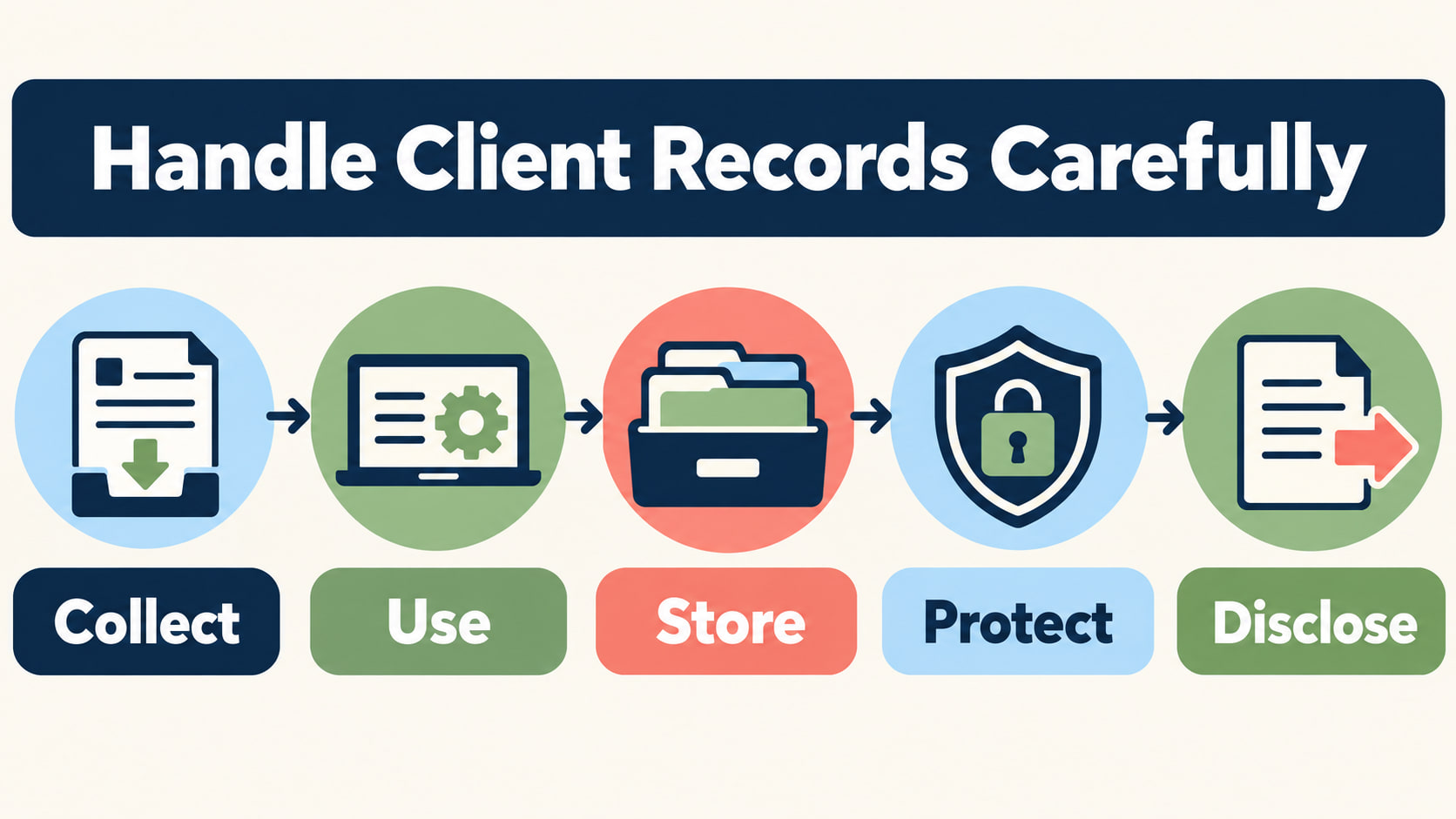
RBT client records confidentiality: the five-part workflow
- Collect: record the information needed for the assigned service or required documentation.
- Use: use it only for the approved service, documentation, communication, or quality task.
- Store: place it in the approved record, platform, location, or workflow.
- Protect: limit access, avoid casual exposure, and follow device and disposal procedures.
- Disclose: verify authorization, recipient, channel, and minimum necessary detail before sharing.
Collect only what the task requires
Good documentation is specific, but more information is not automatically better. Before recording a detail, connect it to the assigned task or required record. If a session note needs an observable response, the relevant measurement, and a description of the procedure implemented, a personal opinion about the family or unrelated household information may not belong there.
Use the organization’s definitions, templates, and data systems. If a form asks for a field you do not understand, ask the supervisor or designated contact instead of inventing a new category. Avoid copying a full client history into a message when a narrow question can be answered with a de-identified example or the record’s approved link.
Accuracy and confidentiality work together. Record objective observations close to the time of service, use the required identifiers, and avoid guesses. A vague or speculative note can expose sensitive information without helping the team make a better decision.
Use records for an approved purpose
Access should have a reason. An RBT may need a current program, data sheet, communication log, or safety procedure to implement assigned services. That does not mean the RBT should browse unrelated files, look up a different client, or save copies for personal reference.
Keep work and personal channels separate. Do not place identifiable client information in a personal notes app, private email, social-media draft, or unapproved cloud folder. Avoid discussing a client in a public hallway, elevator, coffee shop, or group chat that includes people who are not part of the authorized team.
De-identification can reduce risk when a learning question does not require identity. Remove names and combine or generalize details that could still reveal the person. De-identification is not a license to share a story publicly; follow the organization’s training and communication rules.
Store and protect records
Use the approved record system and follow the organization’s access, password, device, retention, and disposal procedures. Lock a screen when stepping away. Keep paper records out of public view. Do not leave a data sheet in a vehicle, on a shared printer, or in an unattended treatment area.
Device convenience can create exposure. If a platform has a secure upload feature, use it instead of taking a screenshot and texting it. If a work device is lost, a file is downloaded accidentally, or a paper record cannot be located, report the concern promptly through the designated route. Waiting because the information may not have been opened can delay the organization’s response.
Check before disclosing information
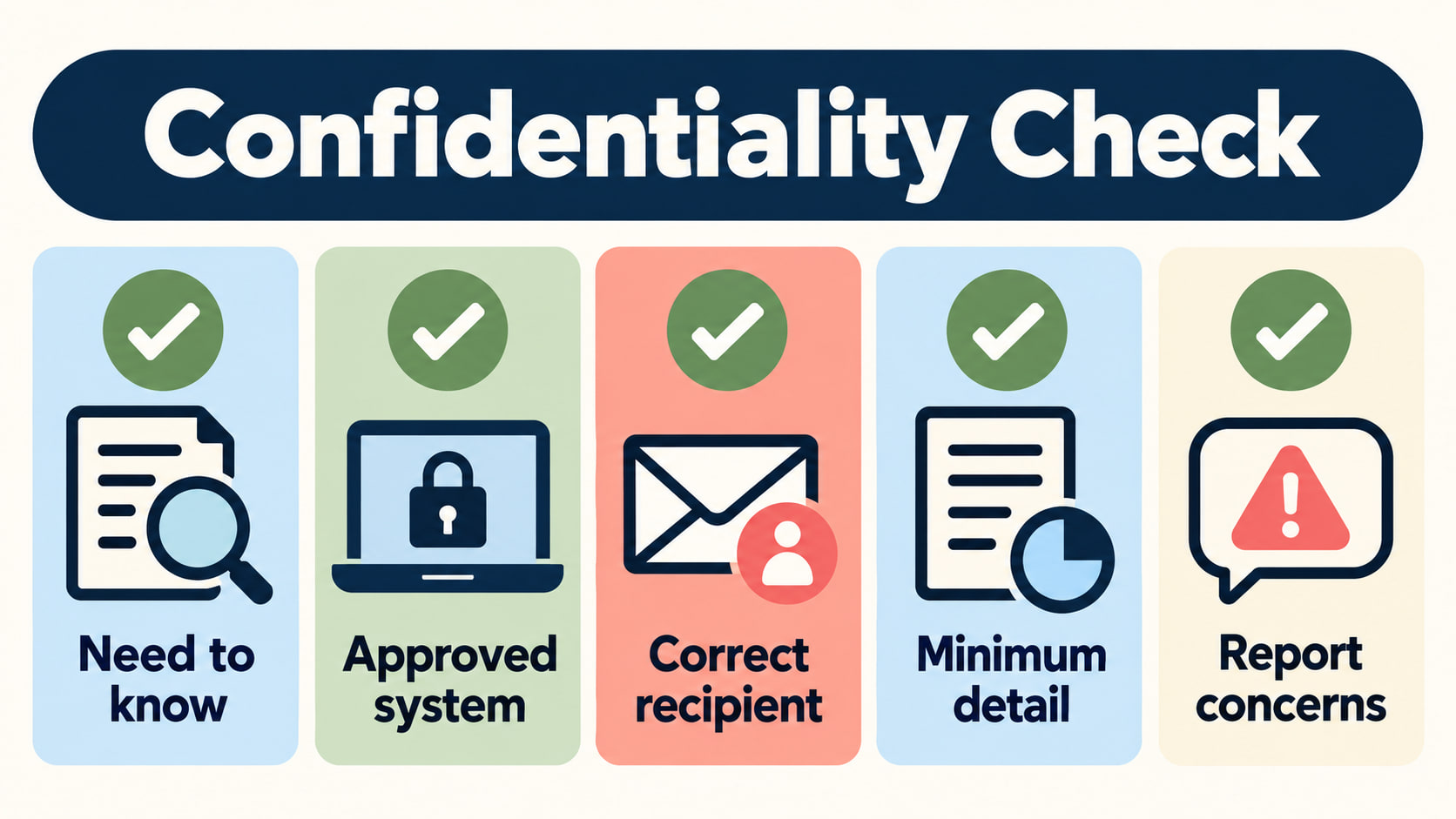
Before sharing a record or message, check five points: the recipient, the purpose, the authorization or approved workflow, the channel, and the amount of detail. A familiar name in a contact list is not enough. Verify the address, number, platform account, or meeting participants according to policy.
Use the minimum necessary detail for the task. A supervisor who is reviewing a data question may need the relevant date, program step, response pattern, and de-identified context. They may not need unrelated family details. When unsure, pause and ask the responsible supervisor or privacy contact before sending.
Be especially careful with photographs, video, recordings, school information, and public-facing examples. Do not post or reuse them because they seem anonymous, educational, or positive. Follow the authorization and media rules that apply to the setting.
Respond when information goes to the wrong place
Mistakes should be handled quickly and factually. If a message goes to the wrong recipient, stop further sharing, do not delete evidence against policy, and notify the designated supervisor or privacy route. State what happened, when it happened, what information was involved, who received it if known, and what immediate action was taken.
If you notice a colleague discussing a client where others can hear, avoid turning the moment into a public confrontation. Protect the conversation from further exposure, follow the organization’s reporting process, and ask for direction. If there is immediate safety risk, use the urgent escalation route first.
Do not quietly rewrite a record to hide an error. Corrections, late entries, and incident reports should follow the approved process so the record remains accurate and the team can decide what follow-up is required.
Stay inside the RBT role
An RBT implements assigned services after demonstrating competence and under ongoing supervision. The RBT can report objective observations, ask what information is needed, use the approved system, and escalate uncertainty. The RBT should not independently decide that a disclosure is legally required, change a treatment plan, reinterpret consent, or create a new privacy rule for the team.
When instructions conflict, a record is missing, a family member requests information, or a third party asks for documents, pause and use the designated supervisor or organizational process. Clear escalation protects the client, the RBT, and the integrity of the record.
Frequently asked questions
Can I send a client data sheet by text if the supervisor needs it quickly?
Use the approved communication system and follow the organization’s policy. Speed does not automatically make a personal text channel acceptable. If the correct route is unclear, ask the supervisor or designated privacy contact before sending identifiable information.
What should I do if I accidentally open the wrong client record?
Stop viewing it, do not copy or discuss the content, and report the access according to the organization’s procedure. Give factual details so the responsible team can determine whether additional steps are needed.
Is removing a name enough to make a story private?
Not always. A combination of schedule, location, age, behavior, or family details may still identify someone. Use approved de-identification guidance and share only what the learning or service task requires.
What is the safest next step when I am unsure?
Pause before sharing, preserve the relevant facts, and ask the responsible supervisor or designated privacy route. A timely question is safer than an improvised disclosure or a private workaround.
Source note: Review current BACB materials, your organization’s policies, applicable requirements, and supervisor direction for the setting in which you work. This article is educational and does not provide individualized legal, clinical, employment, or credentialing advice.
Ready to practice the RBT concepts you just reviewed?
Try an independent, original RBT practice resource with exam-style questions, scoring, and answer explanations.
References
- Behavior Analyst Certification Board. RBT Test Content Outline, 3rd edition.
- Behavior Analyst Certification Board. RBT Handbook.
- Behavior Analyst Certification Board. RBT Ethics Code.