

RBT continuity of services means preparing for changes that may interrupt an RBT’s ability to provide day-to-day services. The goal is not to promise that every session will continue without change. It is to give the supervisor and organization enough notice, facts, documentation, and time to protect the client’s transition when an RBT leaves, takes leave, changes settings, loses supervision, or experiences an emergency.
Table of Contents
- What RBT continuity of services means
- Planned interruptions
- Unplanned interruptions
- The handoff checklist
- Supervision and status boundaries
- Frequently asked questions
- Official sources and scope
RBT service-continuity and transition guide
RBT Continuity of Services: A Practical Transition Guide
Prepare for planned leave, sudden interruptions, organization changes, and supervisor transitions without making private clinical decisions.
RBT continuity of services means preparing for changes that may interrupt an RBT’s ability to provide day-to-day services. The goal is not to promise that every session will continue without change. It is to give the supervisor and organization enough notice, facts, documentation, and time to protect the client’s transition when an RBT leaves, takes leave, changes settings, loses supervision, or experiences an emergency.
BACB’s Continuity of Services: Reminders for RBTs is designed to help technicians navigate changes or interruptions in their ability to provide services. This guide turns that idea into a practical sequence while keeping the RBT role clear: communicate, preserve facts, protect confidentiality, and follow authorized direction.
What RBT continuity of services means
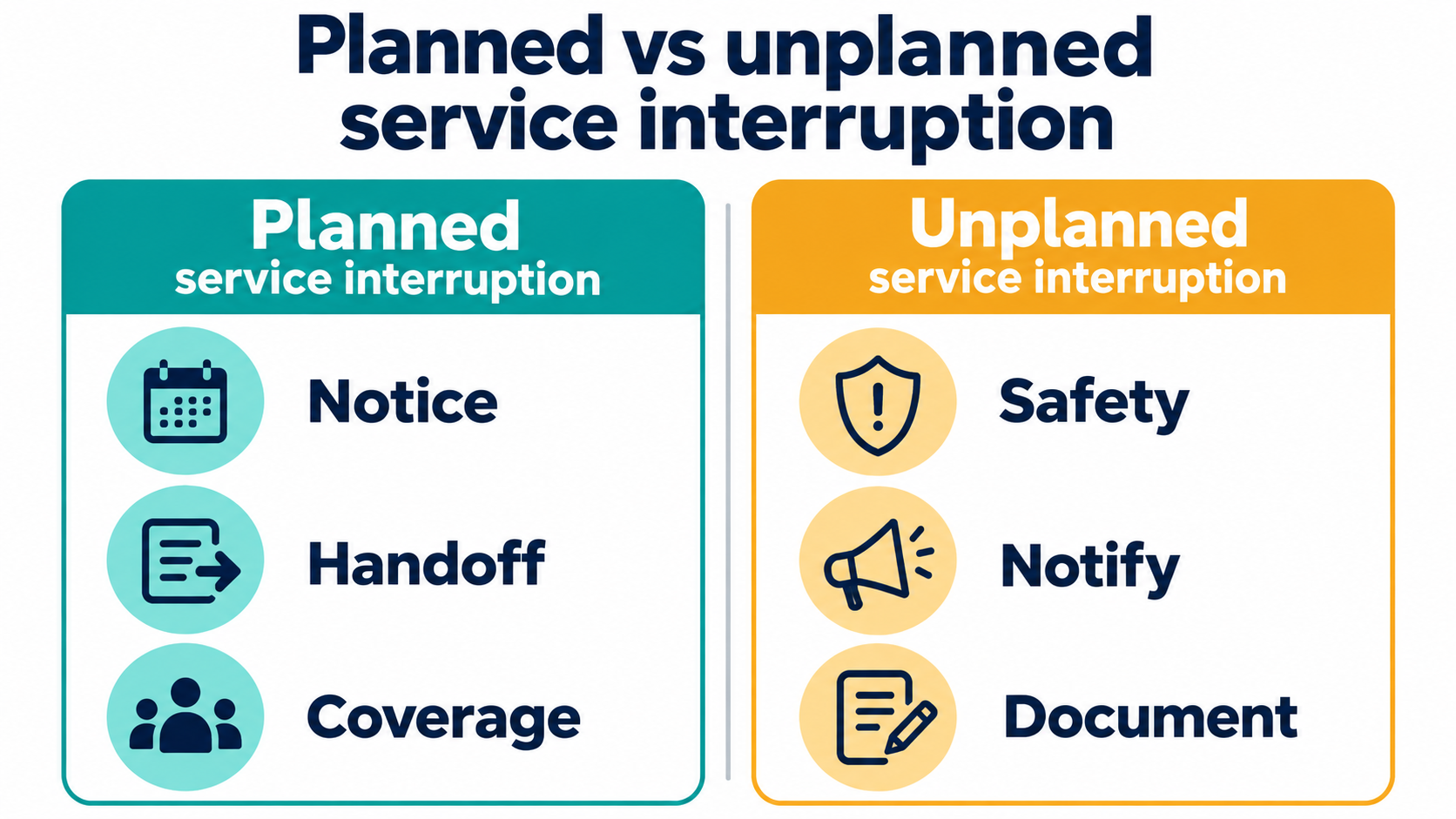
A service interruption can be planned or unexpected. Planned examples include changing employers, taking an extended leave, moving to another setting, or ending an RBT role. Unexpected examples include illness, a personal emergency, a sudden organization closure, an urgent safety event, or an abrupt loss of access to a supervisor.
The effect on the client may depend on the length of the interruption, the learner’s needs, the availability of a qualified replacement, the current plan, and the organization’s procedures. An RBT should not predict the clinical outcome or promise that a replacement arrangement will work. The practical responsibility is to raise the change quickly and help the authorized team organize the next step.
Planned interruptions
When there is time to prepare, give the supervisor or organization notice as early as the situation allows. The notice should state the expected last service date, what is changing, whether the change is temporary or permanent, and what follow-up is needed. Avoid making a private promise to a caregiver about future services before the organization confirms the plan.
A planned transition may include a structured handoff, a final observation, a record review, a new staff introduction, or a schedule change. The RBT can help by reporting objective information about current targets, data status, materials, communication routines, safety instructions, and questions that the next provider should ask. The RBT should not create a new intervention, rewrite a goal, or select a replacement provider independently.
Unplanned interruptions
Safety comes first. If illness, a personal emergency, or another urgent event prevents safe service delivery, follow the organization’s emergency and absence route. Do not continue a session simply to avoid an interruption, and do not disclose unnecessary health or personal information to people who do not need it.
Once the immediate issue is safe, notify the supervisor or designated contact as soon as practicable. State what happened, what service was affected, whether a client or caregiver needs immediate information, and what records or materials are relevant. If you cannot reach the normal contact, follow the approved escalation route instead of improvising a public or personal-message solution.
The handoff checklist
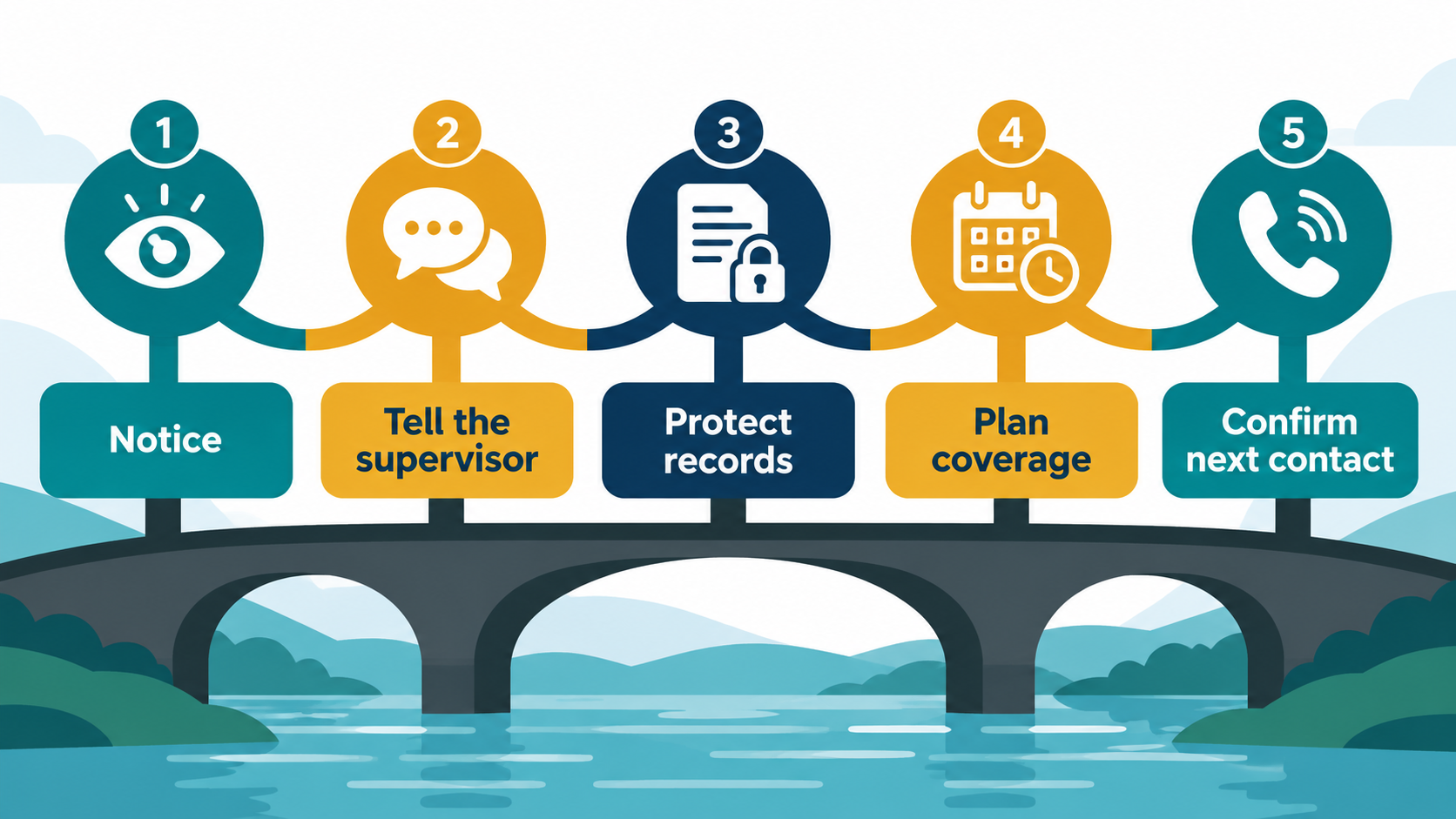
A useful handoff is factual, secure, and limited to the information needed for the authorized team. Use the current program and workplace form if one exists.
- Notice. Record the change, expected timing, and affected sessions or responsibilities.
- Tell the supervisor. Use the designated supervisor, RBT Requirements Coordinator, or escalation route. Do not make the family or the next technician the private decision-maker.
- Protect records. Save notes, data, materials, and communications in the approved system. Do not copy client records to a personal device or delete inconvenient details.
- Plan coverage. Let the authorized organization determine who can provide services, what training is needed, and whether a session should be changed or paused.
- Confirm next contact. Make sure the caregiver or relevant team knows the approved next contact and how urgent questions should be routed.
Close the loop after the handoff
A transition is not complete merely because another person has been named. Confirm which sessions were completed, canceled, rescheduled, or transferred; where the current records are stored; who receives future questions; and whether the supervisor has acknowledged the handoff. Use the organization’s approved documentation system and keep a factual record of the communication.
Do not create duplicate versions of a client plan or keep a private “backup” file with identifying information. If a material, device, key, or record must be returned, follow the workplace process and document the return. If the new provider needs orientation, let the authorized supervisor decide what training or observation is required. A short, accurate closing note is usually more useful than a long narrative filled with guesses.
If the transition changes the setting, schedule, communication partner, or available materials, report those variables rather than assuming they are harmless. The supervisor can decide whether the current procedure still fits and whether additional preparation is needed. The RBT’s contribution is timely information and faithful implementation of the authorized next step.
Supervision and status boundaries
A change in employment or supervision can affect whether an RBT may continue providing services. Check the current BACB account and Handbook instructions rather than relying on memory. If a supervisor is removed or no longer able to provide required oversight, ask the organization how the transition will be documented and who will be listed before services resume.
Continuity planning does not authorize independent practice. An RBT should not continue billing, representing an inactive status as active, changing a behavior plan, using an unfamiliar procedure, or providing services without the required supervision and demonstrated competence. If the organization asks for work outside the RBT’s current training or supervision, report the concern through the approved route.
Confidentiality remains active during a transition. Share only the necessary client information with authorized people through approved systems. Do not use a personal email, social account, group chat, or unapproved cloud folder to make a handoff easier.
Frequently asked questions
Does continuity of services mean an RBT must never take a break?
No. A safe break, leave, or role change may be necessary. The key is to communicate the change, follow the organization’s process, and give the authorized team a chance to plan the client transition.
What if an RBT has to leave immediately?
Follow the emergency or absence process first, then notify the supervisor or designated contact as soon as it is safe. Provide factual information about affected sessions and records, without sharing unnecessary personal details.
Can an RBT train the replacement provider?
An RBT may share approved factual information when directed and competent to do so, but training, authorization, and clinical decisions belong to the responsible supervisor or organization.
Can a caregiver choose the next RBT directly?
A caregiver’s preferences matter, but the organization and authorized clinical team determine the service arrangement. Do not promise a specific person or schedule without confirmation.
Official sources and scope
This article was checked against BACB’s Continuity of Services: Reminders for RBTs, the Continuity of Services toolkit page, and BACB’s RBT transition guidance. Use the current RBT Handbook, supervisor direction, employer procedures, and emergency routes for a specific situation.
Ready to practice the RBT concepts you just reviewed?
Try an independent, original RBT practice resource with exam-style questions, scoring, and answer explanations.
References
- Behavior Analyst Certification Board. RBT Test Content Outline, 3rd edition.
- Behavior Analyst Certification Board. RBT Handbook.
- Behavior Analyst Certification Board. RBT Ethics Code.