

RBT feedback supervision works best when feedback is specific, respectful, connected to the procedure, and followed by another opportunity to practice.
Table of Contents
- What useful feedback does
- RBT feedback supervision: the four-step formula
- Make feedback specific
- Keep the conversation respectful
- Connect feedback to practice
- Document the next step
- Common feedback mistakes
- When feedback needs escalation
- Frequently asked questions
- References
RBT SUPERVISION GUIDE · FEEDBACK IN PRACTICE
RBT Feedback Supervision: How to Make Feedback Useful
Turn observations into specific, respectful, actionable next steps.
RBT feedback supervision works best when feedback is specific, respectful, connected to the written procedure, and followed by another opportunity to practice. “Good job” may encourage someone, but it does not always tell the RBT what to repeat. “Be more careful” may signal concern, but it does not identify the next action.
The current BACB RBT Test Content Outline connects supervision with observation, feedback, instruction, modeling, rehearsal, and timely direction. The exact process depends on the current requirements and written arrangement. This guide offers practical communication habits and does not replace supervisor direction or organizational policy.
What useful feedback does
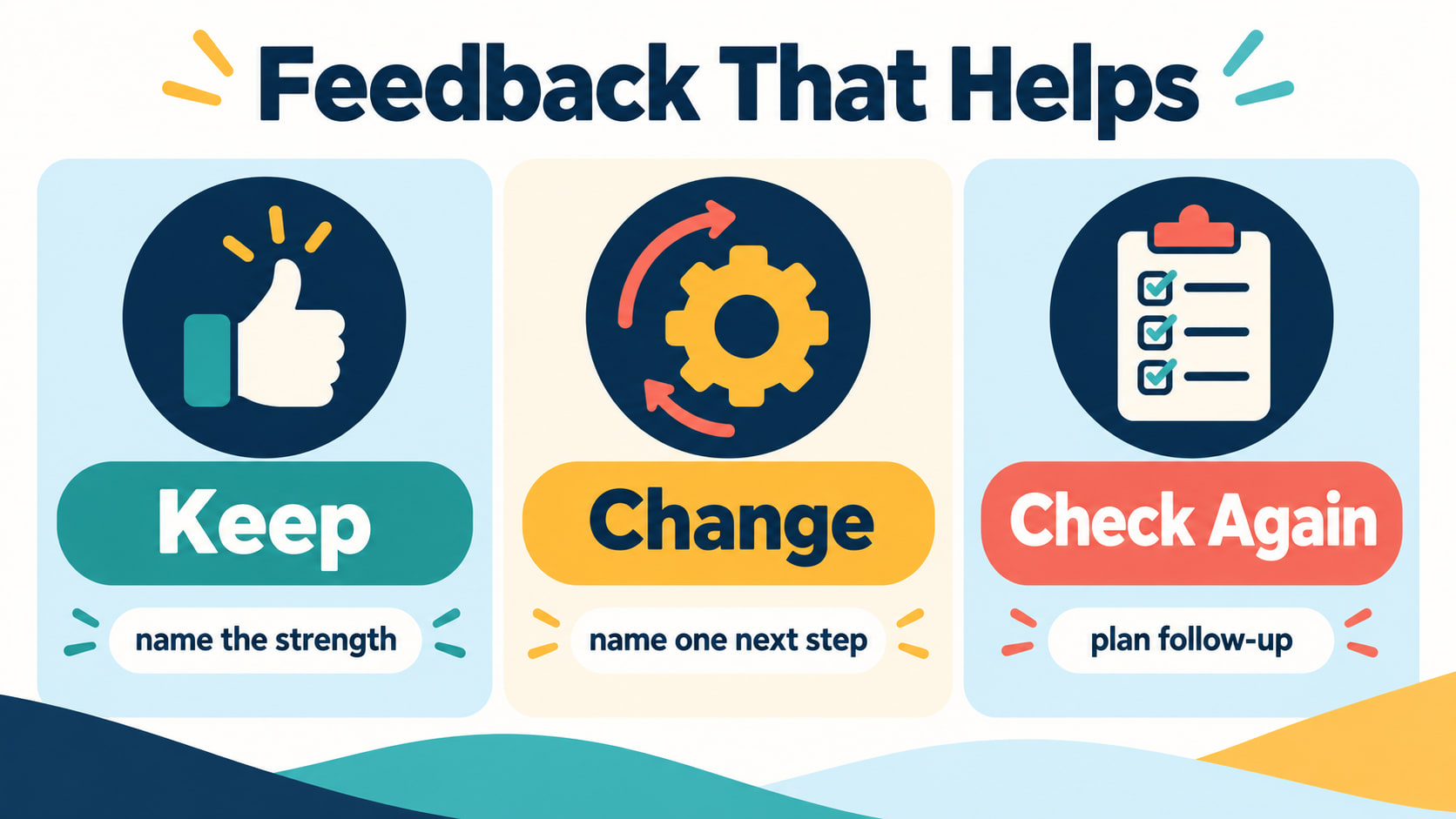
Useful feedback helps a person understand the relationship between an observed action and the next correct action. It can reinforce a step that should continue, identify one change to practice, explain why the step matters, and create a follow-up plan. It should describe performance rather than label a person.
Feedback is strongest when it is close enough to the observation that the details are still clear. If the conversation must wait, make a brief objective note and return to the relevant procedure. Avoid relying on memory, impressions, or a generalized judgment about the RBT.
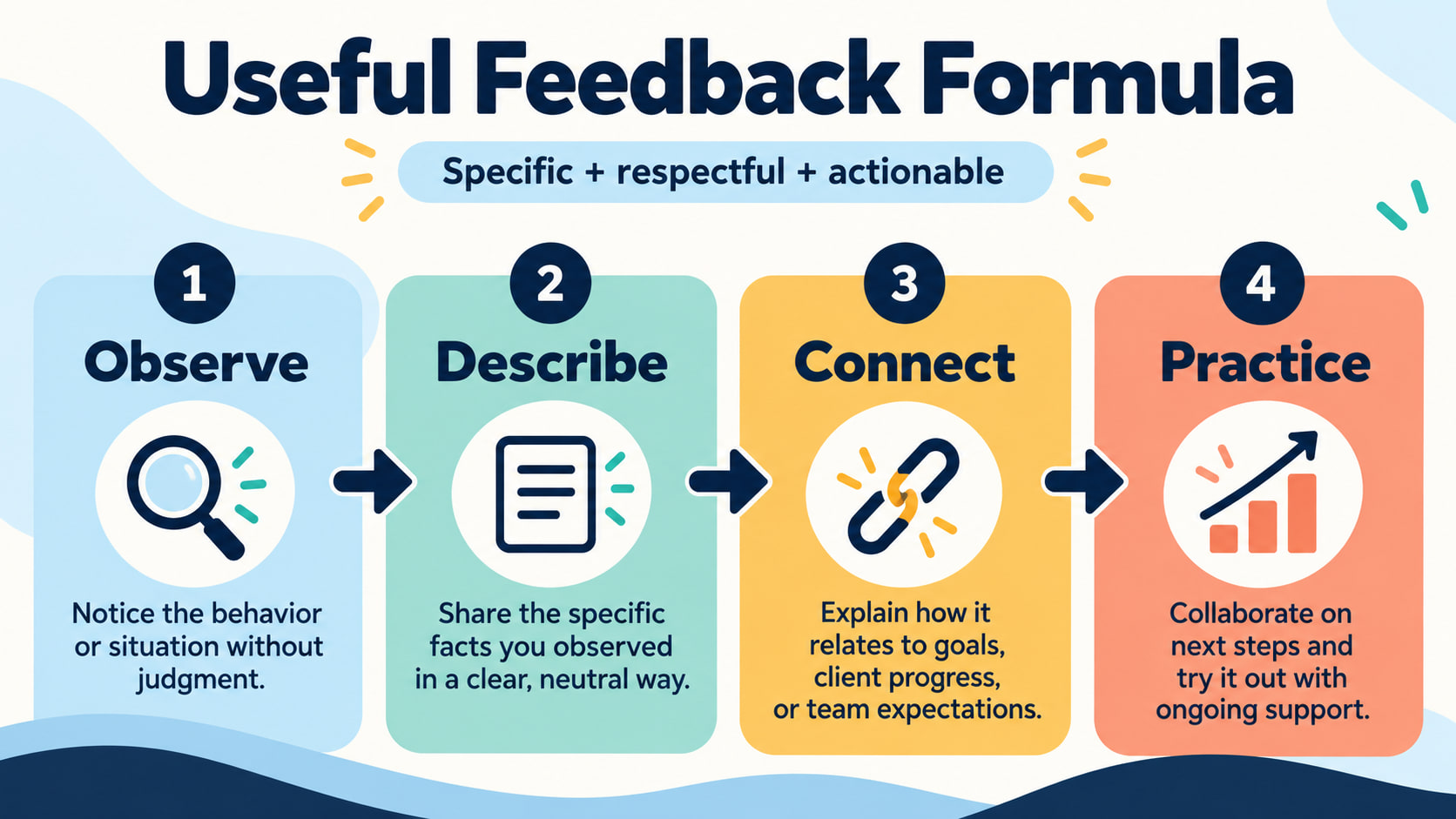
RBT feedback supervision: the four-step formula
- Observe: identify the action, response, or situation that was actually seen.
- Describe: state the facts in neutral language.
- Connect: link the observation to the written procedure, goal, or team expectation.
- Practice: agree on one next step and check it again when appropriate.
Make feedback specific
Specific feedback answers, “What happened?” and “What should happen next?” For example: “You recorded the response category after the defined opportunity on three trials. On the fourth trial, the entry was made before the opportunity ended. Let’s review that timing and practice two examples.” This gives the RBT something observable to repeat or change.
Use the terms in the current program or workplace procedure. If the procedure is unclear, the supervisor should clarify it through the appropriate clinical process. The RBT should not guess at a new definition or silently change the measurement rule.
Keep the conversation respectful
Respectful feedback focuses on the work, protects dignity, and leaves room for questions. It can name a strength before a correction without turning the strength into a compliment sandwich that hides the real message. “You checked the prompt code before recording; next, keep the same check while waiting the defined interval” is direct and supportive.
Use a private and appropriate setting when discussing performance. Avoid sarcasm, public correction, comparisons with coworkers, or comments about personality. The goal is better implementation and clearer support, not embarrassment.
Connect feedback to practice
Feedback becomes actionable when it ends with a manageable next step. The next step might be rehearsing the sequence, reviewing one example, observing another trial, or bringing a specific question to the next supervision contact. One clear change is often more useful than a long list of corrections.
Ask the RBT to restate the next step when appropriate. This checks shared understanding without turning the conversation into a test of confidence. If the RBT still needs instruction, model the step and provide another practice opportunity.
Document the next step
Use the approved supervision or service record. Document what was observed, what direction was provided, and what follow-up is planned using objective language. Do not include unnecessary client details in informal notes or personal messages.
A useful record supports continuity. If another supervisor or team member needs to understand the current training need, they should be able to see the procedure reviewed and the next check without reading a personal judgment. Follow the organization’s correction process if an entry needs to be amended.
Common feedback mistakes
- Too vague: replace “be better” with one observable action.
- Too much at once: prioritize the step that matters most now.
- Only criticism: identify what should continue as well as what should change.
- No follow-up: schedule or identify the next opportunity to check implementation.
- Role drift: feedback does not authorize independent changes to a plan or safety procedure.
Another common mistake is giving feedback without checking the conditions around the performance. Ask whether the written instruction was available, whether the RBT had the required materials, and whether the situation differed from the usual example. Context does not erase an implementation issue, but it can show whether the next step is practice, clarification, additional training, or a change that must be handled by the responsible clinician.
Feedback should also avoid promising a particular client outcome. An RBT can be coached on following an assigned procedure, recording objective data, communicating a concern, or asking for direction. The team should make clinical decisions through the appropriate process rather than treating a feedback conversation as permission to improvise.
When feedback reveals a repeated difficulty, create a small review loop: identify the skill, practice one component, observe the next opportunity, and decide whether the support can be reduced or should continue. That loop makes supervision more useful than a one-time correction and gives the RBT a clear way to show progress.
It also helps to agree on how success will be recognized before the next check, so the follow-up is fair and understandable.
When feedback needs escalation
Use the designated escalation route when feedback reveals a safety concern, conflicting instructions, a privacy issue, a data-integrity problem, or a task outside demonstrated competence. Do not solve a role or clinical conflict through a private workaround. State the objective facts, preserve the relevant record according to policy, and ask who is responsible for the next decision.
Urgent danger or medical needs may require emergency or organizational procedures in addition to supervision. Feedback can support learning after the immediate concern is addressed, but it does not replace emergency response, mandated reporting, medical care, or the organization’s escalation policy.
Frequently asked questions
What if I disagree with feedback?
Ask which observation and written procedure the feedback is based on. If the issue remains unclear, request clarification through the supervision process rather than arguing in front of a client or changing the procedure yourself.
Should feedback always start with something positive?
Respect and specificity matter more than a fixed script. Name a genuine strength when it helps, then state the needed change clearly and connect it to practice.
Can feedback replace training?
Sometimes feedback identifies a small correction; it does not always provide enough instruction for a new or complex skill. Ask for modeling, rehearsal, or a structured training check when needed.
What is the RBT’s role?
The RBT implements assigned services after demonstrating competence and under ongoing supervision. Report objective observations, ask for direction, and stay within the written procedure and demonstrated competence.
Source note: Review current BACB materials, workplace policies, and supervisor direction for your setting. This article is educational and does not provide individualized legal, clinical, employment, or credentialing advice.
Ready to practice the RBT concepts you just reviewed?
Try an independent, original RBT practice resource with exam-style questions, scoring, and answer explanations.
References
- Behavior Analyst Certification Board. RBT Test Content Outline, 3rd edition.
- Behavior Analyst Certification Board. RBT Handbook.
- Behavior Analyst Certification Board. RBT Ethics Code.