
RBT public statements should be accurate, respectful, privacy-protective, evidence-aware, and within the speaker’s role and authorization.
Table of Contents
- What counts as a public statement
- RBT public statements: the four-part check
- Clarify purpose and audience
- Use accurate, supportable language
- Protect privacy and confidentiality
- Stay inside the RBT role
- Common communication examples
- What to do after a mistake
- Frequently asked questions
- References
RBT ETHICS GUIDE · PUBLIC COMMUNICATION
RBT Public Statements: Ethical Communication Guide
Communicate accurately, protect privacy, and stay within authorization and role boundaries.
RBT public statements should be accurate, respectful, privacy-protective, evidence-aware, and within the speaker’s role and authorization. A public statement can be a social-media post, comment, testimonial, presentation, interview, public education message, review response, or casual remark that reaches people outside the immediate service team.
Public communication can build trust, but it can also disclose identifying information, misrepresent a service, promise an outcome, or make an RBT appear to speak for an organization without authorization. Current BACB materials, applicable requirements, organizational policy, and supervisor direction control the details for a particular setting.
What counts as a public statement
Public does not only mean a television interview. A public statement may be visible to anyone online, forwarded beyond the original audience, recorded at an event, or posted in a group that includes people outside the authorized team. A private account is not automatically a private professional channel.
Before speaking or posting, consider whether the audience could connect the statement to a client, family, employer, service setting, or professional role. If yes, use the organization’s communication and media policy and ask for direction when authorization is unclear.
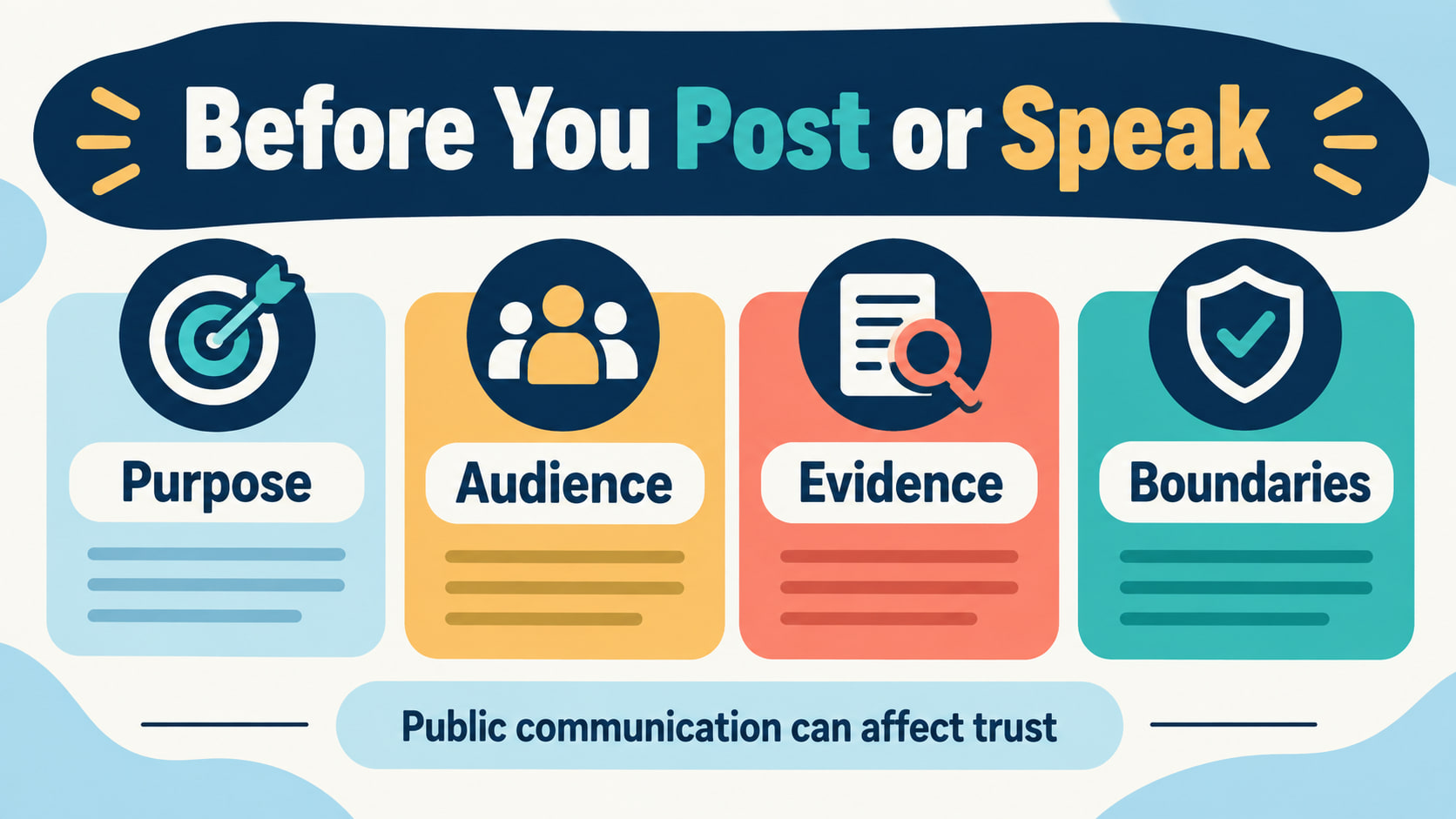
RBT public statements: the four-part check
- Purpose: Why am I speaking or posting?
- Audience: Who can see, hear, save, or forward it?
- Evidence: Is the statement accurate, current, and supportable?
- Boundaries: Does it protect privacy and remain within my role and authorization?
Clarify purpose and audience
A public education message should explain a general concept without presenting a personal client story as a universal rule. An organizational announcement may require approved wording. A response to a public review may belong to a designated communications or leadership role rather than an individual RBT.
Ask who owns the message, who approved it, and whether the audience needs the information. Avoid posting in the moment when emotion, urgency, or frustration makes the purpose difficult to describe.
Audience can change without notice. A message intended for coworkers may be copied to a family member, quoted in a complaint, or read by a future employer. Use wording that remains accurate and respectful if it travels beyond the original audience. Do not assume that disappearing messages, private groups, or temporary stories eliminate the need for professional judgment.
Use accurate, supportable language
Separate general education from individualized advice. Avoid promising that a method will produce a particular outcome, describing a diagnosis you are not authorized to make, or presenting an opinion as an official position. Use careful language when evidence is limited and cite an appropriate current source when the format allows.
Accuracy includes correcting a public error through the approved process. Do not quietly edit a professional record or delete a post to conceal a concern. Preserve relevant facts and ask the responsible supervisor or communications contact how to correct the message.
When discussing research or general practice, distinguish what a source says from what you personally believe. Avoid overstating a small example as proof that a procedure works for everyone. If a question requires individualized clinical interpretation, refer it to the responsible professional rather than answering beyond your role.
Protect privacy and confidentiality
Do not share a client’s name, face, voice, schedule, school, location, family details, data sheet, photograph, recording, or distinctive story without following current authorization and media rules. Removing a name may not remove identifying details when the facts can be combined.
Positive stories and testimonials still require permission and approved handling. Do not post because the story seems encouraging, anonymous, or educational. If the learning point can be made without personal details, use a general or de-identified example according to policy.
Protect privacy in images and background details as well. Check whiteboards, paperwork, notifications, uniforms, school logos, room signs, and reflections before sharing a photograph or recording. When in doubt, do not publish until the designated process confirms what is permitted.
Stay inside the RBT role
An RBT implements assigned services after demonstrating competence and under ongoing supervision. Public communication does not authorize independent clinical claims, treatment changes, diagnoses, legal interpretations, credentialing promises, or statements on behalf of an employer.
If asked to explain a client’s progress, a treatment decision, a complaint, a safety event, or an organization’s position, use the designated route. State what you can responsibly say and refer the request to the person authorized to respond.
Role clarity is especially important when a public statement uses professional language. An RBT can describe assigned responsibilities and general learning resources, but should not imply independent authority to diagnose, prescribe, redesign treatment, determine legal compliance, or guarantee a credentialing result. A clear referral is more helpful than a confident answer outside the role.
Common communication examples
- Social post: share general education without identifiable client details or unsupported promises.
- Public presentation: use approved materials, accurate sources, and clear role boundaries.
- Review response: do not confirm or deny that someone receives services; route the response through the designated process.
- Interview request: verify authorization, preparation, audience, and who is represented before agreeing.
- Team disagreement online: move the issue to an approved private channel and do not expose client or coworker details.
What to do after a mistake
If a post includes identifying information, an unsupported claim, or an unauthorized organizational statement, stop further sharing and report it through the designated route. Do not argue publicly or create a second post that repeats the details. Preserve the relevant facts and follow the correction, incident, and privacy process.
Reporting a concern is not assigning blame. State what was posted or said, when, who could access it, and what immediate action was taken. The responsible team can determine whether removal, correction, notification, training, or another response is appropriate.
Do not repeat the identifying content while reporting it in a public channel. Use the approved private route and provide only the facts needed for the responsible team to investigate.
Public communication should support trust, not create a second unofficial record.
Pause, verify, and ask when the path is unclear.
That pause protects accuracy, privacy, and professional trust.
Ask before sharing publicly.
Frequently asked questions
Can an RBT share a positive client story?
Only according to current authorization, media rules, organizational policy, and the approved communication process. Positive intent does not remove privacy requirements.
Can I say I work for an organization online?
Follow the organization’s social-media and representation policy. Personal opinions should not be presented as official statements.
What if someone asks me for a client update publicly?
Do not confirm or deny private information. Use the designated supervisor or communications route.
What is the safest habit before posting?
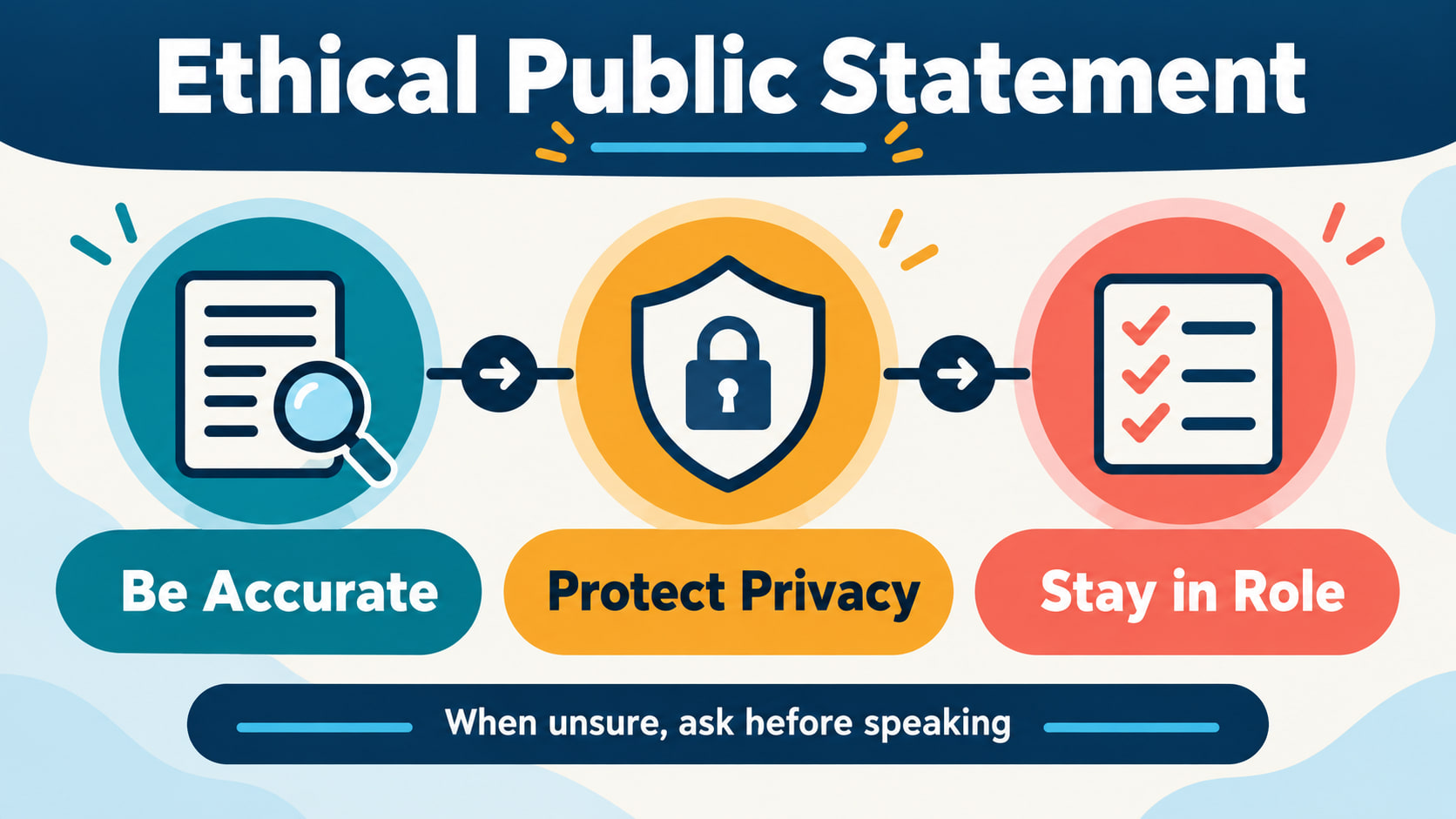
Check purpose, audience, evidence, privacy, authorization, and role boundaries. Ask before speaking when any part is unclear.
Source note: Review current BACB materials, organizational policy, applicable requirements, and supervisor direction for your setting. This article is educational and does not provide individualized legal, clinical, employment, or credentialing advice.
Ready to practice the RBT concepts you just reviewed?
Try an independent, original RBT practice resource with exam-style questions, scoring, and answer explanations.
References
- Behavior Analyst Certification Board. RBT Test Content Outline, 3rd edition.
- Behavior Analyst Certification Board. RBT Handbook.
- Behavior Analyst Certification Board. RBT Ethics Code.