
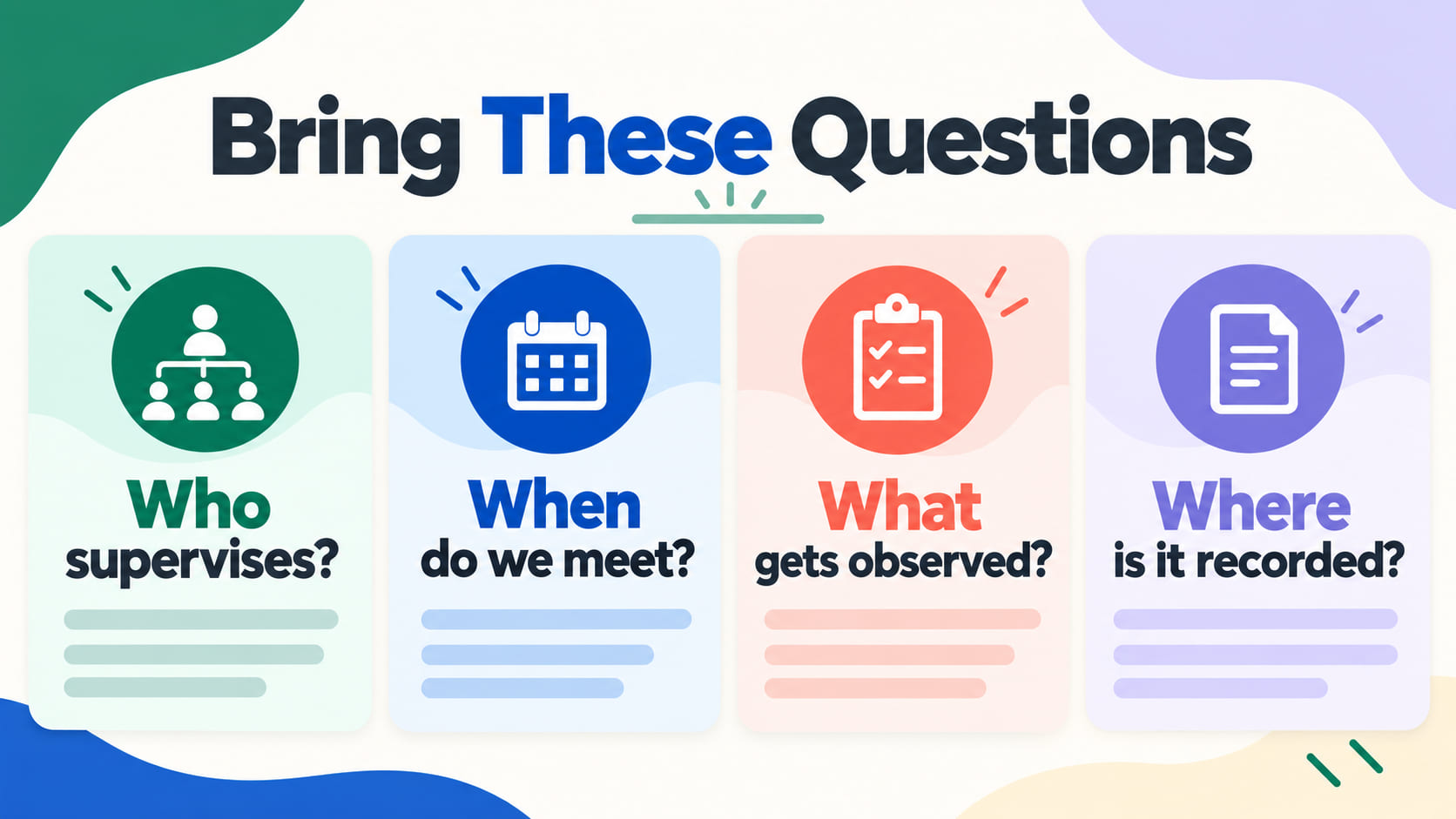
RBT supervision requirements should be verified from the current BACB RBT Handbook, supervision resources, Ethics Code, and the employer’s service structure. A BCBA may be the supervising professional, but the useful question is how the organization provides qualified direction, observation, feedback, documentation, and support for the RBT’s assigned role.
Table of Contents
- RBT supervision requirements: the short answer
- Who does what in an RBT supervision arrangement
- What useful supervision should include
- Questions to ask before accepting the role
- Records, feedback, and follow-through
- What to do when supervision has gaps
- Common supervision mistakes
- Frequently asked questions
RBT supervision, BCBA roles, observation, feedback, records, and current-source checks
BCBA Supervision Requirements for RBT: Roles, Meetings, and Records
A current-source-first guide to clarifying who supervises, what supervision should accomplish, and what to ask.
BCBA supervision requirements for RBT work should be verified from the current BACB RBT Handbook, supervision resources, Ethics Code, and the employer’s service structure. A BCBA may be the supervising professional, but the useful question is how the organization provides qualified direction, observation, feedback, documentation, and support for the RBT’s assigned role.
Requirements can change, and a course page or old checklist may combine past and current rules. Use the current official sources for exact requirements, then ask the employer or supervisor how those requirements are implemented in the actual setting.
RBT supervision requirements: the short answer
A sound arrangement should make five things clear:
- Who is responsible? Identify the qualified supervisor, the organization contact, and how questions are escalated.
- What work is assigned? The RBT should know which services, procedures, data, communication channels, and limits apply.
- How is supervision delivered? Clarify observation, feedback, meetings, competency support, and access between sessions.
- Where is it recorded? Know which approved system stores supervision notes, observations, training, and follow-up.
- What happens when there is a gap? There should be a route for missed meetings, unclear plans, safety concerns, or unavailable supervision.
Do not reduce supervision to a signature. A signed form may be one record, but supervision should provide usable direction and feedback for the work the RBT is actually performing.
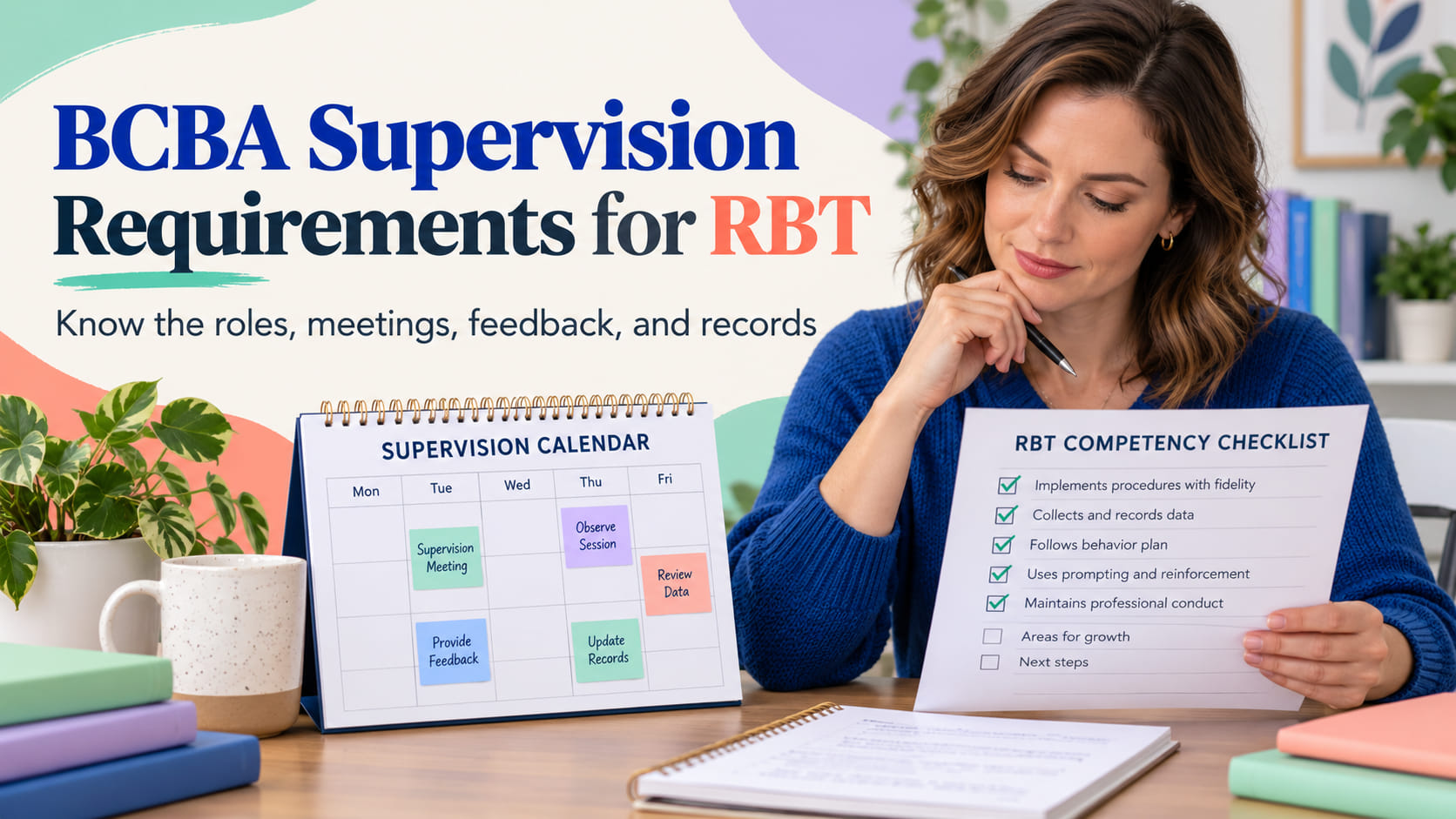
Who does what in an RBT supervision arrangement
The RBT implements assigned procedures, collects defined data, protects privacy, communicates observations, asks questions, and follows the limits of the role. The RBT should not independently diagnose, design treatment, change a plan, or work outside required supervision.
The supervising professional provides direction, observes or reviews implementation as required, gives feedback, supports competence, and addresses questions or concerns within the professional and organizational structure. The exact responsibilities should be checked against current BACB materials and the setting.
The employer or service organization should make the arrangement workable. That includes identifying contacts, scheduling required support, maintaining approved records, communicating policies, and providing an escalation route when a supervisor is unavailable or the work changes.
A person’s job title does not answer every question. Ask who is authorized to supervise the RBT, who provides day-to-day direction, who reviews data, and who responds to urgent concerns. If those answers conflict, ask for clarification before relying on an informal assumption.
What useful supervision should include
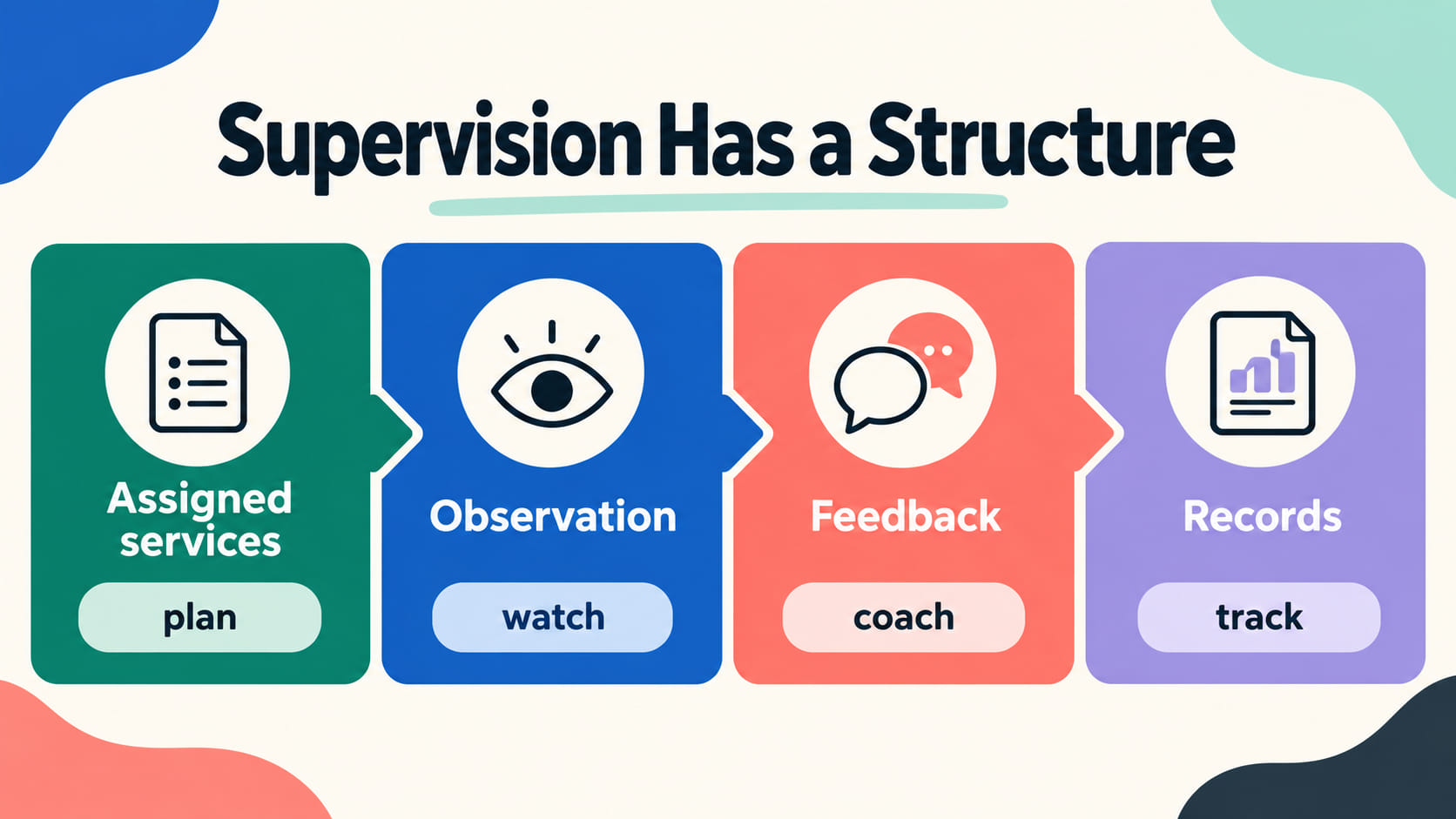
Assigned-service clarity: The RBT should know which clients, settings, programs, materials, and communication processes apply. Changes should be communicated through approved channels rather than passed along as hallway instructions.
Observation: Supervision should provide a way to observe the RBT’s work or review the relevant implementation. Observation can reveal whether instructions are clear, data are being collected consistently, prompts and reinforcement match the plan, and the learner’s dignity and safety are protected.
Feedback: Feedback should be specific enough to guide the next session. “Do better with prompting” is less useful than identifying the target procedure, what was observed, what to change, and how the RBT can practice it.
Training and competency support: When a task is new or complex, the RBT needs instruction, modeling, rehearsal, feedback, and a way to show the required skill under the applicable process. A short verbal reminder may not be enough for every task.
Data and records: Supervision should connect observations to the records the organization requires. Documentation should be accurate, timely, privacy-protective, and stored in the approved system.
Questions to ask before accepting the role
- Who is the responsible supervisor, and who is the backup contact?
- How will observation, feedback, and meetings be scheduled?
- What should I do if a session changes, a plan is unclear, or the supervisor is unavailable?
- Which tasks are within my assigned RBT role, and which decisions must be escalated?
- What data and supervision records am I expected to complete?
- Where are the current BACB materials and employer policies kept?
- How are concerns about safety, privacy, competence, or missed supervision handled?
Records, feedback, and follow-through
A supervision record should not be a memory exercise months later. Follow the organization’s process for recording the date, type of contact, topic, observation or training, feedback, action item, and follow-up when required. Never copy private client information into an unapproved personal file.
After feedback, confirm the next step in plain language: “For the next session, I will use the written prompt sequence, record the prompt level, and ask you to review the data at our next check-in.” If the instruction is unclear, ask before implementing it.
Feedback should travel both ways. The RBT can report that materials were unavailable, a learner responded differently, a safety issue occurred, or the written procedure did not match the setting. Reporting a problem is not the same as independently changing the plan.
What to do when supervision has gaps
If a planned meeting is missed, a supervisor cannot be reached, or the RBT is asked to work outside the known arrangement, use the approved escalation route. Keep the report factual: what was scheduled, what happened, which work is affected, and what immediate support is needed.
Do not solve a supervision gap by borrowing a coworker’s informal advice, signing a record for someone else, or continuing a procedure you do not understand. Ask the organization what to do with the assigned work while the responsible person reviews the situation.
Common supervision mistakes
- Using an old checklist: current official sources control changing requirements.
- Confusing a credential with an arrangement: a title does not explain access, observation, backup, or records.
- Treating a signature as supervision: records should reflect real direction and follow-through.
- Waiting until there is a crisis: ask about contacts, scheduling, and escalation before starting.
- Accepting unclear instructions: confirm the procedure and role boundary before implementing it.
- Sharing private records casually: use the organization’s approved system and minimum necessary information.
Frequently asked questions
Does a BCBA automatically meet every RBT supervision requirement?
Do not assume that a credential alone answers every requirement. Verify the current BACB rules and confirm how the organization assigns, schedules, documents, and supports supervision.
What should supervision feel like for an RBT?
It should provide usable direction, observation or review, feedback, competence support, and a safe route for questions. The exact structure depends on current requirements and the service setting.
What if I am working but cannot reach my supervisor?
Use the employer’s approved escalation route, report the gap factually, and ask what work may continue. Do not invent a private supervision arrangement or change a treatment procedure on your own.
Where can I verify current requirements?
Start with the current BACB RBT Handbook, supervision and training resources, RBT page, Ethics Code, and your employer’s policy. Check the date and version instead of relying on an old summary.
Role reminder: This is educational information, not credentialing, employment, legal, or clinical advice. Verify current BACB materials and ask the responsible supervisor or employer about your specific arrangement.
Official starting points: the BACB RBT Handbook, supervision and training resources, RBT Ethics Code, and RBT page.
Ready to practice the RBT concepts you just reviewed?
Try an independent, original RBT practice resource with exam-style questions, scoring, and answer explanations.
References
- Behavior Analyst Certification Board. RBT Test Content Outline, 3rd edition.
- Behavior Analyst Certification Board. RBT Handbook.
- Behavior Analyst Certification Board. RBT Ethics Code.