
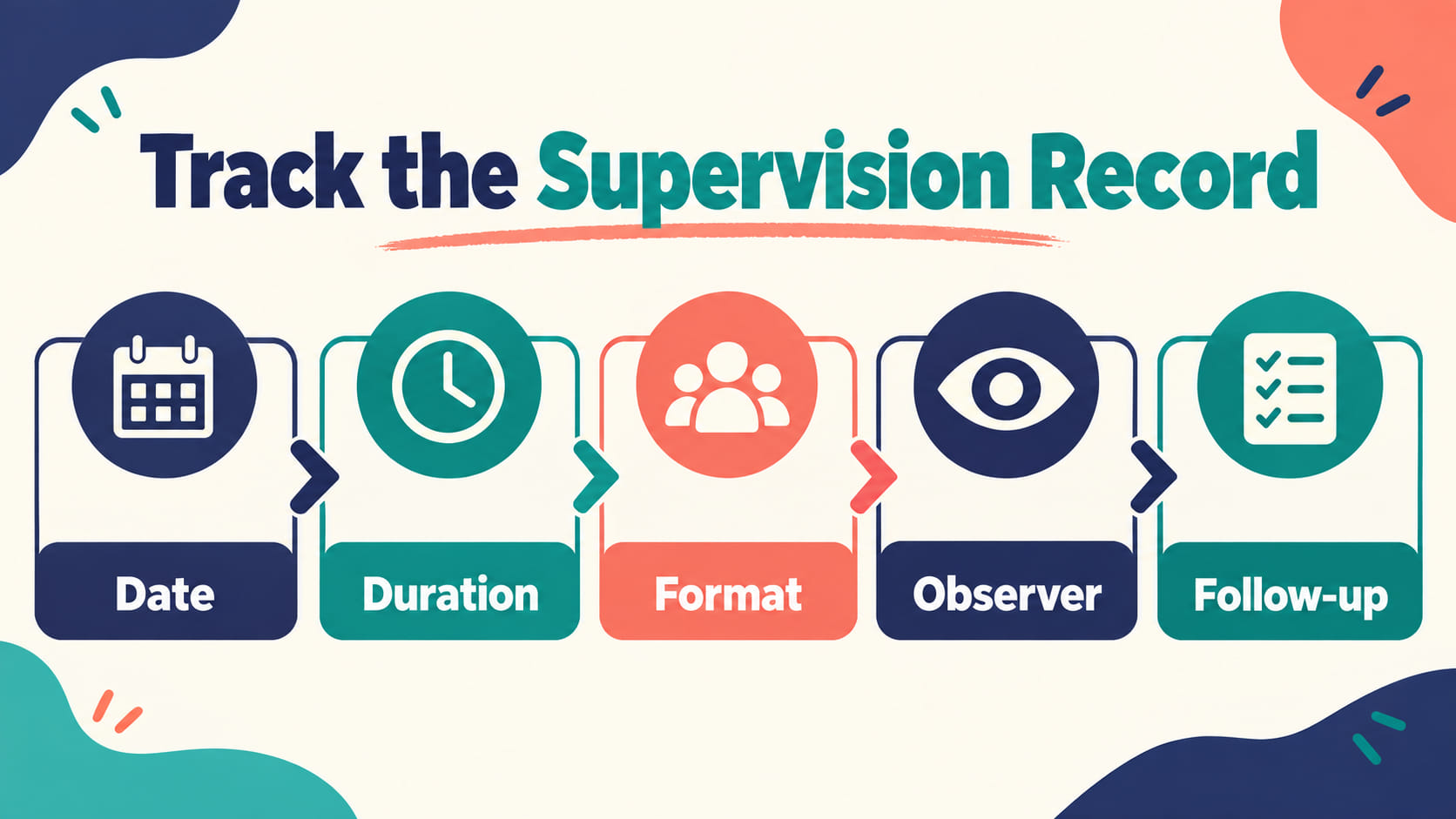
RBT supervision requirements explained in practical terms means knowing what the supervision record must show, who is responsible for it, and how to respond when a record is incomplete. Track the dates and duration of services and supervision, the format, the observer or supervisor, required relationship information, discrepancies, and follow-up through the approved process.
Table of Contents
- RBT supervision requirements explained: the short answer
- What the supervision record should show
- Who is responsible for each part
- How to handle discrepancies
- Prepare for review without manufacturing a record
- Supervision record checklist
- Frequently asked questions
RBT supervision records, responsibilities, discrepancies, and follow-up
RBT Supervision Requirements Explained: What to Track
Organize the dates, durations, formats, observations, records, and follow-up that make supervision reviewable.
RBT supervision requirements explained in practical terms means knowing what the supervision record must show, who is responsible for it, and how to respond when a record is incomplete. The current RBT Handbook and organization process describe the specific requirements. A useful record connects service dates and times, supervision dates and duration, format, direct observation, supervisor identity, relationship information, discrepancies, and follow-up.
Requirements and transition instructions can change, so use this article as an organizing guide and confirm the current official materials before submitting a form or relying on a deadline. This is not an official BACB checklist, audit determination, legal advice, or promise of compliance.
RBT supervision requirements explained: the short answer
Keep the supervision record in the approved system and make sure it can answer:
- When did the RBT provide behavior-analytic services?
- When did supervision occur, for how long, and in what format?
- When was direct observation of the RBT working with a client completed?
- Who provided supervision and what relationship documentation is required?
- What happened when session notes, service logs, or supervision records disagreed?
- What follow-up, correction, or retention step was completed?
Do not treat a calendar invitation or a short message as the whole record if the current process requires more fields. Use the form, portal, and retention process that the organization and current BACB materials specify.
What the supervision record should show
The service record identifies the days and times the RBT provided behavior-analytic services. It should be consistent with the approved session notes, schedules, and other records that the organization uses. Do not create service times from memory after a discrepancy appears.
The supervision record identifies the dates and duration of supervision and the format, such as one-on-one or group when the form asks for it. It also captures direct observation dates and the people who provided supervision. Use the exact names and roles required by the system rather than a nickname or a generic “supervisor” label.
Some situations require additional documentation, including a noncertified supervisor form or proof of a supervisor’s relationship to the client. The current Handbook and organization process control when these records are necessary. If your situation does not fit the standard fields, ask before improvising.
Who is responsible for each part
An RBT should record services, supervision participation, direct observations, and required communication accurately and promptly. The RBT should review the fields, report a mismatch, and keep copies or access only as the approved process allows.
The supervisor or RBT Requirements Coordinator has responsibilities for the relationship, supervision, observation, direction, and required records. The organization may add workflows for scheduling, signatures, portal updates, retention, and audits. Do not assume that responsibility for one field means another person can silently rewrite the record.
When a record needs a correction, follow the system’s amendment or edit history. A supervisor can provide direction, but an RBT should not ask someone to backdate or conceal a service. An accurate correction with a preserved history is more defensible than a perfect-looking record with no explanation.
How to handle discrepancies
Discrepancies can appear when a session note lists a different time than a service log, when supervision duration is missing, when a direct observation date was not recorded, or when the supervisor relationship is not reflected in the expected place. Treat the difference as a question to resolve, not as a reason to choose the number that looks best.
Start with the source documents and approved system. Identify the date, field, and conflicting entries. Ask the responsible supervisor or coordinator which process applies. Record the correction or explanation in the place required by policy, and keep the relevant supporting documentation according to the retention rule.
Do not “clean up” a discrepancy by deleting the session note, moving a supervision date, or changing a signed entry without an audit trail. Do not ask an RBT to sign a statement they cannot support. If the issue may involve a compliance, safety, or ethics concern, use the organization’s escalation route.
Prepare for review without manufacturing a record
A review-ready record is organized, consistent, and traceable. It does not need to pretend that no barrier ever occurred. Keep the required records in the approved location, use consistent names and dates, save required forms, and document legitimate corrections. Review the current Handbook’s retention rule rather than relying on a remembered number.
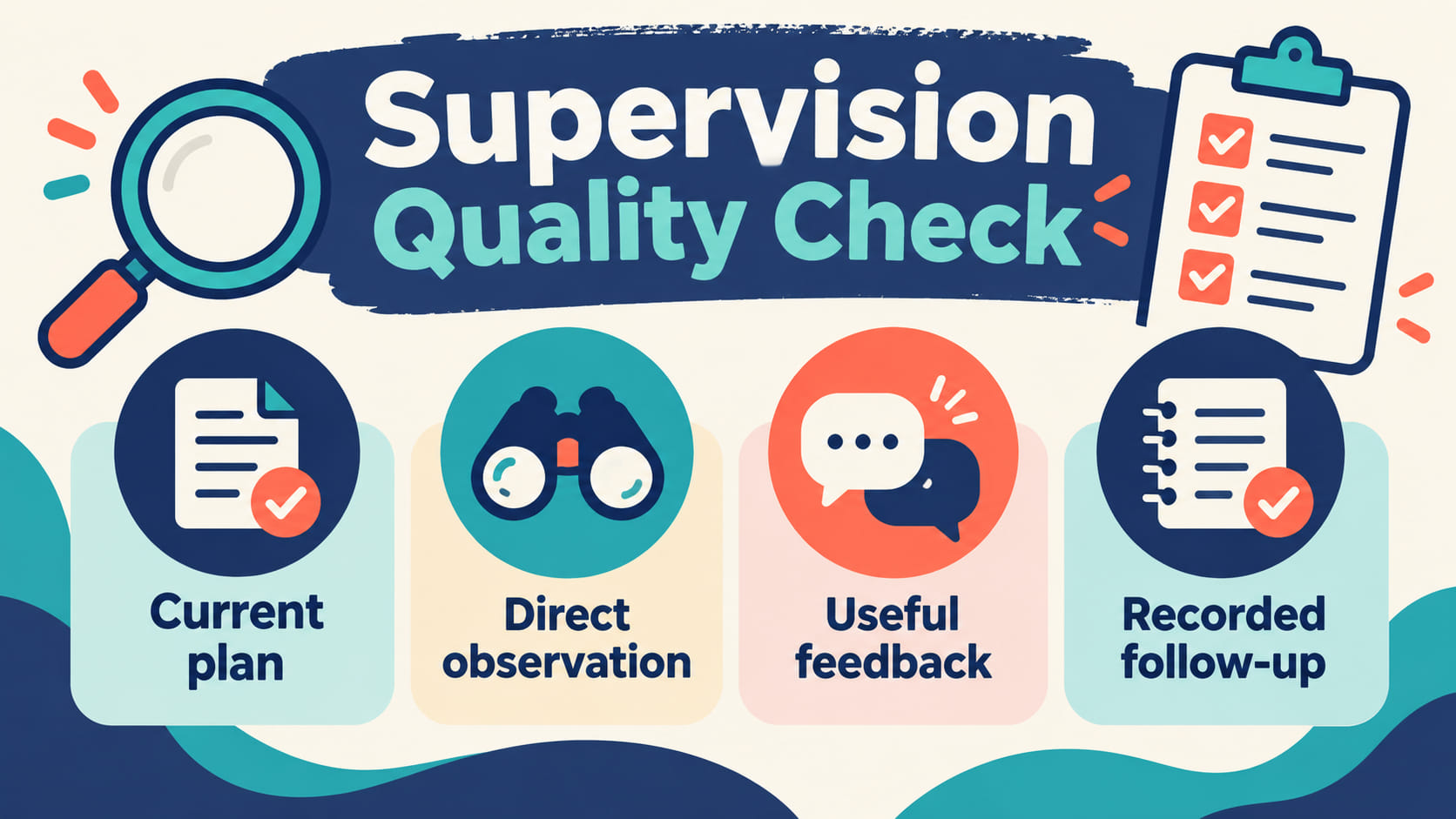
Use a simple monthly or session-level review if the organization provides one: check that required fields are present, dates align, observation information is captured, signatures or approvals are complete, and open questions have an owner. Do not turn a personal spreadsheet into an unauthorized client-record system.
If you discover a missing record, report it promptly. A delayed honest report gives the supervisor a chance to determine the permitted correction. A reconstructed record written to appear contemporaneous can create a larger problem.
Supervision record checklist
- The current Handbook, transition material, and organization instructions were checked.
- Service dates and times match the approved service records.
- Supervision dates, duration, and format are recorded where required.
- Direct observation dates and supervisor names are complete.
- Relationship, noncertified supervisor, or other supporting forms are included when applicable.
- Discrepancies are documented and corrected through an auditable process.
- No record has been backdated, silently overwritten, or deleted to hide a gap.
- Retention, access, privacy, and submission steps follow the approved system.
- Open questions and required follow-up have been communicated to the responsible person.
Frequently asked questions
What records are part of RBT supervision?
The current Handbook and organization process may require service dates and times, supervision dates and duration, format, direct observation dates, supervisor names, relationship information, additional forms, discrepancy documentation, and retention. Confirm the current applicable list.
Who keeps the supervision documentation?
The RBT, supervisor, coordinator, and organization may each have responsibilities. Use the approved system and current process rather than assuming one person’s personal file is sufficient.
What if a session note and supervision log disagree?
Do not pick the more favorable entry or delete either record. Preserve the facts, notify the responsible supervisor or coordinator, and follow the approved discrepancy and correction process.
Does a checklist guarantee that supervision requirements are met?
No. A checklist supports organization, but the current BACB requirements, supervisor qualifications, written records, and facts of the situation determine compliance.
Role reminder: This article is educational content, not an official BACB checklist, audit determination, legal advice, or individualized compliance direction. Follow the current Handbook, official resources, supervisor, employer, and applicable requirements.
Official starting points: the RBT Handbook, BACB supervision and training resources, and the RBT Ethics Code (2.0).
Ready to practice the RBT concepts you just reviewed?
Try an independent, original RBT practice resource with exam-style questions, scoring, and answer explanations.
References
- Behavior Analyst Certification Board. RBT Test Content Outline, 3rd edition.
- Behavior Analyst Certification Board. RBT Handbook.
- Behavior Analyst Certification Board. RBT Ethics Code.