
An RBT supervision tracker helps you look ahead instead of discovering a missing contact, observation, or record at the end of the month.
Table of Contents
- RBT supervision tracker: quick answer
- RBT supervision tracker versus supervision log
- What an RBT supervision tracker should monitor
- Start-of-month planning
- Run a weekly tracker check
- Check for supervision gaps before the month closes
- Review the tracker with the supervisor
- Track multiple organizations or supervisors carefully
- Protect privacy and clarify record ownership
- What to do when the tracker shows a gap
- Common RBT supervision tracker mistakes
- Frequently asked questions
RBT supervision planning and compliance readiness
RBT Supervision Tracker: Plan and Check Each Month
An RBT supervision tracker helps you look ahead instead of discovering a missing contact, observation, or record at the end of the month. Use it to plan the month, monitor service activity, confirm that supervision is occurring through the approved structure, and raise a gap with the supervisor early.
RBT supervision tracker: quick answer
Set up a monthly view with service-hour activity, planned supervision contacts, the required observation check, supervisor or Requirements Coordinator status, and a place to confirm that the approved record was saved. Update it weekly, compare it with the official record, and ask for direction as soon as a box is empty or unclear.
The tracker should answer “What still needs attention this month?” It should not be used to backfill a meeting that did not occur, convert a casual message into supervision, or replace the supervisor’s decision about an ambiguous event.
RBT supervision tracker versus supervision log
A tracker and a log work together but serve different jobs:
- Tracker: A forward-looking checklist or calendar that helps you plan and notice missing steps.
- Supervision log: The factual record of events that actually occurred, including dates, duration, format, supervisor, observation, and supporting evidence.
- Session or service record: The approved documentation of service delivery, which may provide the service-hour information used during review.
Do not let a green check on a personal tracker stand in for an official form. Mark an item complete only after you can connect it to the approved record or supervisor confirmation. If the tracker and log disagree, preserve the original information and ask how the discrepancy should be corrected.
What an RBT supervision tracker should monitor
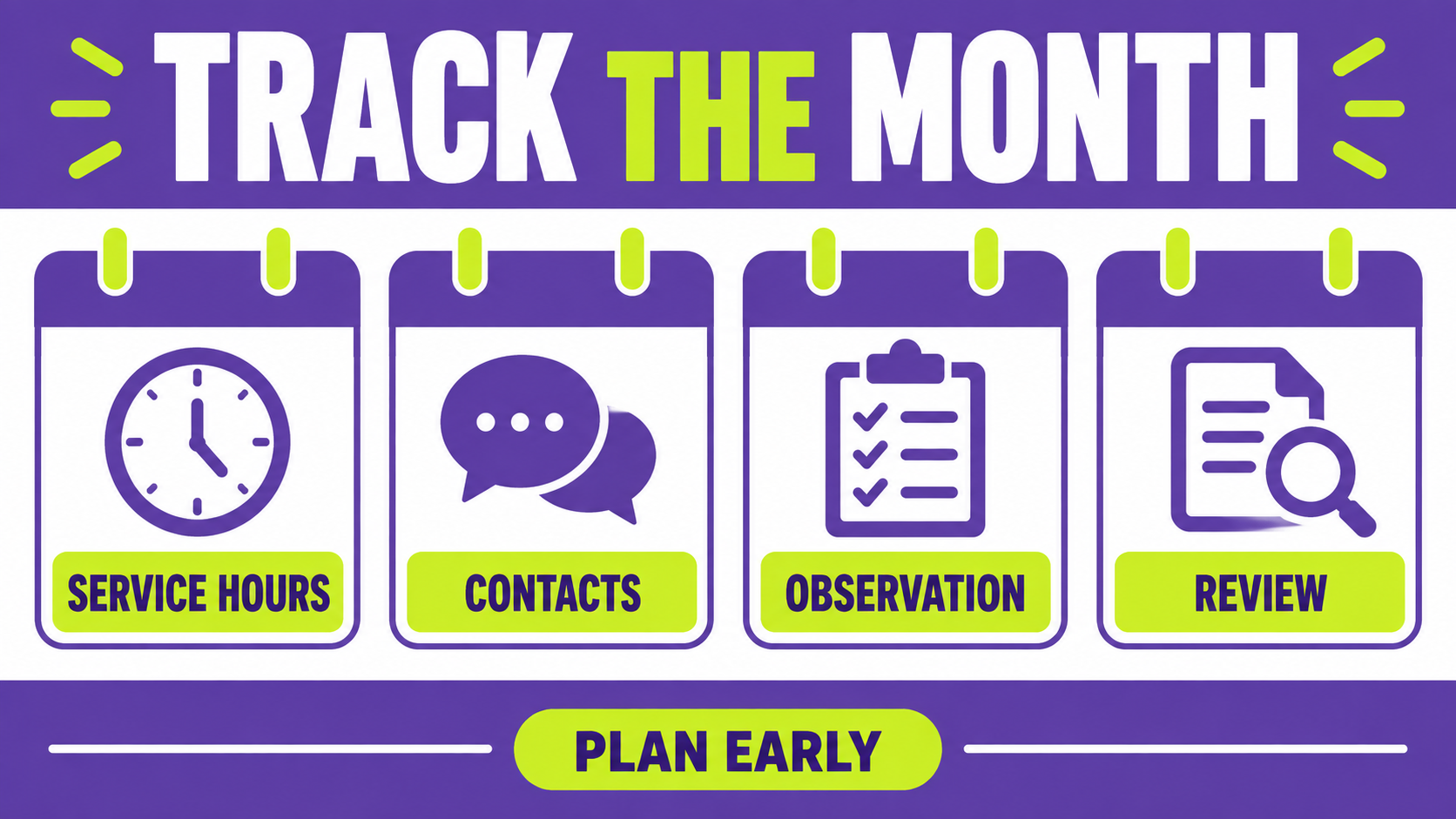
The exact template depends on your employer and supervision structure. As a planning aid, consider separate fields for:
- Calendar month: Identify the month and the organization or service relationship.
- Service activity: Monitor the source used to calculate hours of behavior-analytic services.
- Supervision contacts: Reserve space for the planned and completed dates, duration, and format.
- Observation check: Mark whether the required direct observation has occurred and where the evidence is stored.
- Supervisor status: Confirm the responsible supervisor or Requirements Coordinator and the approved contact route.
- Document status: Confirm that the official form or system entry was completed, reviewed, and securely saved.
- Open question: Keep a short list of items needing direction rather than hiding them in a note.
Keep the tracker minimal. It should not become a second clinical chart or contain unnecessary protected information.
Start-of-month planning
At the beginning of the month, confirm who is supervising you and how supervision will be provided. Review the organization’s expectations for scheduling, documentation, observation, and backup contacts. Put tentative supervision windows on the approved calendar, but label them as planned until they actually occur.
Ask practical questions early:
- Who is the supervisor or Requirements Coordinator on record?
- Which contact should be individual, and which formats are permitted?
- When can direct observation occur?
- What is the approved route for a schedule change or urgent concern?
- Which system owns the official documentation?
Planning is not a promise that every event will happen exactly as scheduled. It is a way to create enough time to reschedule appropriately when illness, client availability, staffing, or another variable changes the month.
Run a weekly tracker check
A five-minute weekly review is more useful than an end-of-month reconstruction. Compare the tracker with the approved service record and ask:
- Did the planned contact occur?
- Is the date and duration recorded in the approved system?
- Is the format classified correctly?
- Has direct observation occurred, or is it still only planned?
- Has the supervisor reviewed any unusual variable or data concern?
- Is the next contact still realistic given the remaining calendar?
Use neutral labels such as “planned,” “completed—awaiting record,” “recorded,” “needs clarification,” and “not applicable with supervisor confirmation.” Avoid marking an item complete because a meeting was scheduled or because someone said it would happen.
Check for supervision gaps before the month closes
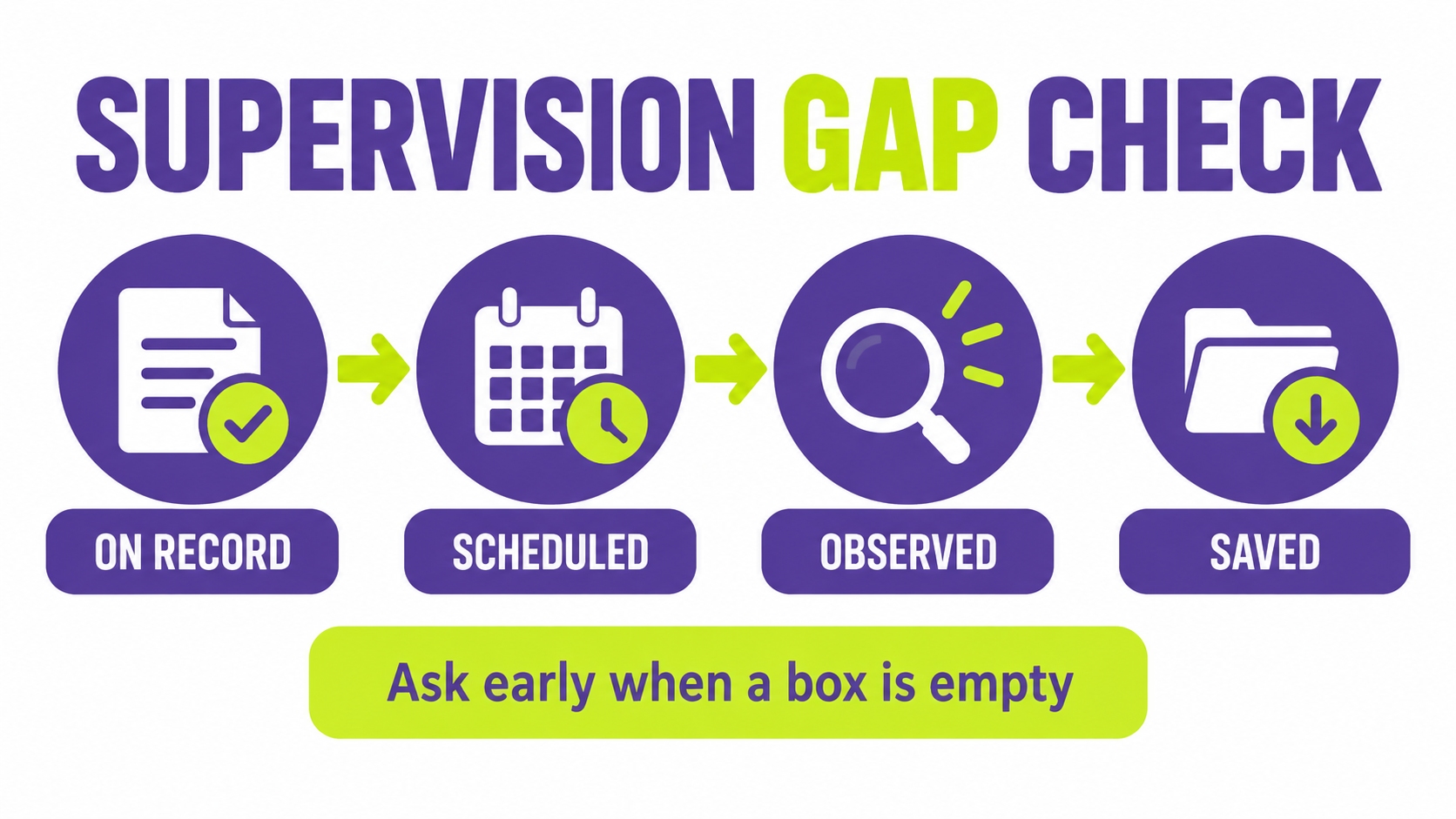
The current BACB Handbook describes ongoing supervision and supporting documentation requirements. A tracker can help you identify risk, but it cannot determine compliance by itself. If one of the following boxes is empty, ask promptly:
- No supervisor or Requirements Coordinator appears on record.
- The service-hour source is incomplete or differs from the supervision record.
- A planned contact was canceled and no approved replacement is scheduled.
- The format of a contact is unclear.
- Direct observation has not yet occurred or the evidence cannot be located.
- A supervisor provided direction but the documentation route is unknown.
- Two records show different dates, durations, or supervisors.
Do not solve the gap by changing a date, copying an old signature, or labeling an email as a meeting. The correct response is transparent escalation and a documented resolution.
Review the tracker with the supervisor
Bring the tracker to supervision as a question list, not as proof that every requirement has been satisfied. A useful message is: “The tracker shows 60 service hours in the approved record, one completed contact, one contact planned, and no observation entry yet. Can we confirm the next step and where the evidence should be saved?”
If your supervisor uses a different calculation or form, follow that direction and update your personal planning method. The supervisor may also identify a missing variable, training need, or documentation issue that the tracker cannot see.
When several supervisors share responsibility, ask who maintains the central record and who must receive the final monthly review. The BACB resources distinguish the roles of RBT Supervisors and RBT Requirements Coordinators; do not assume that a conversation with one person automatically updates the organization’s official record.
Track multiple organizations or supervisors carefully
If you provide services through more than one organization, do not combine all hours and contacts into one undifferentiated total. Create a separate view or clearly separated section for each service relationship, then ask how your supervisor wants the records linked.
A shared supervisor does not automatically mean the evidence can be copied from one organization to another. Keep the client relationship, service source, supervisor, and approved documentation path clear. If you change employers or supervisors, preserve the old record according to the approved retention process and confirm who owns future follow-up.
Protect privacy and clarify record ownership
Use the organization’s secure platform whenever possible. A personal tracker should contain only the minimum information needed for planning and should not become the only copy of supervision documentation. Avoid full names, diagnoses, addresses, medical details, or session narratives when a simple internal reference will do.
Do not store the tracker in a shared personal drive, personal email, or social-media chat without authorization. If a supervisor gives you a form or system, ask whether your planning copy should be deleted, exported, or transferred when employment ends. The current Handbook states that supervision documentation must be retained for at least seven years; the approved record owner and any longer workplace requirement still matter.
What to do when the tracker shows a gap
Contact the responsible supervisor or Requirements Coordinator early and describe the exact gap. Include the month, the record you checked, the event that is missing or unclear, and the direction you need. Ask whether a contact can be scheduled, whether the event was documented elsewhere, and what correction or reporting step is required.
If you are not receiving required supervision, do not quietly continue as though the tracker were complete. Follow the organization’s escalation route and current BACB reporting guidance. An RBT should not represent themself as actively practicing under supervision when the official status or supervisor relationship is not in place.
Common RBT supervision tracker mistakes
- Confusing planned with completed: Keep those statuses separate.
- Tracking meetings but not service activity: Monitor the source used for the monthly review.
- Using one combined tracker for multiple employers: Separate each relationship.
- Checking observation before it occurs: Link the check to actual evidence.
- Relying on a personal spreadsheet as the official record: Use the approved system.
- Waiting until the last day: Ask about an empty box while there is time to resolve it.
- Editing a discrepancy silently: Preserve the original and follow the correction process.
Frequently asked questions
What is an RBT supervision tracker?
It is a planning and review aid that helps an RBT monitor service activity, planned and completed supervision contacts, observation coverage, supervisor status, and documentation follow-up during the month.
Is an RBT supervision tracker the same as a log?
No. A tracker looks ahead and flags missing steps; a log documents events that actually occurred. Use the tracker to support the approved log, not to replace it.
Can I use a spreadsheet as an RBT supervision tracker?
You may use an approved spreadsheet or a private planning checklist if your organization allows it. Do not store unnecessary client information or treat a personal spreadsheet as the official record without authorization.
When should I update the tracker?
Update it when a contact is scheduled or completed, then run a brief weekly review against the approved service and supervision records. Mark planned items as planned until the event and record are confirmed.
What if the tracker shows that I am missing supervision?
Tell the responsible supervisor or Requirements Coordinator promptly, state the exact gap, and ask for the approved correction or escalation route. Never invent, backdate, or relabel an event.
How long should the official records be kept?
The current BACB Handbook states that supervision documentation must be retained for at least seven years. Confirm the current Handbook and any longer organization, payer, contract, or legal requirement.
Official sources: BACB Registered Behavior Technician Handbook; BACB RBT supervision resources; BACB Supervision Checklist for RBTs; BACB Supervision, Assessment, Training, and Oversight. Retrieved September 28, 2026. Verify current requirements before relying on a tracker or deadline.
Ready to practice the RBT concepts you just reviewed?
Try an independent, original RBT practice resource with exam-style questions, scoring, and answer explanations.
References
- Behavior Analyst Certification Board. RBT Test Content Outline, 3rd edition.
- Behavior Analyst Certification Board. RBT Handbook.
- Behavior Analyst Certification Board. RBT Ethics Code.