
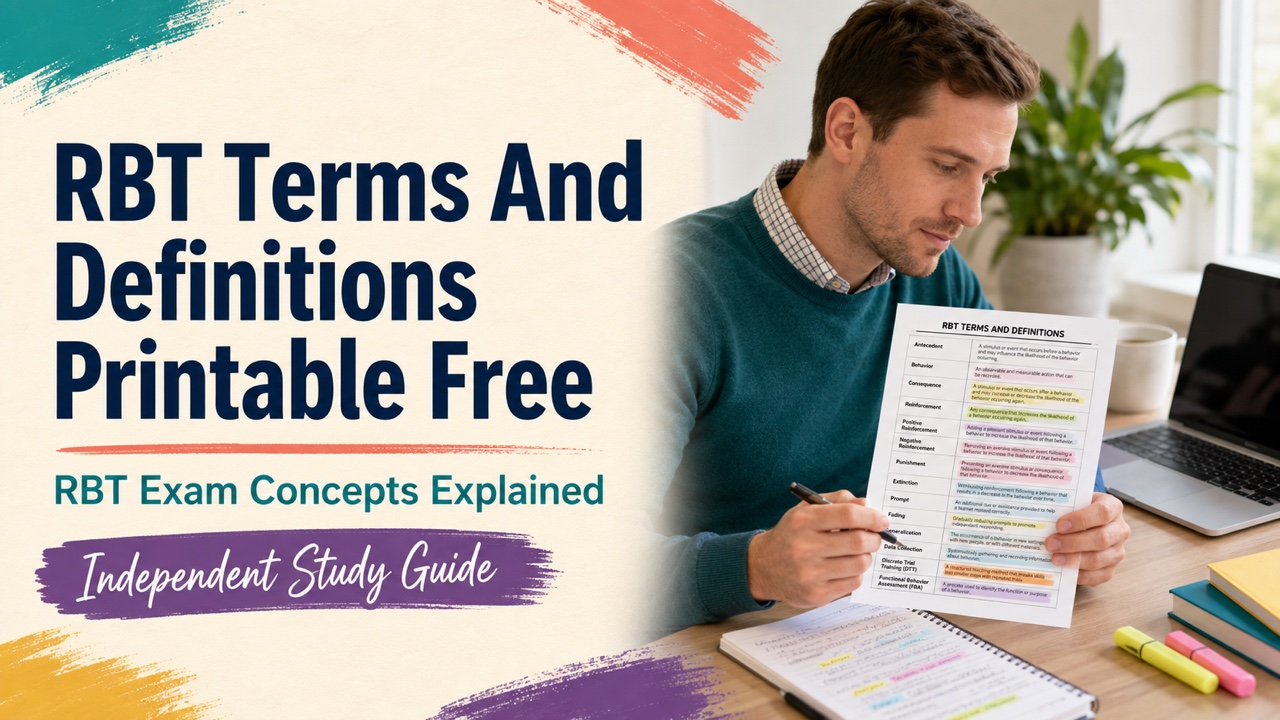
RBT terms and definitions printable free is a useful study-tool search, but a printable vocabulary sheet should support decisions rather than become a list of disconnected words. Use current BACB materials for task wording and build each term around an observable example, a data or teaching implication, and the RBT’s supervision boundary. This guide offers original explanations, not an official BACB glossary or exam answer key.
Table of Contents
- What makes a printable RBT vocabulary sheet useful
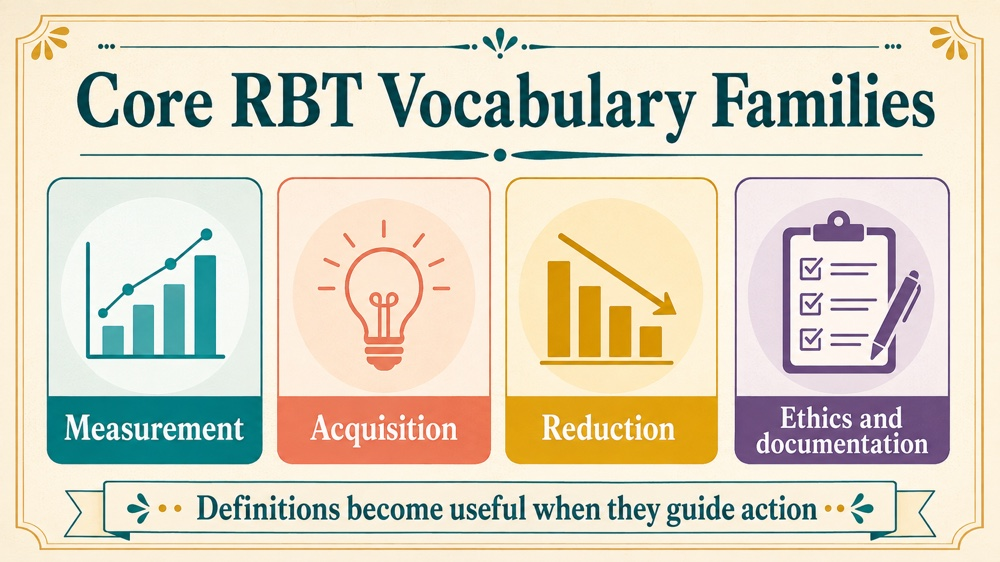
- Measurement terms to include
- Acquisition and prompting vocabulary
- Reduction, documentation, and ethics vocabulary
- A printable definition example
- RBT terms and definitions printable free: use active recall
- Current outline and source checking
- Mistakes to avoid on a free printable
- RBT terms and definitions printable free checklist
- Frequently Asked Questions
- References
Quick answer: Treat rbt terms and definitions printable free as a current-source RBT study topic. Define the concept, connect it to an observable action, use original examples, and keep the supervision boundary visible.
Study boundary: This independent guide is educational content. It is not a BACB policy, certification decision, legal opinion, answer key, or guarantee of examination success. Examples are original and are not official, recalled, leaked, or BACB-endorsed questions.
Current exam context: The current BACB RBT Test Content Outline describes 43 tasks across six domains; the examination includes 75 scored questions and 10 unscored pilot questions in a 90-minute testing period. Verify the current handbook and outline before relying on a time-sensitive detail.
What makes a printable RBT vocabulary sheet useful
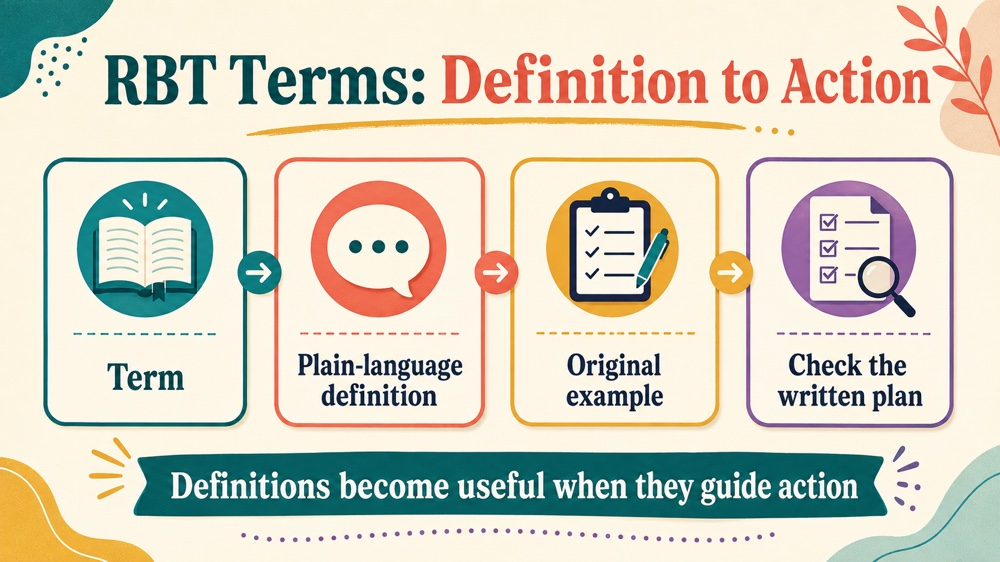
A useful sheet is short enough to scan and specific enough to guide an action. Put the term on the left, a plain-language definition in the middle, and an original RBT example or caution on the right. Add the official source and version date at the bottom. That layout helps a learner connect vocabulary to a session decision.
Avoid treating a definition as universal when the written program controls the operational rule. For example, reinforcement has a general meaning, but the schedule, item, response criterion, and delivery procedure are programmed for the learner. A printable sheet should prompt you to check the plan, not authorize an improvisation.
Measurement terms to include
Common measurement vocabulary includes frequency, rate, duration, latency, interval recording, permanent product, and percentage. The distinction is practical. Frequency counts occurrences; rate relates occurrences to time; duration measures how long; latency measures time from a cue to a response; interval systems score behavior across intervals; permanent product measures a lasting result.
On a printable sheet, pair each term with a miniature timeline or count example. Then write the data-quality warning: use the operational definition, start and stop rules, and specified recording system. An RBT should not swap measures because one is easier to record or because the result looks more favorable.
Acquisition and prompting vocabulary
Important teaching terms include reinforcement, prompting, prompt fading, shaping, chaining, discrimination, generalization, and maintenance. Define each by what the learner experiences and what the RBT does. A prompt is added assistance; reinforcement is a consequence arranged to affect future behavior. Generalization and maintenance are performance across relevant changes and over time, not automatic results of one successful session.
Add a ‘watch for’ line to every term. For prompting, watch whether the response is recorded as independent or prompted. For reinforcement, watch whether the programmed consequence follows the qualifying response. For generalization, watch whether the new person, material, setting, or instruction is programmed rather than assumed.
Reduction, documentation, and ethics vocabulary
A printable sheet can also include antecedent, consequence, function, differential reinforcement, extinction, crisis procedure, objective note, confidentiality, competence, supervision, and reporting. These terms should be studied with care. Knowing the word function does not authorize an RBT to independently announce a functional diagnosis. Knowing extinction does not authorize an untrained change to a plan.
Write the RBT action beside each term: implement as trained, collect the specified data, document facts, protect privacy, report concerns, and seek direction. The action line is what keeps a vocabulary page connected to professional behavior rather than turning it into an abstract glossary.
A printable definition example
Term: latency. Plain-language definition: the time between a specified instruction or event and the start of the target response. RBT example: use the timer and start-stop rules in the program, record the value, and report if the cue or timer is unclear. Boundary note: do not change the target response or timing rule independently.
This format is better than writing only ‘latency = time.’ It tells the learner what to look for, what to do, and where to stop. Use the same pattern for every term: definition, observable example, measurement or teaching implication, and role boundary.
RBT terms and definitions printable free: use active recall
Hide the definition column and explain each term aloud. Then cover the term and infer it from a short scenario. For a missed item, identify whether the problem was vocabulary, discrimination, measurement, or authority. Create a new example instead of copying the same sentence. The new example should change the setting, material, prompt, or consequence while preserving the concept.
Review in mixed order. A session may move from latency to reinforcement to confidentiality without labeling the domain. Interleaving helps you choose a rule from the facts rather than from the position of a word on the page.
Current outline and source checking
The current RBT Test Content Outline describes 43 tasks across six domains, and the examination includes 75 scored questions and 10 unscored pilot questions in a 90-minute period. Use the outline and handbook as the source for changing administrative details. A free printable sheet is independent study material and may need updating when official documents change.
Put the source URL and check date on the printable. If a term has multiple meanings in ordinary English and behavior analysis, state the context. If a standard is not clear, ask the responsible supervisor or consult the official source rather than adding an attractive but unverified rule.
Mistakes to avoid on a free printable
- Treating a third-party glossary as the current BACB source.
- Writing definitions without an observable example.
- Using a term as permission to change a learner’s plan.
- Confusing reinforcement, prompting, punishment, and a response itself.
- Leaving out privacy, documentation, supervision, or competence.
- Presenting a printable as official, endorsed, or predictive of exam questions.
- Failing to record a version date and update a sheet when sources change.
RBT terms and definitions printable free checklist
- Does each term include a plain-language definition and observable example?
- Can I connect measurement terms to start, stop, and scoring rules?
- Can I distinguish prompting from reinforcement and observation from interpretation?
- Do I know which actions an RBT implements and which require supervision?
- Are ethics, documentation, privacy, and competence included?
- Is the official source and check date recorded?
- Can I generate a new scenario instead of memorizing a protected or recalled question?
A printable sheet becomes a durable study tool when it points back to current sources and forward to an observable decision. Keep the page concise, revise it when requirements change, and use original examples that help you act accurately in a supervised RBT role.
Practice the concept
Review rbt terms and definitions printable free with original RBT scenarios, current-source reminders, and clear role boundaries.
Review the RBT study resource →
Frequently Asked Questions
Is this a BACB official printable glossary?
No. It is independent study content. Use the current BACB Handbook, RBT Test Content Outline, and ethics materials as the controlling sources.
What should a free RBT definition sheet include?
Include the term, a clear definition, an observable example, a data or teaching implication, a role boundary, and the source check date.
Can a printable sheet replace practice?
No. Vocabulary should be combined with original scenarios so you can apply the concept to changing conditions.
Are the examples official exam questions?
No. They are original explanations and are not official, recalled, leaked, or BACB-endorsed questions.
References
- Behavior Analyst Certification Board: Registered Behavior Technician Handbook, updated June 2026.
- Behavior Analyst Certification Board: RBT Test Content Outline (3rd ed.).
- Behavior Analyst Certification Board: RBT resources.
- Behavior Analyst Certification Board: ethics resources.
- Behavior Analyst Certification Board: RBT Ethics Code (2.0).