
When you report medication changes rbt work should stay within an RBT’s role: receive the information, record the source and observable facts, protect privacy, and notify the supervisor through the approved channel.
Table of Contents
- What this RBT task involves
- Report medication changes rbt: start with the facts
- Report medication changes rbt: what to document
- Separate a report from a direct observation
- When to report and escalate
- Protect privacy and use the right channel
- What an RBT should not do
- Common documentation mistakes
- Frequently asked questions
- References
RBT TASK GUIDE · OBJECTIVE REPORTING
Report Medication Changes RBT: How to Document and Escalate Safely
Record what was reported, separate it from what you observed, protect privacy, and seek supervisor direction without giving medical advice.
When you report medication changes rbt work should stay within an RBT’s role: receive the information, record the source and observable facts, protect privacy, and notify the supervisor through the approved channel. The BACB’s RBT task-list materials identify medication changes as an example of a variable that might affect client progress and should be reported or documented in a timely manner.
This is a documentation and communication guide, not medical advice. The exact record, deadline, chain of command, and emergency process come from the employer, client plan, supervising behavior analyst, and applicable procedures. If there is an immediate safety concern, follow the designated emergency procedure.
What this RBT task involves
A medication change may be mentioned by a caregiver, another team member, a nurse, a supervisor, or an approved communication system. The RBT’s responsibility is not to decide whether the change is clinically appropriate or whether it caused a particular behavior. The responsibility is to make sure relevant information reaches the right person and is represented accurately.
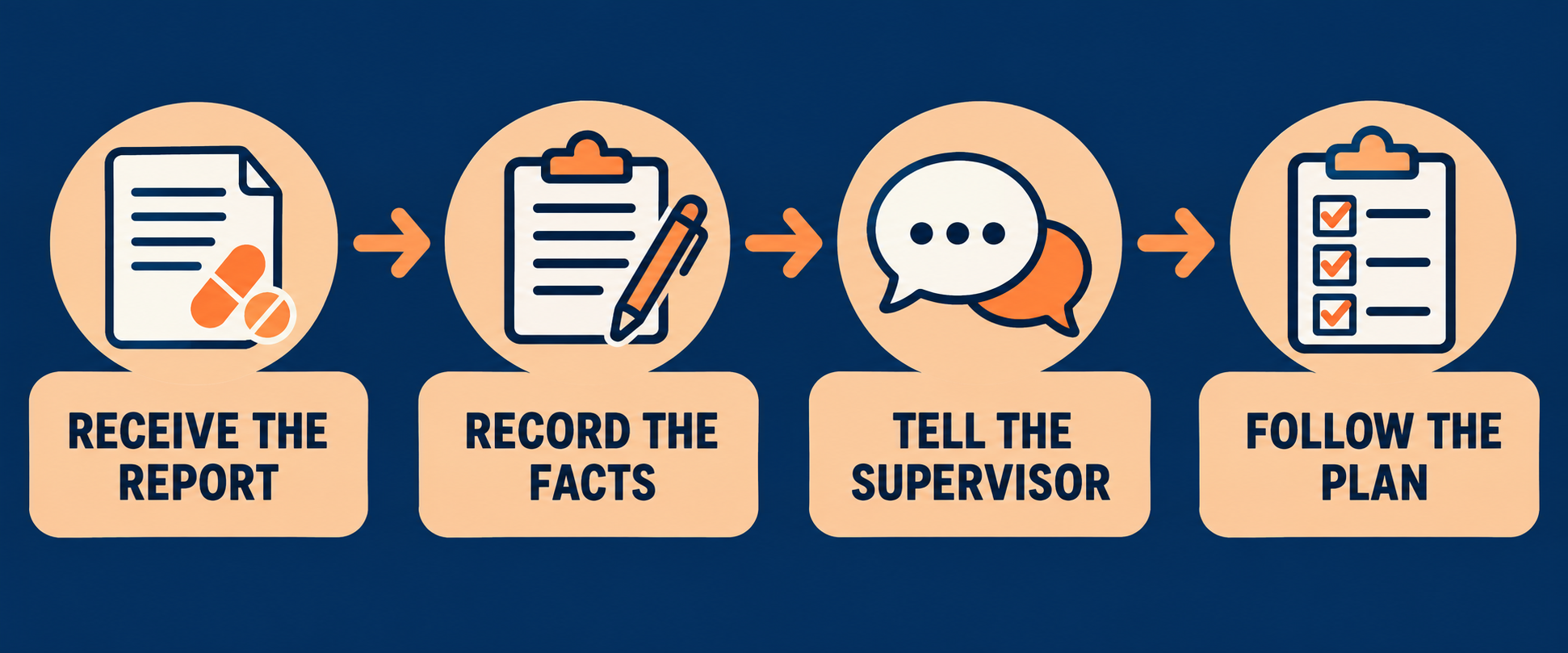
Think of the task as four connected actions:
- Receive: listen for the information and identify who provided it.
- Record: capture the date, time, wording, and observable context using the approved record.
- Report: notify the supervisor or designated team contact according to the chain of command.
- Follow: continue only under the current plan unless the supervisor or emergency procedure gives new direction.
That sequence helps preserve a crucial distinction: a medication change is a reported variable, while a behavior observed during a session is direct observation. Both can matter, but they are not the same kind of evidence.
Report medication changes rbt: start with the facts
Start by writing down what you actually know. If a caregiver says, “The medication changed yesterday,” do not convert that statement into “the medication caused today’s increase.” The first sentence identifies a report. The second is a medical and causal conclusion that an RBT should not make independently.
Use neutral wording that preserves the source. For example: “Caregiver reported a medication change at 8:10 a.m. before session. Specific medication details were not requested or recorded in this note. During the first 20 minutes, the client engaged in three instances of the behavior defined in the current plan.” This separates the report, the time, and the direct observation.
If the person provides more information, record only what the approved system and employer procedure call for. Do not solicit unnecessary medical details, photograph a prescription bottle, or copy private information into an unsecured text message simply because it seems useful.
Report medication changes rbt: what to document
A useful note lets a supervisor understand what was reported, when it was reported, what you observed, and what you did next. Use the employer’s template or approved electronic record. A general checklist may help you remember the categories, but it does not replace the required form.
Depending on policy and relevance, check these categories:
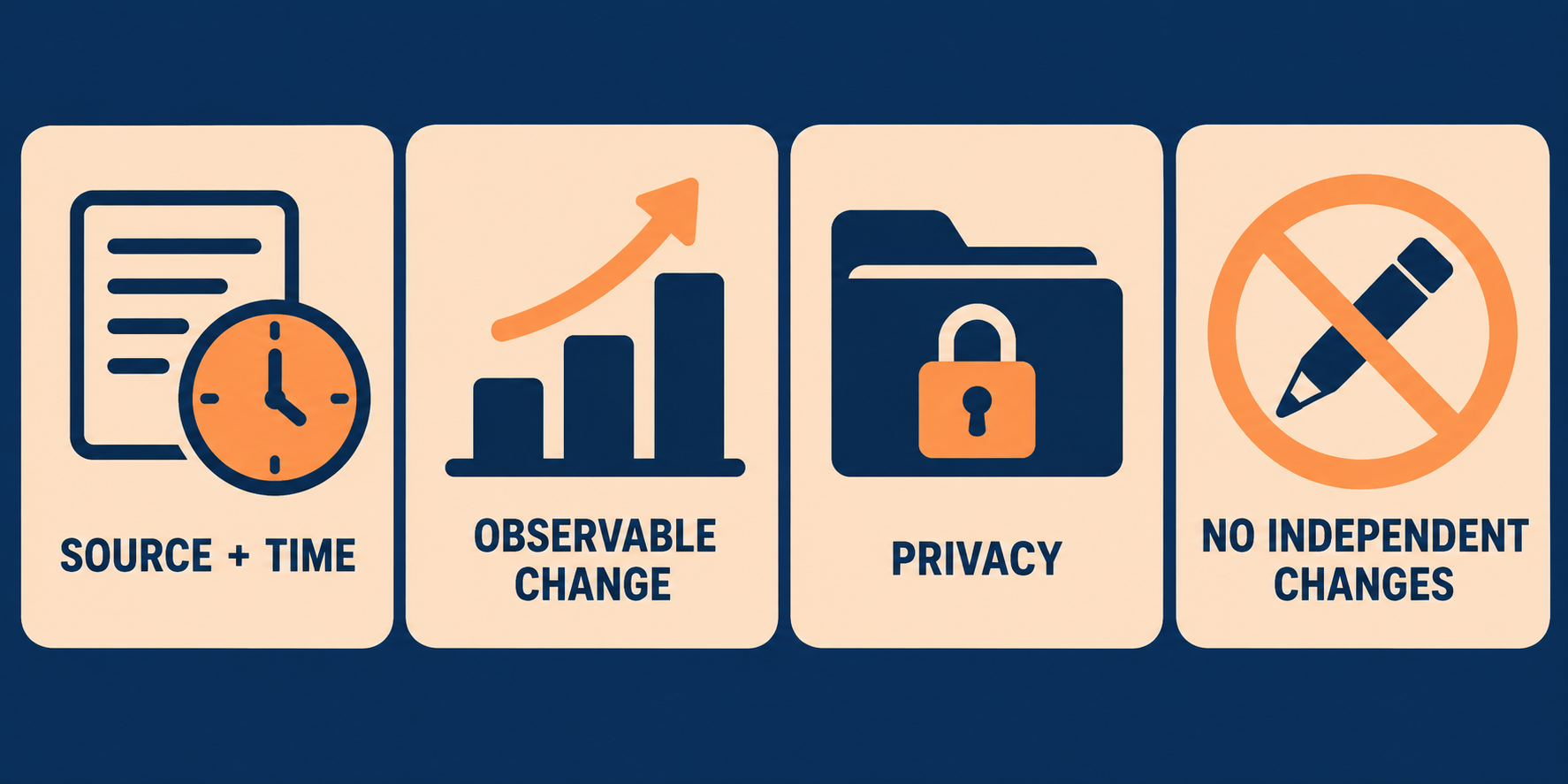
- Source: who reported the change and their relationship to the client or team.
- Time: when you received the information and, if known and appropriate to record, when the change occurred.
- Exact report: the person’s neutral description, using quotation marks only when your documentation policy allows it.
- Session context: the date, setting, schedule change, illness report, sleep concern, or other relevant variable that was actually provided.
- Direct observation: what you saw, heard, counted, timed, or recorded under the current plan.
- Action taken: who you notified, when, through which approved channel, and what direction you received.
Keep the note observable. “Client seemed drugged” is an interpretation. “Client kept eyes closed for approximately 30 seconds during the instruction and required two additional prompts” describes events that can be reviewed. If you are unsure whether an observation is relevant, record it according to policy and ask the supervisor rather than adding a causal explanation.
Separate a report from a direct observation
Use clear labels in your thinking and, when allowed, in the note. “Caregiver reported…” identifies secondhand information. “RBT observed…” identifies what happened in the session. “Supervisor directed…” identifies the source of a later instruction.
This separation prevents two common errors. First, it avoids presenting an unverified report as if the RBT personally confirmed it. Second, it avoids presenting a co-occurring behavior change as proof of medical causation. A medication change and a behavior change may both be relevant variables; the supervisor determines how they should be considered within the service plan.
Continue using the assigned definitions and measurement rules unless a supervisor gives a documented change. Do not start a new assessment, add a new target, or alter reinforcement because you suspect the medication is related.
When to report and escalate
Report the information promptly under the employer’s procedure rather than waiting until the end of the week. The BACB uses timely reporting language, but the exact deadline and channel can vary by organization and client plan. If the supervisor is unavailable, use the next approved contact in the chain of command.
Escalate as soon as possible when the report is accompanied by a significant observable change, a safety concern, a missed service condition, a request to alter treatment, or uncertainty about whether the current plan can be followed safely. For an immediate emergency, follow the designated emergency response first and notify the required supervisor or emergency contact as the procedure directs.
When you contact the supervisor, make the message easy to act on:
- identify the client and session without unnecessary private details;
- state who reported the medication change and when;
- list the relevant observable change and the measurement used;
- state whether there is an immediate safety concern;
- ask for direction instead of proposing a medication or treatment change.
Protect privacy and use the right channel
Medication information is sensitive health information. Follow the employer’s privacy, confidentiality, record-retention, and communication rules. Use the approved client record or secure channel, not a personal notes app, public group chat, or social media message. Share the minimum information needed with the people authorized to receive it.
Privacy does not mean hiding a relevant variable from the supervisor. It means reporting it through the correct protected process. If a caregiver sends the information through an unapproved channel, do not forward it broadly. Preserve the required record according to policy and notify the designated person about the secure next step.
What an RBT should not do
An RBT should not recommend a dose, tell a caregiver to stop or restart medication, identify a medication side effect, or advise someone to contact a particular medical provider unless the employer’s authorized procedure and qualified professional give that direction. The RBT also should not change the behavior plan, measurement system, reinforcement schedule, or session demand solely because a medication change was reported.
If a caregiver asks, “Should we change the medication?” a safe role-based response is: “I cannot give medical advice. I will document that you raised this concern and notify the appropriate supervisor through our procedure.” If the situation may be urgent, follow the emergency process instead of treating the question as a routine note.
Common documentation mistakes
Turning timing into causation: A change that happened before a session may be relevant, but timing alone does not prove a cause.
Recording too much medical detail: Include what policy requires and what is relevant to service delivery; do not collect private information out of curiosity.
Leaving out the source: A supervisor needs to know whether a statement came from direct observation, a caregiver, a team member, or an earlier record.
Waiting for certainty: The RBT does not need to solve the question before reporting a possible variable. Report the facts and ask for direction.
Changing services independently: Keep following the current plan until authorized direction or an emergency procedure requires another response.
Frequently asked questions
Does an RBT need to record the medication name and dosage?
Not automatically. Follow the employer’s approved documentation requirements and record only relevant, authorized information. If the form or supervisor requires specific details, use the secure process provided.
Should the RBT stop the session after hearing about a medication change?
Not automatically. Follow the current plan unless the supervisor, employer procedure, caregiver’s authorized clinical direction, or an emergency procedure says otherwise. Escalate promptly if there is a safety concern or the plan cannot be followed safely.
Can the RBT say the medication caused a behavior change?
No. Document the report and the observable behavior separately. A supervisor and qualified medical professionals determine how medical information should be interpreted.
What if the supervisor does not respond?
Use the next approved contact in the chain of command and follow the employer’s escalation or emergency procedure. Document the time, channel, and response status according to policy.
Good RBT reporting is timely, objective, private, and within scope. When you receive information about a medication change, preserve the facts, describe what you directly observed, notify the right supervisor, and wait for authorized direction before changing services.
Ready to practice the RBT concepts you just reviewed?
Try an independent, original RBT practice resource with exam-style questions, scoring, and answer explanations.
References
- Behavior Analyst Certification Board. RBT Test Content Outline, 3rd edition.
- Behavior Analyst Certification Board. RBT Handbook.
- Behavior Analyst Certification Board. RBT Ethics Code.