

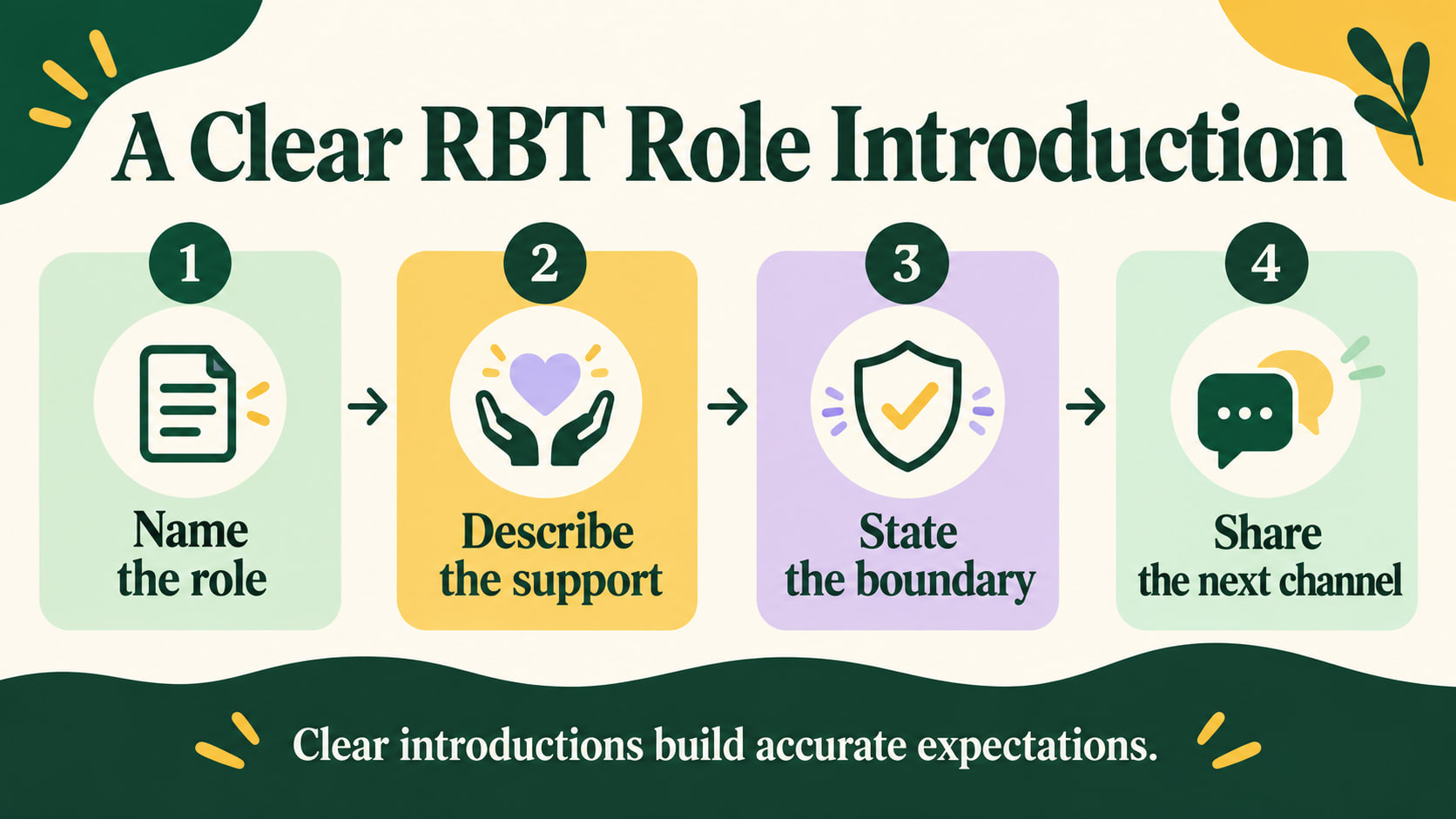
The phrase representing yourself as RBT points to the way an RBT explains their role, assigned support, professional boundaries, and next communication channel.
Table of Contents
- What does representing yourself as RBT mean?
- Name the role accurately
- Describe the support you provide
- State the boundary without sounding dismissive
- Share the next communication channel
- Common mistakes and practice checklist
- Frequently Asked Questions
- Sources and further reading
RBT role clarity and communication guide
Representing Yourself as RBT: Introduce Your Role Clearly
Explain your assigned support accurately, set expectations, protect privacy, and route questions to the right professional.
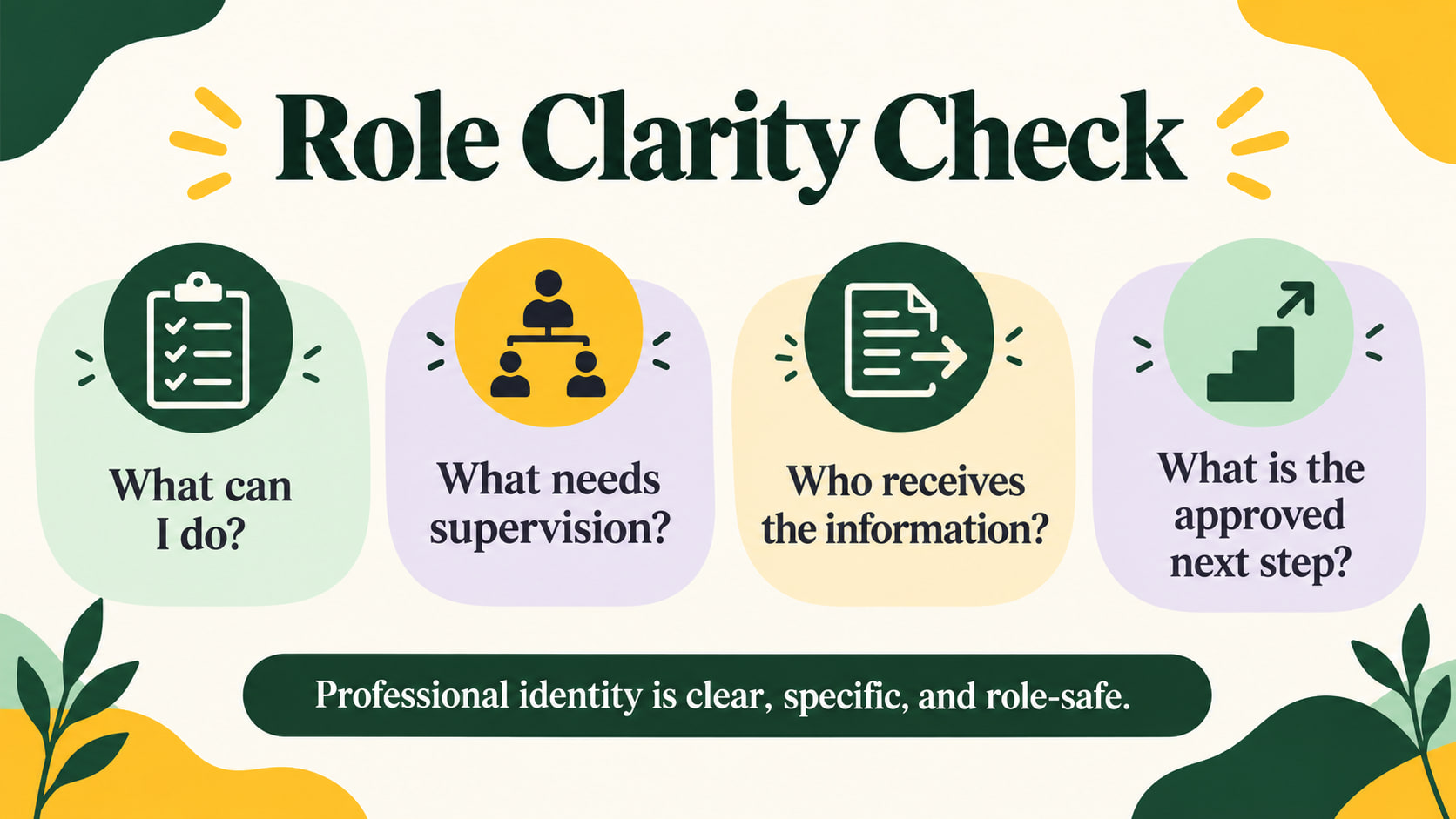
The phrase representing yourself as RBT points to the way an RBT explains their role, assigned support, professional boundaries, and next communication channel. A clear introduction helps families, learners, supervisors, and team members understand what the RBT can do, what needs supervision, and where a question should go.
Role clarity is not about sounding important or minimizing your contribution. It is about being accurate. An RBT can implement assigned procedures, collect or record data as directed, communicate observations, and seek input. The RBT should not present themselves as a BCBA, diagnostician, independent treatment designer, or supervisor.
What does representing yourself as RBT mean?
For an RBT, a useful role introduction contains four parts:
- Name the role: state that you are an RBT or behavior technician working within the organization’s assigned structure.
- Describe the support: explain the activities you are assigned to implement, observe, or document.
- State the boundary: identify which questions require the supervisor or another authorized professional.
- Share the next channel: tell the person how a concern or question will be routed.
A role introduction is not a promise about the learner, the program, or the future. It is a short map of responsibility and communication.
Name the role accurately
Use the title and credential language that the organization and current BACB materials support. Avoid shorthand that could make another person think you are the supervisor or the person who designed the treatment. If a person asks, “Are you the therapist?” you can answer plainly: “I am the RBT implementing the assigned behavior-analytic procedures under supervision. The supervising professional handles program decisions and clinical questions.”
Accuracy also includes knowing the context of the introduction. A first meeting may call for a one-sentence explanation. A caregiver conversation may need a little more detail about how observations are documented. A school or community setting may require a reminder about privacy and who is authorized to receive information.
Do not use a role introduction to imply a credential you do not hold. A confident tone is helpful, but confidence should come from accuracy rather than from making the role sound broader than it is.
Describe the support you provide
Describe actions that another person could observe. You might say that you implement the current procedure, record assigned data, communicate session observations, and bring questions to supervision. Avoid promises such as “I will fix this behavior” or “I know exactly why this is happening.”
When explaining support to a caregiver, connect your description to the current plan without reciting private details. For example: “My role is to follow the assigned teaching and behavior procedures, record the observations requested by the team, and share questions with the supervisor. If you have a concern about the plan, I can help route it through the approved channel.”
This language gives the person something useful without turning a role introduction into individualized clinical advice. It also leaves room for the supervisor to explain decisions that do not belong to the RBT.
State the boundary without sounding dismissive
A boundary works best when it includes a next step. Instead of saying only “That is not my job,” acknowledge the question and explain where it belongs:
- “I can share what I observed and document the question; the supervisor handles changes to the plan.”
- “I do not want to guess about a credentialing requirement. Let’s use the current official source or ask the requirements coordinator.”
- “I can continue the current procedure, but I need the supervisor to clarify the new request before I change anything.”
These responses protect the relationship and the role at the same time. You are not refusing to help; you are directing the question to the person or process with the right authority.
Share the next communication channel
Role clarity includes communication logistics. Tell the person whether the concern should go through the supervisor, an approved team message, a session note, an employer coordinator, or an official credentialing channel. Do not invite people to send client-identifying information to a personal account or a public group.
Before ending the conversation, repeat the next action: “I will pass this concern to the supervisor through the approved channel and continue the current procedure until I receive clarification.” If the question is urgent or involves immediate safety, privacy, suspected harm, or a medical concern, use the required escalation process without waiting for a routine meeting.
Good channel-setting also protects expectations. Do not promise that the supervisor will agree, that a plan will change, or that the question will lead to a specific outcome. Promise only the narrow follow-up you can actually complete.
Common mistakes and practice checklist
- Overstating authority. Do not describe yourself as the person who diagnoses, designs the plan, or makes unsupervised clinical decisions.
- Using vague promises. Replace “I will fix it” with a specific description of your assigned action and follow-up route.
- Sounding dismissive. Acknowledge the question, state the boundary, and offer the next approved channel.
- Sharing too much information. Use the minimum necessary details and protect client privacy.
- Leaving the next step unclear. Say who will review the question and what you will do while waiting.
Practice a short introduction and ask a supervisor or trainer whether it is accurate. Then test it in three situations: a first introduction, a caregiver question, and a request to change a procedure. The goal is not to memorize a script; it is to make the role, support, boundary, and channel easy to understand.
Frequently Asked Questions
How should an RBT introduce themselves?
State your accurate role, briefly describe the assigned support you provide, explain that you work within supervision, and tell the person where questions or concerns should be routed.
Can an RBT call themselves a therapist?
Use the title and credential language supported by your organization and current requirements. Do not use a title that implies authority, training, or a credential you do not hold.
What should an RBT say when asked for a diagnosis or treatment change?
Acknowledge the question, explain that the decision belongs to the responsible professional, and route it through the approved supervision or team channel. Do not guess or change the plan independently.
How can an RBT sound confident without overpromising?
Be specific about what you can do: implement the assigned procedure, record observations, share a concern, and confirm the follow-up. Confidence comes from accurate boundaries, not from promising a result.
Why does role representation matter?
Clear role language helps people know what information to share, who owns a decision, and what follow-up to expect. That can reduce confusion while protecting privacy and scope.
Sources and further reading
- BACB RBT Test Content Outline, 3rd edition
- BACB RBT resource page
- BACB RBT Handbook
- BACB Ethics Codes and RBT Ethics Code resources
Explore RBT communication training, supervision learning, and role-safe practice resources for your next introduction.
Ready to practice the RBT concepts you just reviewed?
Try an independent, original RBT practice resource with exam-style questions, scoring, and answer explanations.
References
- Behavior Analyst Certification Board. RBT Test Content Outline, 3rd edition.
- Behavior Analyst Certification Board. RBT Handbook.
- Behavior Analyst Certification Board. RBT Ethics Code.