

The phrase “skills abilities and personality traits of a good behavior therapist” is easiest to evaluate when it is translated into observable work behaviors rather than vague labels such as “nice” or “a people person.”
Table of Contents
- Skills abilities and personality traits of a good behavior therapist: quick answer
- What “behavior therapist” means in an RBT setting
- Skills abilities and personality traits of a good behavior therapist: technical skills
- Skills abilities and personality traits of a good behavior therapist: personality traits
- Skills abilities and personality traits of a good behavior therapist: communication
- Skills abilities and personality traits of a good behavior therapist: dignity
- Reliability and professional judgment
- How to evaluate a candidate
- Red flags and coaching opportunities
- A practical scorecard
- Frequently asked questions
Skills abilities and personality traits of a good behavior therapist: RBT hiring, practice, dignity, and teamwork
Skills, Abilities, and Personality Traits of a Good Behavior Therapist
The phrase “skills abilities and personality traits of a good behavior therapist” is easier to evaluate when it is translated into observable work behaviors rather than vague labels such as “nice” or “a people person.” In an RBT setting, a strong behavior therapist can implement an authorized plan, collect accurate data, protect client dignity, communicate clearly, accept supervision, and stay calm enough to make safe decisions. Warmth matters, but it must work together with technical accuracy, professional boundaries, reliability, and respect for the learner’s voice.
Skills abilities and personality traits of a good behavior therapist: quick answer
A good behavior therapist combines four groups of qualities:
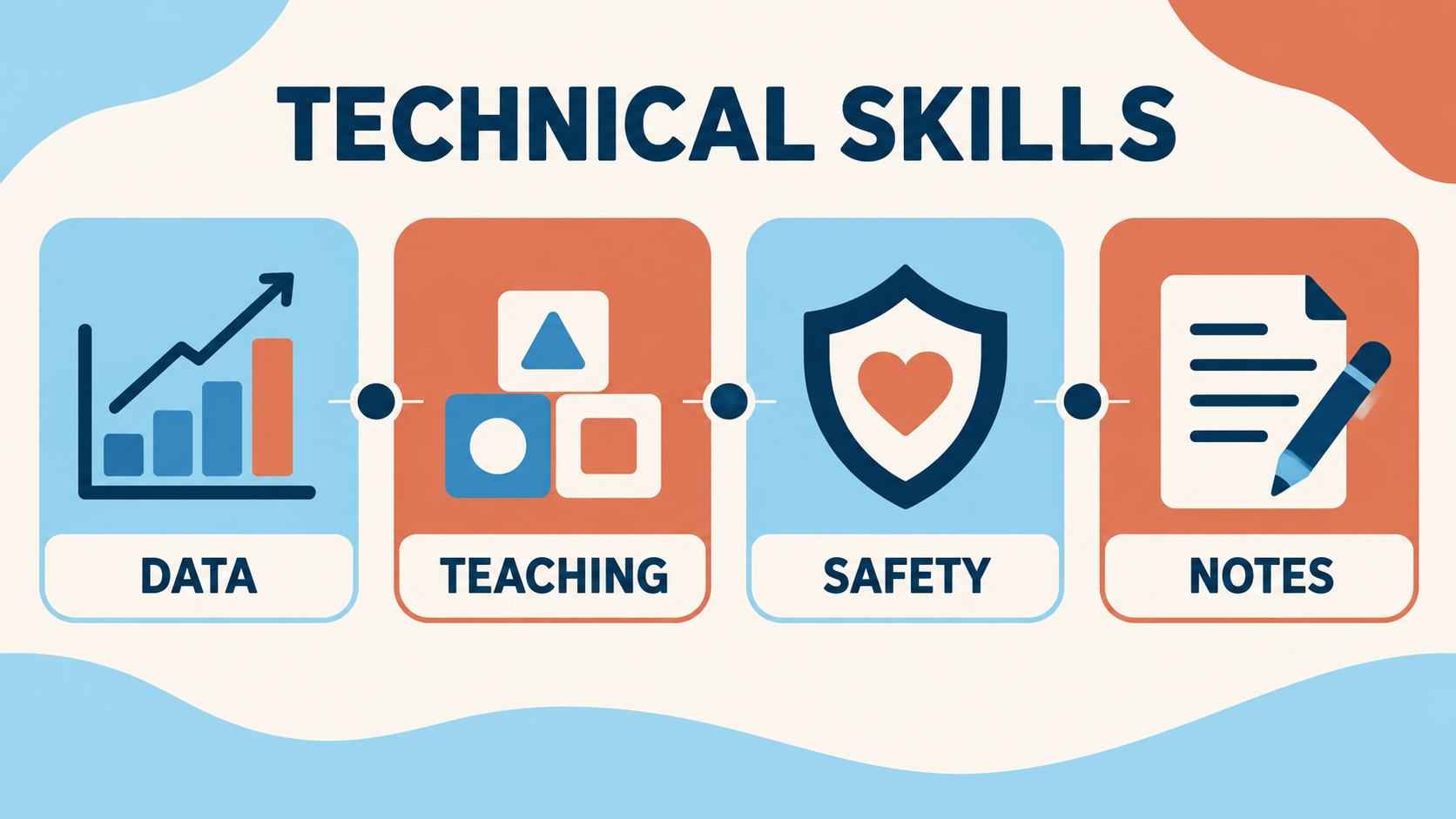
- technical skill: follows the authorized program, records data, uses teaching and safety procedures correctly, and writes objective notes;
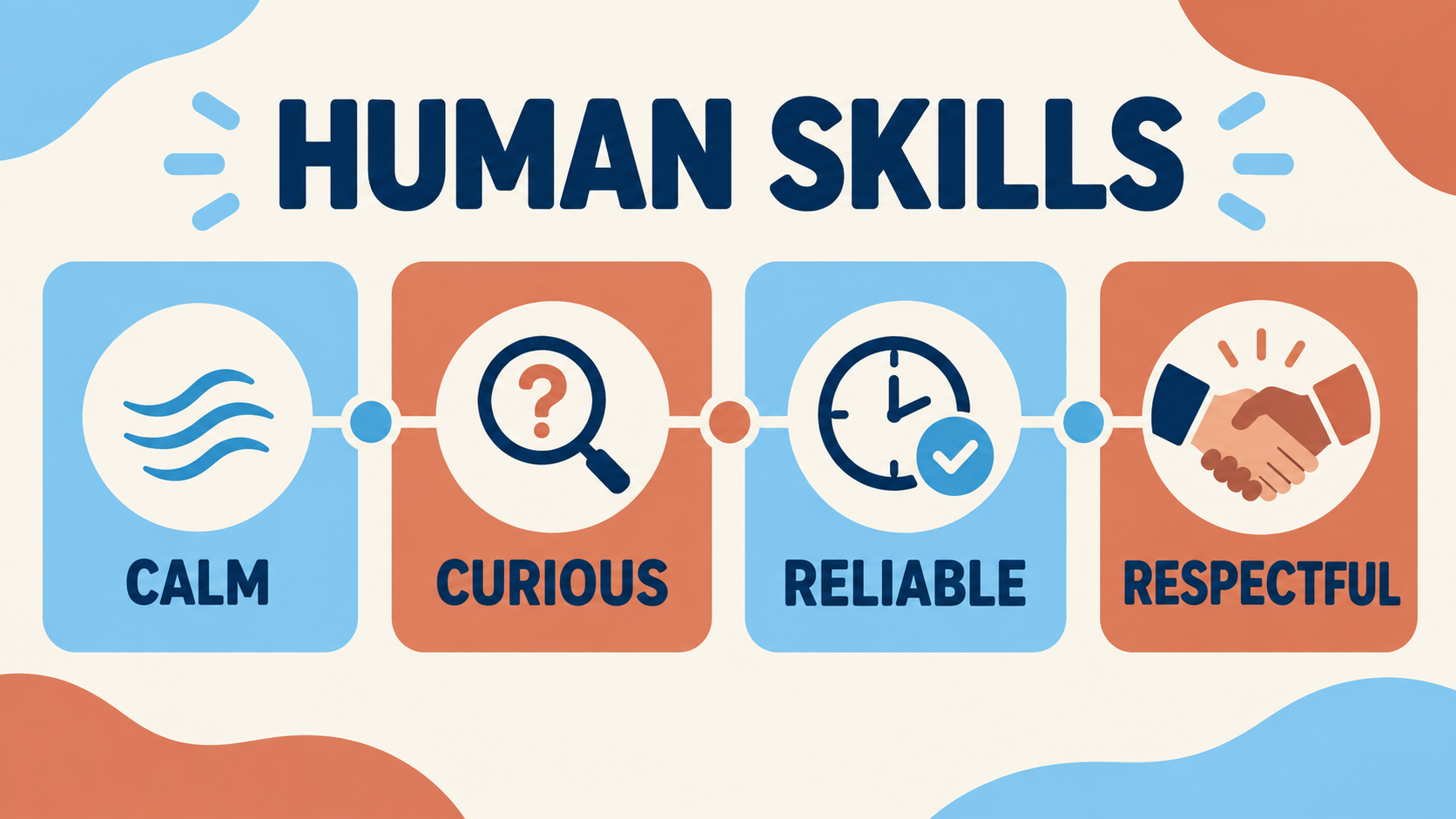
- human skill: stays calm, curious, patient, flexible, respectful, and willing to learn;
- professional judgment: knows the limits of the role, protects privacy, reports concerns, and asks for direction; and
- team skill: communicates with supervisors and caregivers clearly, accepts feedback, and follows through consistently.
No personality test can prove that a person will be effective. The better question is whether the person repeatedly demonstrates these behaviors during training, role-play, observation, and supervised service. A quiet therapist can be excellent, and an outgoing therapist can still be unreliable or unsafe. Evaluate evidence, not charisma.
What “behavior therapist” means in an RBT setting
“Behavior therapist” is a job title used by different employers and is not, by itself, a single universal credential. An RBT is a BACB credentialed behavior technician who provides services under the close, ongoing supervision required by the role. Other people may work in behavior-support jobs under different credentials, licenses, training pathways, or employer standards.
That distinction matters for families and hiring managers. Ask what the person is authorized to do, who provides clinical direction, how supervision works, what training has been completed, and which organization is responsible for the service. A friendly title cannot replace a clear scope of practice. The BACB RBT Ethics Code states that RBTs provide services within a clearly defined role and under close, ongoing supervision, and that they should seek support when interpreting ethical requirements or facing a dilemma.
A strong therapist does not present independent clinical decisions as if they were routine technician tasks. They know when to implement, when to document, and when to pause and contact the supervisor.
Skills abilities and personality traits of a good behavior therapist: technical skills
Technical skills are the parts of the job that can be observed, practiced, and checked. They are not limited to memorizing ABA vocabulary.
Accurate data collection
A good behavior therapist understands what the program defines as a response, opportunity, prompt, error, duration, latency, or completed step. They record what happened rather than what they hoped would happen. They ask questions when a definition is unclear and notice when the data sheet no longer matches the current program.
Program implementation
The therapist prepares materials, follows the written sequence, uses the specified prompt and reinforcement procedures, and avoids improvising a new intervention without authorization. Fidelity is not robotic behavior; it is accurate implementation plus timely communication when the plan does not fit the situation.
Teaching and prompting
A capable therapist can create enough opportunities for practice without rushing the learner. They use the planned prompt level, allow processing time, reinforce meaningful responses, and watch for prompt dependence. They understand that a functional response may be spoken, signed, pictured, typed, or produced through an AAC system.
Safety and prevention
Good safety skill includes prevention, environmental awareness, knowing the approved response procedure, and recognizing when to call for help. It does not mean trying to solve every crisis alone. The therapist follows training, protects the learner and others, reports injuries or risk, and documents objectively.
Objective documentation
Session notes should describe observable events, relevant context, interventions used as authorized, and the learner’s response. “Had a bad attitude” is not an objective note. “Left the table twice after the demand was presented and returned after the scheduled break” gives the team information it can use.
Skills abilities and personality traits of a good behavior therapist: personality traits
Personality traits are useful only when translated into behavior. A hiring manager should ask, “What would I see this person do on a difficult day?”
- Calm: keeps voice, pace, and body language steady when a session changes or a learner is distressed.
- Curious: asks what happened before and after a behavior instead of jumping to a judgment about motivation.
- Patient: allows time for processing, practice, and communication rather than filling every silence.
- Flexible: can move between activities and accept a supervisor’s adjustment without losing the goal or safety plan.
- Reliable: arrives prepared, completes records, communicates schedule problems early, and follows through.
- Respectful: treats the learner and family as people with preferences, rights, culture, and expertise.
- Humble: can say “I do not know,” receive feedback, and ask for help before a mistake becomes harm.
- Observant: notices small changes in engagement, communication, health, environment, and response effort.
These traits do not require a single personality type. A therapist can be introverted, energetic, serious, playful, or soft-spoken. What matters is whether their behavior supports learning, dignity, safety, and team coordination.
Skills abilities and personality traits of a good behavior therapist: communication
Behavior services happen in a team. The RBT may be the person who sees the learner most often, but the RBT is not the only decision maker. A good therapist communicates observations without exaggeration, keeps client information in approved channels, and distinguishes a fact from an interpretation.
Useful team communication includes:
- asking the supervisor to clarify an ambiguous target or procedure;
- reporting a meaningful change in health, communication, safety, or participation;
- sharing data in a format the team can review;
- listening to caregiver and learner information without promising an unauthorized change;
- accepting corrective feedback and confirming the next step; and
- escalating a privacy, safety, or ethics concern through the correct route.
A good therapist does not use “teamwork” to mean agreeing with everyone. Professional teamwork includes respectful disagreement, accurate questions, and documentation when the plan or direction is unclear.
Skills abilities and personality traits of a good behavior therapist: dignity
Technical competence is not enough if the learner is treated as a task list. The RBT Ethics Code identifies client welfare, compassion, dignity, respect, integrity, and competence as core principles. A good behavior therapist explains or previews what is happening in an age- and communication-accessible way, watches for signs of discomfort, and provides approved choices, breaks, refusal, and alternative communication.
Dignity also shapes the language used around the learner. Avoid joking about behavior, discussing private details in public, or treating eye contact, stillness, speech style, or compliance as a complete measure of success. Focus on meaningful participation and the goals that matter to the learner and authorized team.
Cultural responsiveness means the therapist works with the supervisor to examine assumptions and seek training when needed. Family routines, communication styles, disability identity, language, religion, gender expression, and community context may influence how a plan is understood and implemented. The therapist does not need to know everything; they do need to notice when they need guidance.
Reliability and professional judgment
Families often experience reliability as one of the most important qualities. A technically talented therapist who frequently arrives late, loses data, changes plans without notice, or fails to report concerns can undermine continuity of care.
Professional judgment appears in small decisions:
- checking the current plan before using a familiar procedure;
- protecting a client’s identity when someone asks about services in public;
- declining personal requests or gifts that create a boundary concern;
- reporting an error rather than quietly changing the record;
- telling the supervisor when a task is beyond competence; and
- stopping an unsafe or unauthorized action while seeking direction.
The best candidate is not the person who claims never to make mistakes. It is the person who notices, reports, repairs, and learns from mistakes.
How to evaluate a candidate
Use behavioral questions and short work samples instead of relying on a general impression. Ask the candidate to describe a time when:
- they received feedback that changed how they worked;
- data did not match their first impression;
- a learner refused, became distressed, or needed a break;
- they were unsure whether a task was within their role; and
- they had to communicate a difficult observation to a supervisor or caregiver.
Listen for specifics: what did they observe, what did they do, who did they contact, what was documented, and what did they learn? Strong answers show ownership without overclaiming. Concerning answers blame the learner, describe punishment as the default, dismiss supervision, or suggest that privacy and data rules are optional.
A brief role-play can assess whether the candidate can write an objective note, explain a prompt, respond to a client’s request for a break, and ask for clinical direction. The aim is not to create a high-pressure performance. It is to see how the candidate thinks, communicates, and responds to correction.
Red flags and coaching opportunities
Some weaknesses are coachable. A new therapist may need practice with data definitions, pacing, or documentation. A supervisor can set expectations, model the skill, observe implementation, and provide feedback.
More serious red flags include:
- claiming to diagnose, redesign treatment, or work independently as an RBT;
- describing the learner as manipulative, lazy, or bad rather than describing observable behavior;
- treating distress, refusal, or communication differences as inconveniences to suppress;
- resisting data review or refusing to document errors;
- sharing client details casually or using personal channels without authorization;
- rejecting supervision as unnecessary; or
- promising a family a result, schedule, or intervention that is outside the role.
A good hiring process separates a skill gap from an integrity or dignity problem. Teach what can be taught, but do not ignore patterns that put clients or coworkers at risk.
A practical scorecard
For a simple review, rate each area from “needs direct support” to “consistently demonstrates” and record an example:
- data and objective observation;
- program fidelity and prompting;
- safety awareness and escalation;
- client dignity and communication access;
- privacy and professional boundaries;
- reliability and preparation;
- communication with the team; and
- response to feedback and uncertainty.
Use the scorecard as a coaching and hiring aid, not as a substitute for required credential checks, competency assessment, supervision, employer policy, or applicable law. Revisit it during onboarding and supervision. The qualities of a good behavior therapist should remain visible in daily practice, not only during an interview.
Frequently asked questions
Does a good behavior therapist need a specific personality?
No. Effective therapists can have different personalities. Look for observable behaviors: respect, reliability, calm communication, curiosity, accurate data, professional judgment, and willingness to learn.
Is being friendly enough to make someone a good RBT?
No. Warmth helps build a working relationship, but it must be paired with technical competence, supervision, documentation, privacy, boundaries, and safety.
Can a behavior therapist change a treatment plan if they think another approach is better?
An RBT should not independently change clinical procedures. Record the observation and seek direction from the supervisor. A good therapist contributes useful information without presenting an unauthorized change as treatment.
What should families ask before choosing an RBT provider?
Ask who supervises the RBT, how the provider verifies training and competency, how data and progress are reviewed, how concerns are reported, how privacy is protected, and how the learner’s communication and preferences are included.
Where can I verify the professional expectations?
Review the BACB RBT Ethics Code, the current RBT Handbook, and BACB resources on supervision, assessment, training, and oversight. These official sources should be read together with employer policies and applicable law.
Source note: This article was reviewed against BACB resources retrieved September 28, 2026. It is an educational hiring and practice guide, not individualized employment, clinical, legal, or credentialing advice.
Ready to practice the RBT concepts you just reviewed?
Try an independent, original RBT practice resource with exam-style questions, scoring, and answer explanations.
References
- Behavior Analyst Certification Board. RBT Test Content Outline, 3rd edition.
- Behavior Analyst Certification Board. RBT Handbook.
- Behavior Analyst Certification Board. RBT Ethics Code.