

The search phrase supervisor direction RBT reflects a core RBT skill: knowing when to seek clinical direction, who to contact, and what information to provide.
Table of Contents
- What “supervisor direction RBT” means
- Why timely direction matters
- When to ask for direction
- Choose the right communication route
- Document facts before conclusions
- Follow the authorized plan
- Common examples and questions
- A supervisor-direction checklist
- FAQ
- Key takeaways
- Sources and scope
RBT PRACTICE GUIDE · CLINICAL DIRECTION
Supervisor Direction RBT: When to Ask, What to Document, and How to Follow Up
A practical guide to recognizing when an RBT needs supervisor direction, routing the question correctly, and keeping service delivery inside the current plan.
The search phrase supervisor direction RBT reflects a core RBT skill: knowing when to seek clinical direction, who to contact, and what information to provide. The BACB RBT Test Content Outline describes timely direction in examples such as training needs, data irregularities, and following the chain of command. Asking is not a sign that an RBT cannot work independently; it is part of practicing within competence and supervision.
This article is general education. The current learner plan, employer policy, supervisor instructions, and emergency process control what happens in a real case. An RBT should not use a general checklist to replace clinical direction or independently change a procedure.
What “supervisor direction RBT” means
Supervisor direction is the process of obtaining guidance from the person responsible for the RBT’s work when a question affects implementation, data, safety, ethics, competence, or the next clinical decision. It may be a quick clarification before a session, an observation and feedback meeting, a written update, or a formal change communicated through the organization’s process.
Direction is different from asking a coworker for an opinion. A coworker may help locate a material or explain a routine, but clinical decisions and changes must go through the authorized supervision structure. Know the difference between an operational question and a clinical question, then route it appropriately.
Why timely direction matters
RBTs provide behavior-analytic services under the direction and close supervision of an RBT Supervisor or RBT Requirements Coordinator. Timely communication helps protect the learner, preserve data quality, and prevent an improvised response from becoming an undocumented change in treatment.
Delaying a question can create several problems:
- a target may be measured differently across sessions;
- a safety concern may not reach the right person quickly;
- a new staff member may practice a skill outside current competence;
- the team may miss a variable affecting progress; or
- different adults may give conflicting instructions.
Timely does not mean sending a stream of incomplete messages. It means using the agreed channel, giving the relevant facts, stating the urgency, and asking the specific question.
When to ask for direction
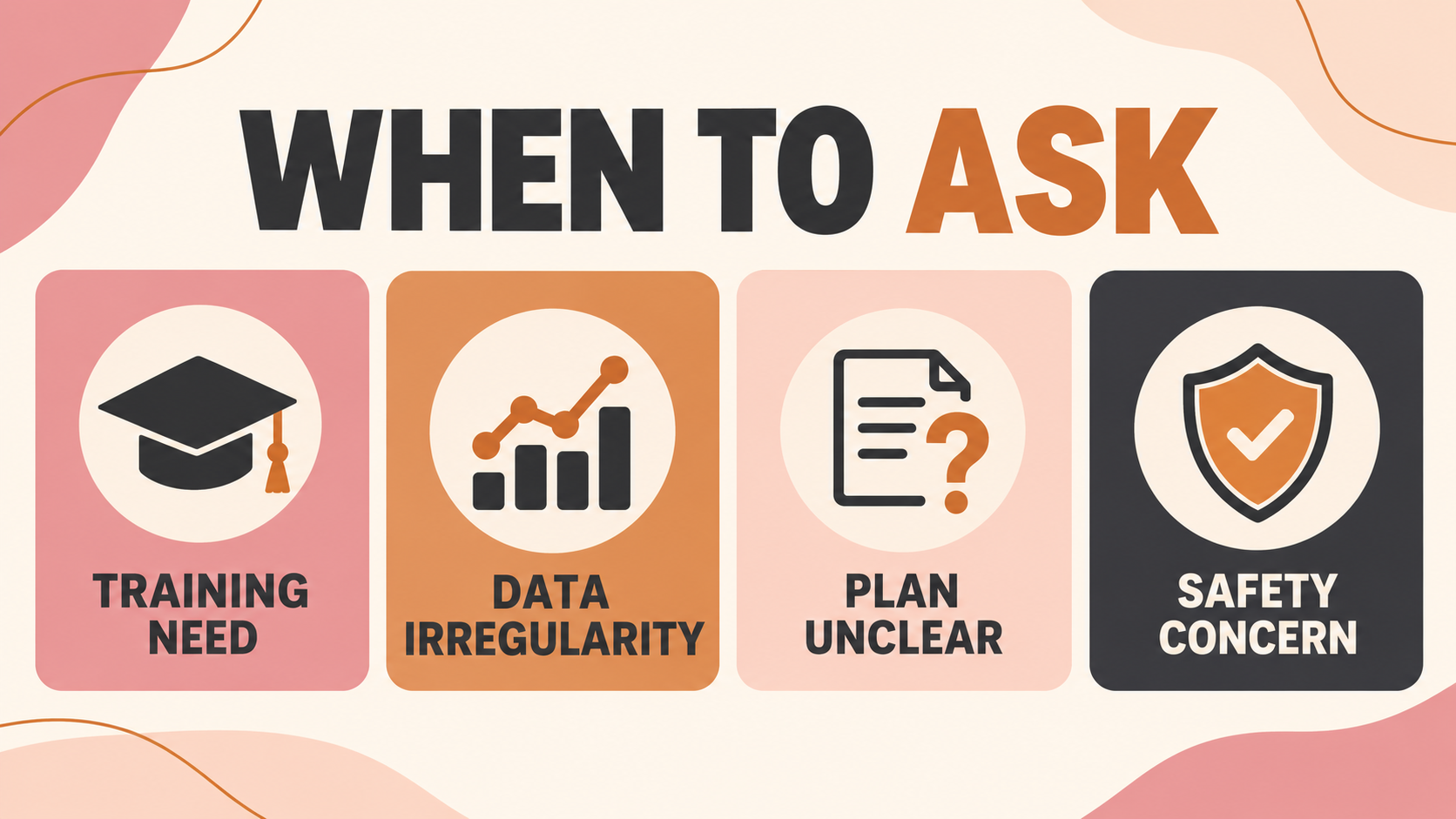
Ask before proceeding when:
- Training is needed: you have not demonstrated competence with the task, material, or procedure.
- Data are irregular: the definition, measurement, data sheet, or recent pattern does not make sense.
- The plan is unclear: two documents conflict, a step is missing, or the learner’s context is outside the written rule.
- Safety changes: an urgent risk, crisis, injury, or environmental change requires the approved escalation pathway.
- The team disagrees: a caregiver, teacher, or colleague requests an action that does not match the authorized plan.
- Boundaries are at risk: privacy, gifts, social media, multiple relationships, or a request outside the RBT role is involved.
Choose the right communication route
Use the organization’s chain of command. A routine data question may go to the designated supervisor through the normal channel. A safety concern may require an immediate call or emergency procedure. A missing supervisor or unmet supervision requirement may need a requirements coordinator or organization contact.
Before sending a message, confirm:
- Who is the RBT Supervisor or Requirements Coordinator on record?
- Which channel is approved for routine questions?
- Which channel is approved for urgent or after-hours concerns?
- What information should be included or excluded to protect confidentiality?
- What should happen if the first contact does not respond within the stated time?
Do not put confidential client information into a personal messaging app unless the organization explicitly authorizes that channel and its protections. Use the minimum necessary information and follow local policy.
Document facts before conclusions
A useful supervisor message separates observation from interpretation. Include the time, setting, instruction or event, observable response, data collected, current plan step, action already taken within the plan, and the question that needs direction.
For example:
“During independent work at 10:15, the learner pushed the worksheet to the floor after the instruction. The current definition records this as material displacement; one event was recorded. The plan does not state whether the next step is a prompt or a break. What should I do for the next opportunity?”
This message gives the supervisor a decision point without claiming why the learner acted. Avoid labels such as “attention-seeking” or “refusing because of escape” unless the authorized team has defined and documented that analysis.
Follow the authorized plan
After receiving direction, confirm what changed, who approved it, when it begins, and how it should be documented. If the supervisor says to continue the existing plan, do that and record the facts that prompted the question. If the supervisor authorizes a change, use the organization’s documentation and training process.
Do not fill a gap by inventing a new reinforcement schedule, consequence, prompt hierarchy, extinction procedure, punishment procedure, or crisis response. An RBT can pause and seek direction; an RBT cannot independently turn uncertainty into a clinical protocol.
Common examples and questions
| Situation | Useful question |
|---|---|
| New or unfamiliar task | “Can I observe a model and rehearse this before implementing it?” |
| Data irregularity | “Which definition and measure should I use for this event?” |
| Plan conflict | “Which version is current, and where should I document the clarification?” |
| Safety concern | “Which urgent pathway applies, and who must be contacted now?” |
| Team request | “This request differs from the plan. Should I continue the plan and route the request to you?” |
| Training need | “What practice criterion and follow-up observation should we use?” |
These questions do not prescribe a clinical response. They help the RBT make the uncertainty visible so the responsible person can direct the next step.
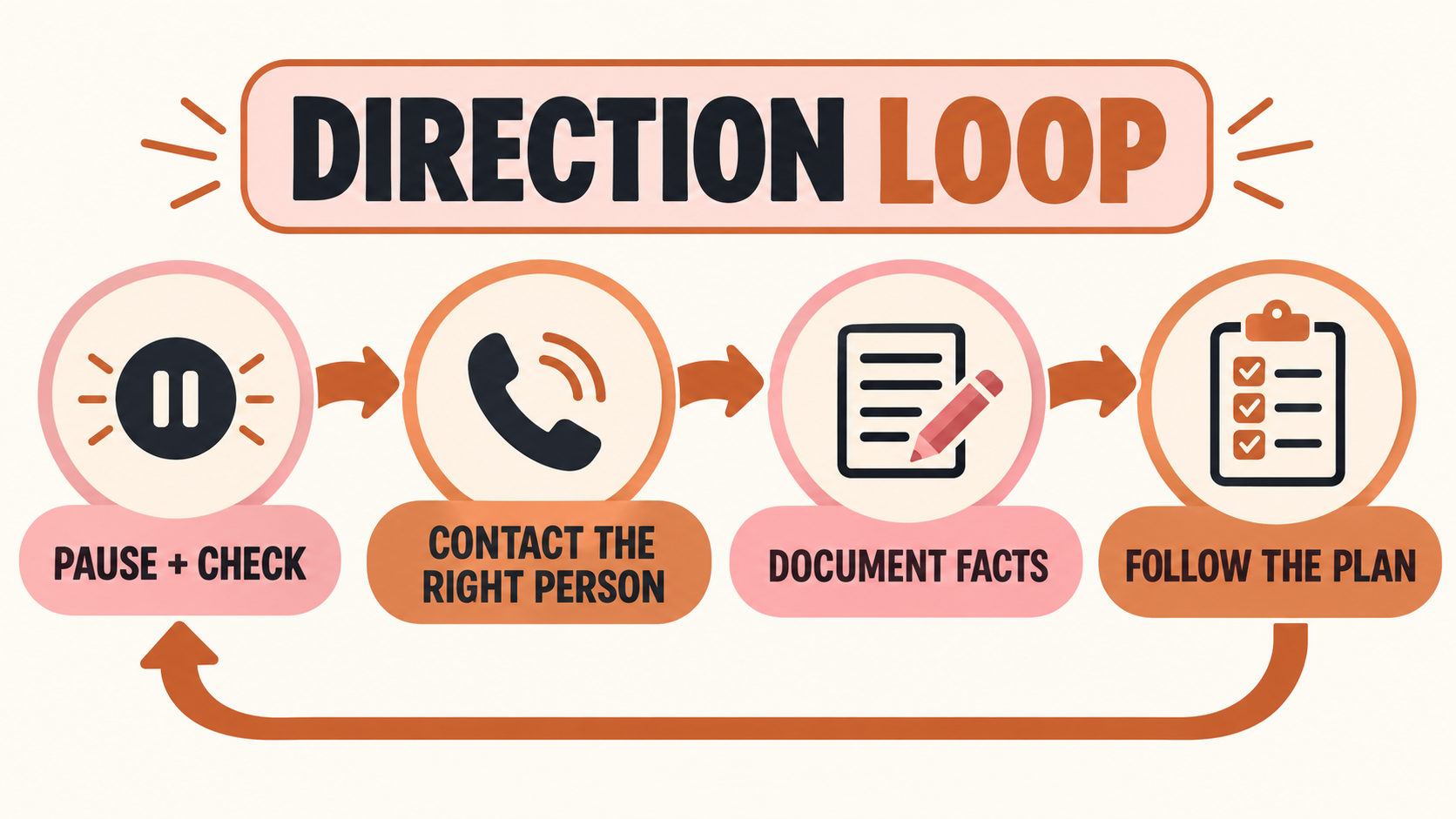
A supervisor-direction checklist
- Pause and check: read the current plan, definition, safety step, and data rule.
- Contact the right person: use the approved supervisor or escalation route.
- Document facts: record objective observations, relevant data, and the question.
- Follow the plan: implement the authorized direction and note the follow-up requirement.
- Review: bring remaining uncertainty, patterns, or training needs to the next supervision contact.
FAQ
When should an RBT seek supervisor direction?
Seek direction for training needs, data irregularities, unclear or conflicting plans, safety concerns, ethical or boundary questions, and requests that may be outside the RBT role. Use the urgent process for immediate safety risks.
Can an RBT ask another technician instead?
A coworker may help with a logistical question, but clinical direction should come from the authorized supervisor or requirements coordinator. If the route is unclear, ask who is responsible for the decision.
What should be included in a message?
Include the context, observable event, current plan or definition, relevant data, urgency, action already taken within the plan, and a specific question. Protect confidential information.
Does asking for direction show a lack of competence?
No. Recognizing the limits of current competence and seeking timely direction are part of ethical, supervised practice. The supervisor can then arrange instruction, modeling, rehearsal, feedback, or clarification.
Key takeaways
Supervisor direction is a normal part of RBT practice. Ask when training, data, the plan, safety, ethics, or chain of command is unclear. Route the question correctly, document objective facts, follow the authorized response, and review the outcome with the supervisor. This protects the learner, the data, and the RBT’s professional boundaries.
Ready to practice the RBT concepts you just reviewed?
Try an independent, original RBT practice resource with exam-style questions, scoring, and answer explanations.
References
- Behavior Analyst Certification Board. RBT Test Content Outline, 3rd edition.
- Behavior Analyst Certification Board. RBT Handbook.
- Behavior Analyst Certification Board. RBT Ethics Code.