

Unavoidable multiple relationships RBT situations can occur in a small community, school, rural area, family network, or workplace where people know one another in more than one role.
Table of Contents
- Unavoidable multiple relationships RBT: quick answer
- What “unavoidable” means
- Unavoidable versus convenient
- Risks to identify
- How to disclose the overlap
- Build a risk-reduction plan
- Privacy and minimum-necessary communication
- Gifts, personal requests, and romantic boundaries
- When the supervisor is involved
- Review, document, and exit
- Frequently asked questions
RBT ethics, disclosure, supervision, documentation, and practical risk reduction
Unavoidable Multiple Relationships RBT: How to Reduce Risk
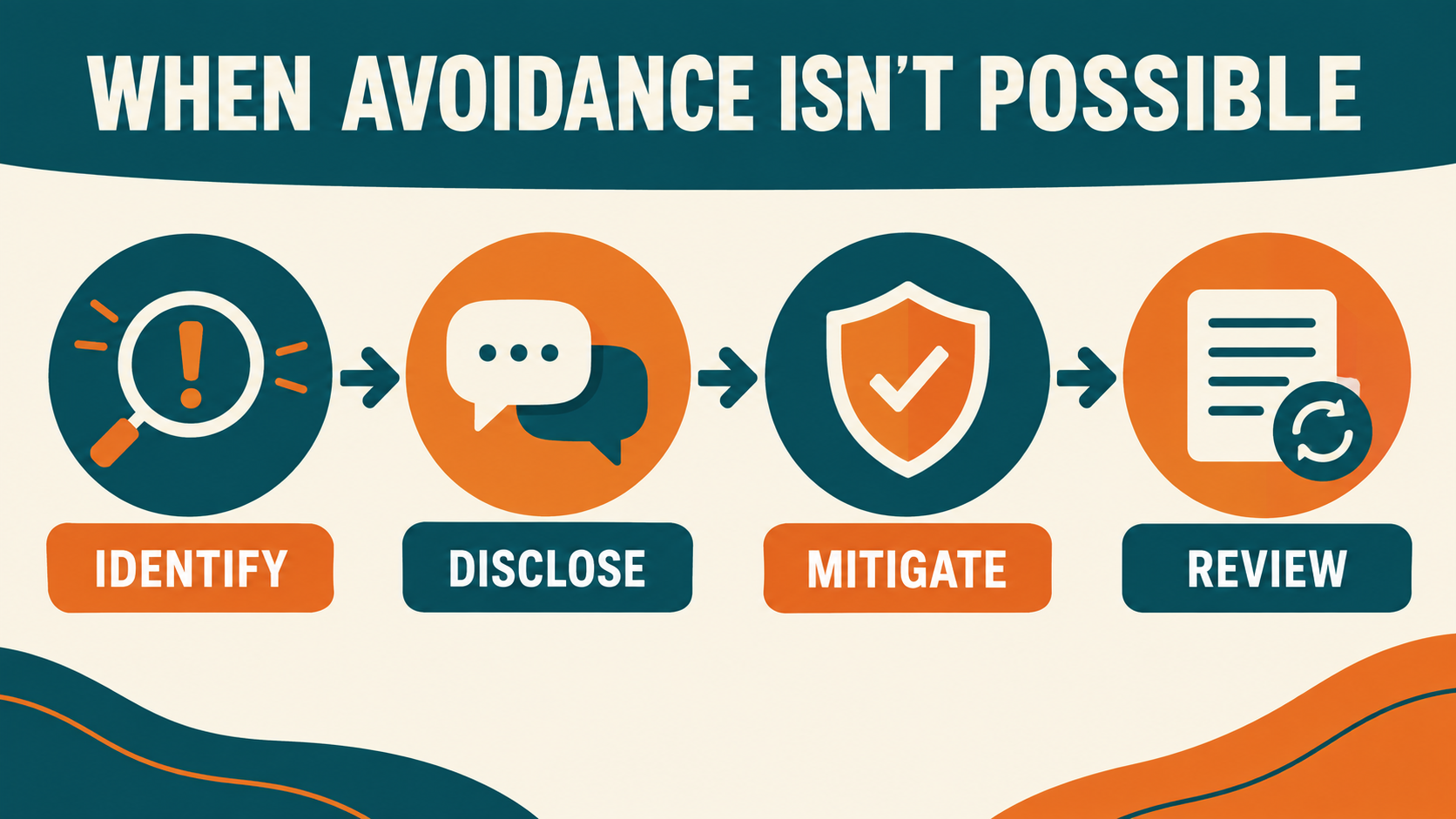
Unavoidable multiple relationships RBT situations can occur in a small community, school, rural area, family network, or workplace where people know one another in more than one role. The preferred response is still to avoid overlapping roles whenever possible. When the overlap cannot be avoided immediately, an RBT should disclose it, follow supervisor or employer direction, protect privacy, and document the steps used to reduce risk. This guide explains how to move from an uncomfortable discovery to a clear, reviewable plan.
Unavoidable multiple relationships RBT: quick answer
The RBT Ethics Code (2.0) directs RBTs to avoid multiple relationships with clients, coworkers, and supervisors when the combination of roles could create a conflict of interest or risk harm. If a multiple relationship develops, the RBT informs the supervisor immediately, works to resolve it, and documents the actions taken. If the supervisor is part of the relationship, the RBT reports to the supervisor’s manager or another appropriate entity, such as human resources or the BACB.
“Unavoidable” does not mean “automatically allowed,” and it does not authorize an RBT to approve their own exception. It describes a circumstance that cannot be removed quickly or realistically—for example, an RBT and a client’s caregiver may live in the same small town. The ethical work is to make the overlap visible, obtain direction, limit unnecessary contact and access, and keep reviewing whether the assignment remains safe.
What “unavoidable” means
A multiple relationship exists when an RBT has two or more roles with the same person or people connected to the service relationship. One role may be professional and another may be personal, financial, social, educational, family-related, or supervisory. The Code’s glossary describes multiple relationships as situations in which a person has more than one role with another person. The concern increases when the overlap creates a conflict of interest or risk of harm.
An overlap may be difficult to avoid when:
- the service takes place in a small or rural community;
- the RBT and caregiver attend the same school, faith community, or public program;
- a local employer assigns the only available trained RBT to the case;
- the RBT’s family and the client’s family already know one another;
- the RBT’s supervisor is connected to the workplace through another role; or
- the overlap is discovered after the assignment has already begun.
These examples explain why immediate avoidance may be hard. They do not remove the RBT’s responsibility to report the situation. The RBT should not decide that a relationship is harmless simply because it is common in the community or because the people involved have good intentions.
Unavoidable versus convenient
It is useful to separate a true constraint from a preference. A relationship may be unavoidable for now when the organization has no practical alternative assignment, an immediate reassignment would interrupt care, or the people share a setting that cannot be changed. A relationship may be merely convenient when the RBT chooses to accept extra work, private contact, a personal favor, or a social role even though a professional alternative is available.
Ask three practical questions:
- What specific fact makes separation difficult?
- What alternatives have been considered by the supervisor or employer?
- What new risk would be created by keeping the current assignment?
Write the facts rather than defending the relationship. “We live in the same small town” is more useful than “we are close but professional.” The first statement identifies a circumstance to manage; the second may hide the very overlap that needs review.
Risks to identify
A good discussion names the specific risk instead of treating every overlap as identical. The same community connection may be low risk in one setting and high risk in another, depending on access, power, confidentiality, money, and the ability to change assignments.
- Privacy risk: the RBT may hear personal information outside the service channel or be asked to discuss a client in public.
- Favoritism risk: a personal connection may create pressure to offer extra time, flexibility, information, or advocacy.
- Power risk: a caregiver, supervisor, or coworker may feel unable to refuse a request because of the professional relationship.
- Role confusion: people may be unsure whether a conversation is personal, employment-related, or part of the service.
- Financial risk: gifts, discounts, loans, side work, or business activity may create an obligation or conflict.
- Documentation risk: the RBT may soften, omit, or alter a record to protect a friendship or family connection.
- Supervision risk: a supervisor may struggle to provide objective feedback when another role is involved.
Do not wait for harm to occur before raising the concern. The Code refers to risk of harm as well as actual harm. Early disclosure gives the supervisor and organization a chance to protect the client and the RBT.
How to disclose the overlap
Disclose the situation promptly through the normal supervision or management route. Use factual, limited information: identify the people, describe the separate roles, explain how the overlap was discovered, and state why you believe it could affect professional judgment, access, privacy, or boundaries.
A concise message might say:
“I want to disclose a possible multiple relationship. I have been assigned to provide RBT services to a family whose caregiver is also a neighbor and a member of my community group. We have shared public activities before the assignment. I will keep service communication in approved channels, but I would like direction about assignment, contact limits, documentation, and whether reassignment is needed.”
Do not include unnecessary client details in a personal text or public channel. Use the employer’s secure system when required. Ask for written direction when the plan affects assignment, communication, supervision, gifts, billing, or access to records.
Disclosure is not an accusation. It is a request for an appropriate person to review the risk. A supervisor may decide that the assignment can continue with safeguards, may alter the service arrangement, or may move the RBT to another case. The RBT should follow that direction and document the outcome.
Build a risk-reduction plan
The BACB Code does not present a universal “unavoidable relationship plan” form. The following framework is a practical workplace tool for organizing a discussion with the supervisor or employer; it is not a substitute for the Code, law, organizational policy, or professional judgment.
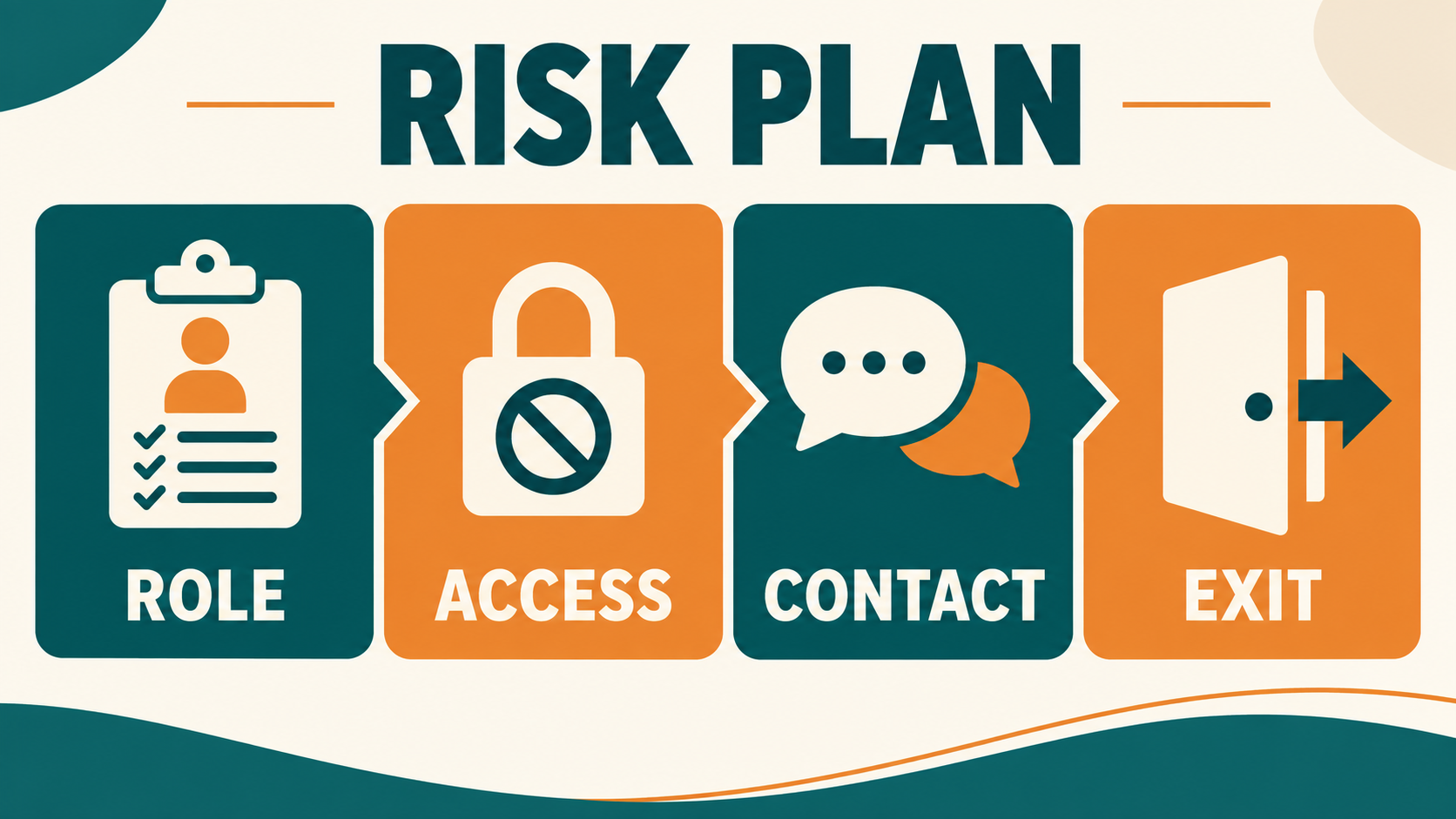
A useful plan answers four questions:
- Role: What is the RBT’s authorized professional role, and what roles are outside it? State who makes clinical, scheduling, billing, and employment decisions.
- Access: Which records, rooms, devices, social accounts, and personal information are necessary for the service? Remove access that is not necessary.
- Contact: Which channel, hours, topics, and participants are approved? Keep contact focused on the service and route personal or financial requests to the supervisor.
- Exit: What events will trigger reassignment, additional supervision, or a pause? Name the decision maker and a review date.
For example, the plan might require that all service questions go through the clinic platform, that the RBT does not provide babysitting or transportation, that another supervisor reviews documentation, and that the arrangement is reconsidered after two weeks. The details must match the actual risk and the employer’s policy.
Privacy and minimum-necessary communication
An unavoidable community connection can make privacy harder, especially when the RBT sees the client or caregiver in public. A practical boundary is to let the client or caregiver choose whether to acknowledge the RBT outside the service setting. The RBT should not identify the person as a client, discuss services in public, or share stories that could allow others to recognize the family.
Use the minimum necessary information when disclosing the overlap to a supervisor, manager, or alternate reporting contact. Share what is needed to evaluate the risk, protect the client, and direct the next step. The RBT still follows the Code’s privacy and confidentiality requirements while reporting a concern. Confidentiality does not mean keeping an ethics concern secret from the people who are authorized and responsible for managing it.
Keep records in the approved system. Do not use a personal phone gallery, private cloud folder, or social-media message as the long-term record for client information. If a public encounter leads to a service-related request, document the request and the direction received.
Gifts, personal requests, and romantic boundaries
An unavoidable multiple relationship does not waive the other RBT Ethics Code standards. Gifts still require careful review. Standard 1.11 addresses gifts from clients, stakeholders, and supervisors, including a monetary threshold of $10 US dollars or equivalent purchasing power, and notes that repeated or cumulative gifts may create a concern. An employer may have a stricter policy. A small gift is not automatically safe if it is secret, repeated, personal, tied to outcomes, or intended to obtain special access.
Keep personal requests separate from the service role. Do not accept private babysitting, side work, loans, business arrangements, transportation requests, or social-media access simply because the community connection makes the request feel normal. Pause and ask the supervisor or employer for direction.
Romantic or sexual relationships are addressed separately and strictly in the Code. Current clients, stakeholders, and supervisors are not appropriate romantic or sexual partners under standard 1.12. The Code also includes rules and timeframes for certain former relationships and supervision after a past relationship. A rural setting or lack of alternatives does not turn a prohibited relationship into an acceptable one.
When the supervisor is involved
If the overlapping role includes the supervisor, do not rely on that same person to approve the solution alone. The Code directs the RBT to report the concern to the supervisor’s manager or another appropriate entity, such as human resources or the BACB. Follow the organization’s reporting policy and use a secure route.
Describe the conflict without exaggeration. Explain what role the supervisor has, what decision or access may be affected, and what protection you need while the issue is reviewed. Keep working within the current authorization unless an authorized person directs otherwise, and document the direction you receive.
Review, document, and exit
A plan is not a one-time permission slip. Schedule a review or agree on the event that triggers one. Revisit the arrangement when the client’s service changes, a personal relationship deepens, a gift is offered, a complaint occurs, a new channel is requested, or the RBT feels pressure to favor one person.
Documentation should show:
- when and how the overlap was identified;
- which roles and risks were disclosed;
- who received the report and when;
- the direction, safeguards, or reassignment decision;
- the dates of follow-up reviews; and
- the reason the arrangement ended or continued.
Keep the record objective. Do not write that a person is “difficult” or “unsafe” without describing observable facts. A stronger entry says that a caregiver requested personal weekend childcare, the RBT declined, the supervisor was notified, and the communication boundary was reviewed.
End or change the arrangement when safeguards do not work, the RBT cannot remain impartial, privacy cannot be protected, the person feels pressured, or the overlap creates a new conflict. Escalate unresolved concerns through the organization or another appropriate authority. The purpose of a risk plan is to protect the client and professional relationship—not to preserve an assignment at any cost.
Frequently asked questions
Does unavoidable mean an RBT can continue without telling anyone?
No. Unavoidable circumstances are a reason to disclose and seek direction, not a reason to self-approve the overlap. The supervisor or responsible organization should decide what safeguards or reassignment are appropriate.
Can an RBT manage the relationship privately if there has been no harm?
No. The Code addresses risk of harm and conflicts of interest, not only proven harm. Prompt disclosure allows a qualified person to evaluate the situation before the risk grows.
What if the supervisor says the overlap is fine?
Ask for the direction and safeguards in writing, follow the approved plan, and raise new concerns if the facts change. If the supervisor is personally involved, use the supervisor’s manager or another appropriate reporting route.
Does a small community make gifts or personal services acceptable?
No. Community context may explain why roles overlap, but it does not waive gift, financial, competence, privacy, or relationship standards. Check the Code and the employer’s stricter policy.
Where can I read the official rule?
Read the BACB RBT Ethics Code (2.0), especially standard 1.10 on multiple relationships, standards 1.11–1.12 on gifts and romantic or sexual relationships, standards 2.08–2.10 on privacy and confidentiality, and the glossary. This article is an educational risk-management guide, not individualized legal or ethics advice.
Source note: This article was reviewed against the BACB RBT Ethics Code (2.0), retrieved September 28, 2026. The practical four-part plan is an editorial framework for discussing risk with an authorized supervisor or employer; it is not a BACB-issued form.
Ready to practice the RBT concepts you just reviewed?
Try an independent, original RBT practice resource with exam-style questions, scoring, and answer explanations.
References
- Behavior Analyst Certification Board. RBT Test Content Outline, 3rd edition.
- Behavior Analyst Certification Board. RBT Handbook.
- Behavior Analyst Certification Board. RBT Ethics Code.