
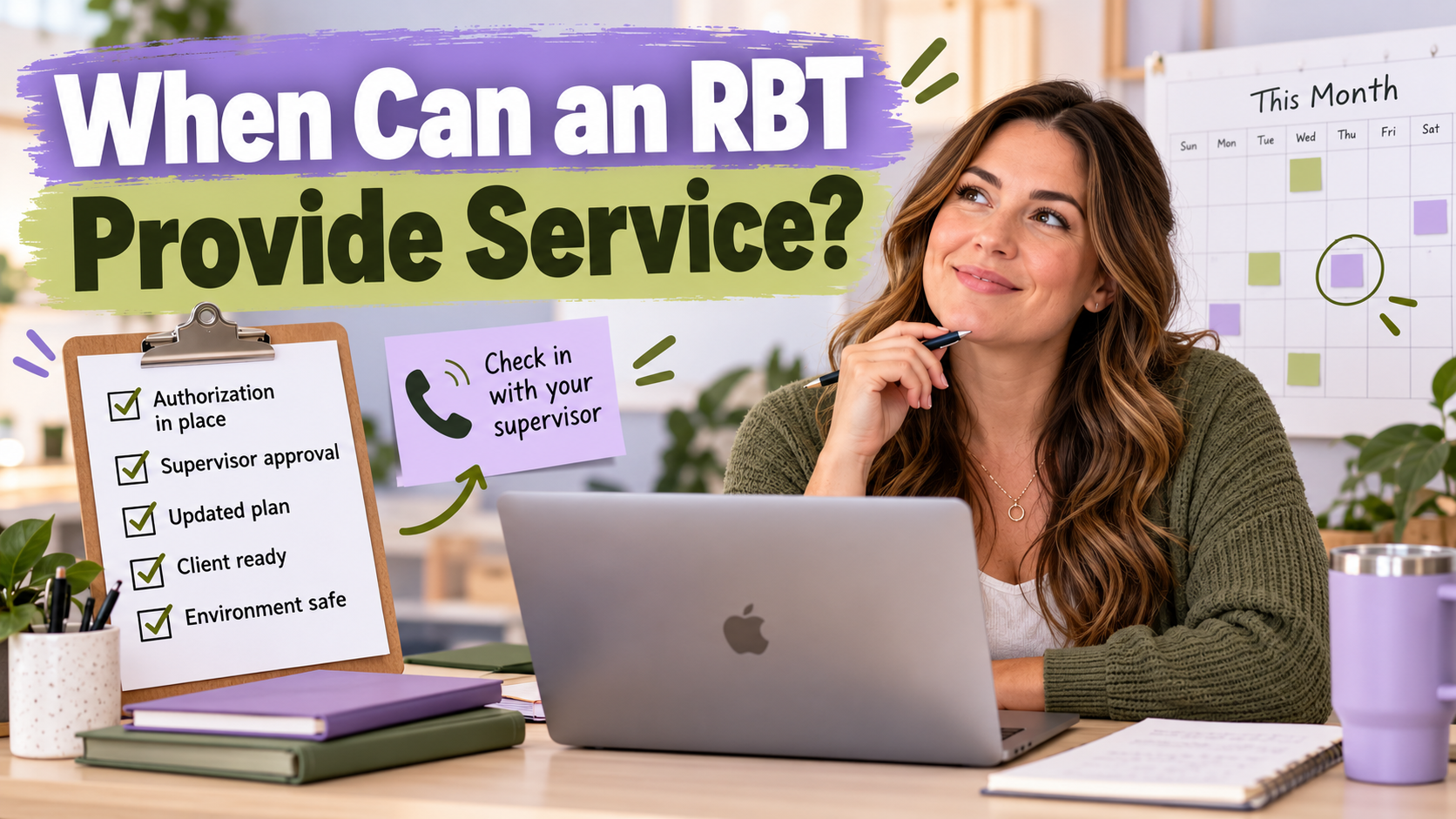
When RBT can provide service depends on more than holding a certificate. The RBT needs current status, an authorized service context, supervisor direction, demonstrated competence, and the required supervision and safety supports.
Table of Contents
- When RBT Can Provide Service: the short answer
- Check current certification status
- Check the service authorization and plan
- Check supervisor direction
- Check demonstrated competence
- Check supervision and safety supports
- When an RBT should pause
- Common service-start scenarios
- Frequently asked questions
- Sources and scope note
RBT SERVICE GUIDE · AUTHORIZATION, STATUS, AND SUPERVISION
When RBT Can Provide Service: Five Checks Before You Start
Use five gates to separate a current credential from a service that is actually authorized, supervised, and within competence.
When RBT can provide service depends on more than holding a certificate. The RBT needs current status, an authorized service context, supervisor direction, demonstrated competence, and the required supervision and safety supports.
The BACB describes RBTs as paraprofessionals who assist with behavior-analytic services under the direction and close supervision of an RBT Supervisor and/or RBT Requirements Coordinator. The RBT Ethics Code also requires services only after the supervisor confirms demonstrated competence. This article is educational and does not decide legal authorization, payer coverage, medical care, or an individual workplace question.
When RBT Can Provide Service: the short answer
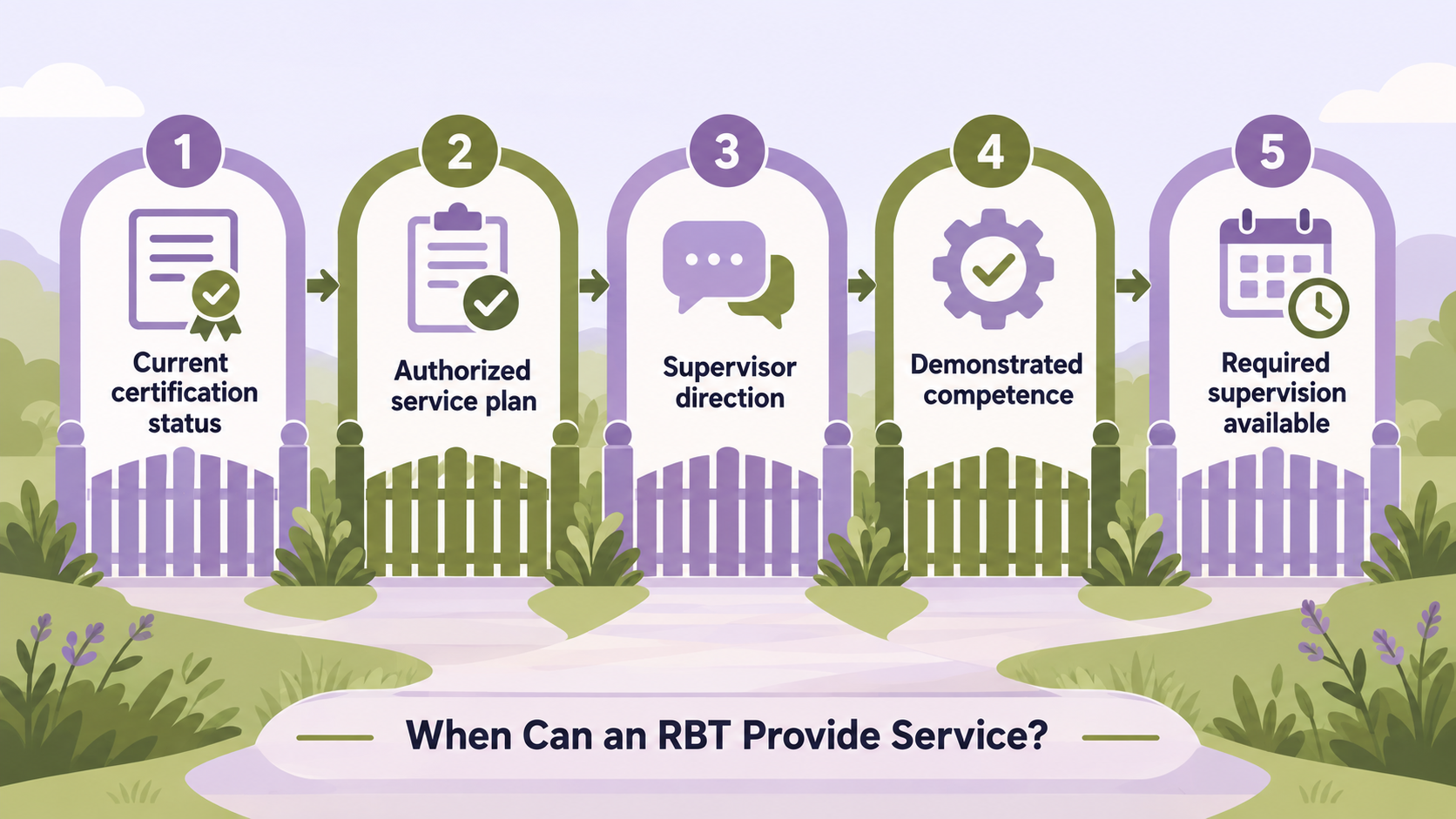
An RBT can generally provide assigned behavior-technician services when all five gates are open:
- Current status: The RBT’s certification and relevant practice status are current.
- Authorized context: The service, client, setting, and assignment are approved through the applicable employer and treatment arrangements.
- Supervisor direction: The RBT is working under the responsible supervisor or designated requirements coordinator.
- Demonstrated competence: The RBT has been trained and the supervisor has confirmed readiness for the task.
- Required supports: The required supervision, safety, privacy, materials, and communication routes are available.
If one gate is unclear, do not fill the gap with confidence or guesswork. Protect immediate safety, pause the questionable action, and ask the supervisor or appropriate workplace authority.
Check current certification status
A credential is a starting point, not the whole answer. Before service, the organization should be able to verify the RBT’s current status and any applicable practice restrictions. If the RBT learns that the certification is inactive, expired, suspended, revoked, or otherwise changed, the RBT should report the change to the supervisor and follow current BACB, employer, billing, and practice requirements.
Do not use the RBT title or represent certification status inaccurately. Keep personal information in the BACB account current as required, and use the current Handbook for maintenance and status rules. A status check does not replace a supervisor’s decision about a particular assignment.
Check the service authorization and plan
The next question is whether this service is actually assigned and authorized in the current context. Check the current behavior plan, service instructions, employer assignment, and any setting-specific requirements. The client, treatment team, school, payer, and employer may have distinct roles.
An RBT does not independently create a new goal because a caregiver asks for one or because a current target seems incomplete. The RBT can communicate the request and collect observations under the current plan. The supervisor or authorized treatment team determines whether a goal, procedure, or service arrangement should change.
Authorization also includes the setting. A procedure approved in a clinic may require separate training or direction before use in a home, school, community, or telehealth context. Ask what applies to the location and who is responsible for the decision.
Check supervisor direction
RBT service delivery occurs under direction and close ongoing supervision. Confirm who the responsible supervisor or RBT Requirements Coordinator is, how to reach them, and what backup route to use if they are unavailable.
Supervisor direction should be specific enough for the RBT to understand the assigned procedure, data requirements, safety boundaries, and escalation route. If the direction is verbal, follow the workplace process for confirming or documenting it. Do not treat an informal suggestion from an unauthorized person as a replacement for the current plan.
A supervisor’s absence is not a blank check for independent clinical practice. If urgent safety action is required, follow the applicable emergency procedure and contact the responsible authority as soon as possible.
Check demonstrated competence
The RBT Ethics Code requires services only after the supervisor confirms demonstrated competence. Ask whether you have been trained and observed for this exact task, client population, equipment, and context. A completed course or prior experience may be relevant, but it does not automatically answer the question for a new procedure.
Be especially careful with unfamiliar interventions, restrictive or punishment-based procedures, complex communication systems, new data platforms, and tasks that carry safety implications. The RBT should tell the supervisor when asked to work beyond certification or competence and document the communication according to workplace process.
Competence is not a judgment about worth. It is a safeguard that tells the team what training, modeling, rehearsal, observation, and feedback are needed before service.
Check supervision and safety supports
Even when the first four gates are open, the session may not be ready to start if required supports are missing. Check that you have the current plan, necessary materials, a functioning data system, a safe environment, an approved communication route, and access to the level of supervision required for the service.
Privacy matters too. Use approved systems for client information and confirm that the people present are authorized for the setting. An RBT should not begin a service in a public or private location that creates an avoidable confidentiality or safety problem simply because the appointment is on the calendar.
When an RBT should pause
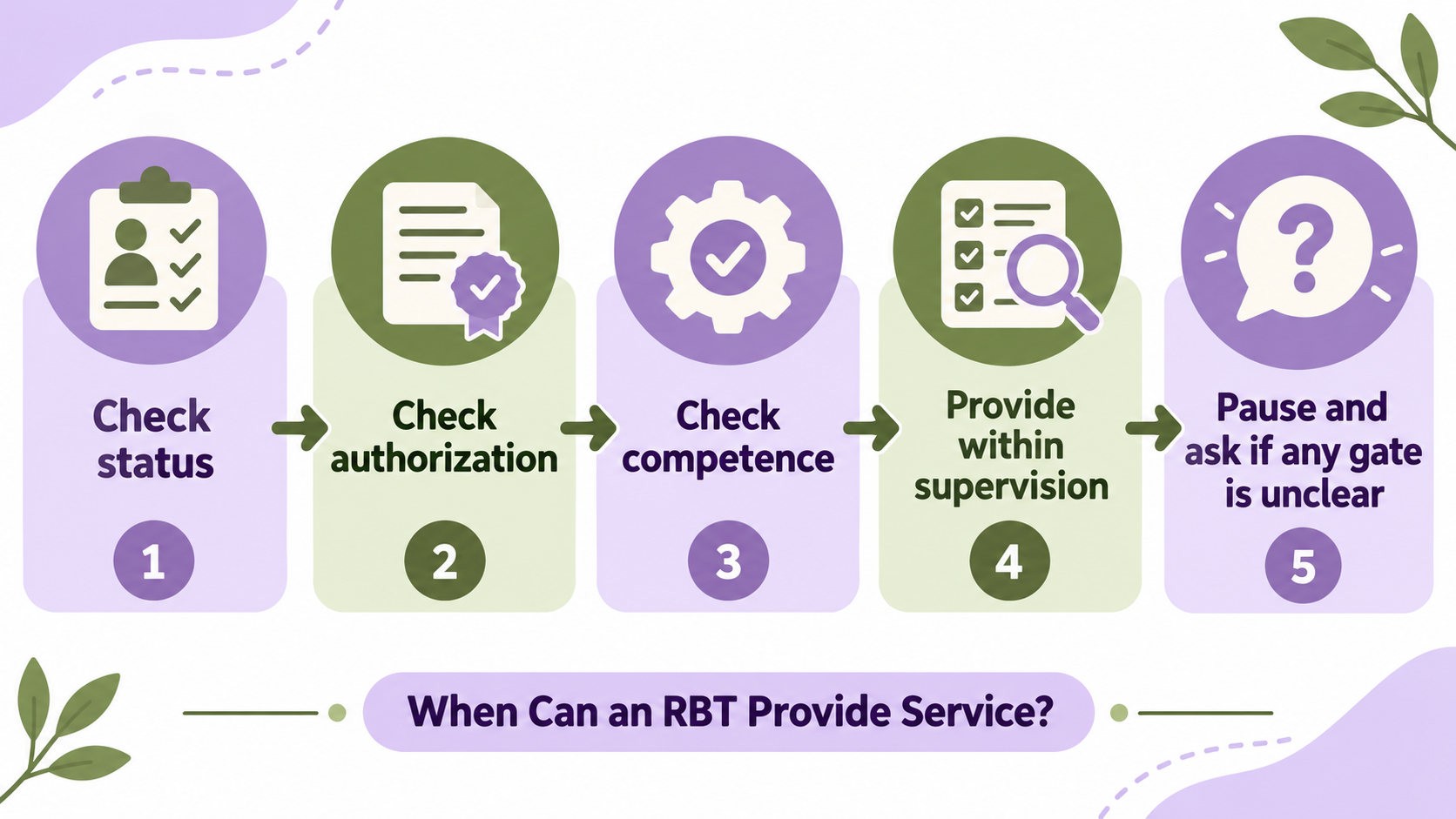
Pause and ask when certification status is unclear, the plan is missing or changed, the assignment is not authorized, the task is unfamiliar, competence has not been confirmed, supervision is unavailable, or safety and privacy conditions are not adequate.
Pausing does not mean abandoning the learner. Follow the trained safety procedure, protect immediate welfare, communicate the specific gap, and use the approved next step. Describe what happened without exaggeration: the task, the current direction, the missing support, any immediate risk, and the question for the supervisor.
Common service-start scenarios
The RBT passed the exam but has not used the client’s communication device. Certification is current, but task-specific competence still needs to be trained and confirmed. Ask the supervisor before using the device as part of service.
A caregiver asks the RBT to start a new program today. Record the request and bring it to the supervisor. Continue only the authorized program; do not independently add the goal.
The certification status changed overnight. Stop representing the old status, notify the supervisor promptly, and follow current BACB and employer instructions about practice, billing, and title use.
The supervisor is unreachable and a safety concern appears. Use the organization’s emergency or safety route, protect the learner within your training, and document attempts to obtain direction. Do not invent a new clinical procedure.
The payer or employer question is unclear. Preserve the factual service information and contact the responsible billing, compliance, or supervisory route. Do not promise coverage or alter the record to make a service appear authorized.
Frequently asked questions
Can an RBT provide service without a BCBA physically present?
Physical presence and supervision requirements are not identical questions. The RBT must follow the current BACB, supervisor, employer, payer, setting, and applicable requirements for the service. Confirm the required supervision arrangement rather than assuming either presence or absence is always enough.
Does a current RBT certificate authorize every ABA task?
No. The task must also be assigned, supervised, and within demonstrated competence. New procedures or contexts may require additional training and observation.
Can the RBT decide that a service is billable?
Do not make that assumption. Billing depends on payer, employer, contract, and other requirements. Record what actually happened and ask the appropriate supervisor or billing contact.
What should I do if one of the five checks is unclear?
Protect immediate safety and privacy, pause the questionable action, contact the supervisor or designated authority, and document the direction and follow-up through the approved system.
Sources and scope note
This guide is based on the BACB Registered Behavior Technician Handbook, the RBT Ethics Code (2.0), and BACB RBT information. Requirements can change, and employer, payer, school, state, and legal rules may add obligations. Check current sources and ask the appropriate supervisor or authority about your situation.
Ready to practice the RBT concepts you just reviewed?
Try an independent, original RBT practice resource with exam-style questions, scoring, and answer explanations.
References
- Behavior Analyst Certification Board. RBT Test Content Outline, 3rd edition.
- Behavior Analyst Certification Board. RBT Handbook.
- Behavior Analyst Certification Board. RBT Ethics Code.