
This BACB competency checklist helps RBT candidates organize task-specific practice before an assessment. It focuses on observable implementation, measurement, documentation, communication, and knowing when to ask for direction.
Table of Contents
- How to use this BACB competency checklist
- 1. Measurement and data
- 2. Implementation and teaching steps
- 3. Documentation and reporting
- 4. Communication and feedback
- 5. Professional conduct and scope
- How to organize practice evidence
- Frequently asked questions
- Sources and scope note
RBT ASSESSMENT GUIDE · TASK PREPARATION
BACB Competency Checklist: RBT Assessment Tasks to Confirm
A task-focused preparation guide for observable implementation, measurement, documentation, communication, and professional boundaries.
This BACB competency checklist helps RBT candidates organize task-specific practice before an assessment. It focuses on observable implementation, measurement, documentation, communication, and knowing when to ask for direction.
The current BACB resource set includes an Initial Competency Assessment Packet effective January 1, 2026. Use the current packet and assessor instructions as the authority. This article offers a preparation framework and does not reproduce or replace the official assessment materials.
Competence is more than recalling a definition. A candidate should be able to perform the assigned task accurately, explain important steps, notice an error or missing condition, and communicate when the task is unclear.
How to use this BACB competency checklist
Turn each heading into a practice conversation with your qualified assessor or supervisor. For each task, record the current procedure, the materials used, the context practiced, the evidence observed, and the next support needed.
Do not mark a task complete because it feels familiar. Mark it ready for review when you can demonstrate it under the conditions selected by the assessor and can describe what to do if an unexpected event appears. The assessor determines the formal method and result.
1. Measurement and data
Check whether you can identify the current operational definition and measurement system before recording anything. Practice locating the correct form or electronic field, recognizing what counts as an event, and following timing rules for measures such as frequency, duration, latency, or interval recording when those measures are assigned.
Also practice error recognition. What will you do if the timer fails, the definition does not match the event, an observation is interrupted, or a field is missing? The goal is not to invent a number. The goal is to preserve accurate information, use the approved correction route, and tell the supervisor when the data may be affected.
A strong practice note identifies the measure, the rule, the context, and the question that remains. “I collected data” is less useful than “I used the current duration definition, started timing at the stated onset, and asked how to document an interrupted observation.”
2. Implementation and teaching steps
Review the written procedure and practice the sequence in the correct order. Depending on the assigned program, this may involve preparing materials, delivering an instruction, using a trained prompt, waiting the required interval, providing an authorized consequence, and recording the response.
Practice the conditions that make the step meaningful. If the real service uses a communication device, electronic data system, or particular material, ask how the assessment practice will represent that context. If the procedure changes for safety or learner communication, identify who gives direction rather than choosing an improvised variation.
Implementation competence includes knowing when to pause. A candidate who notices a missing instruction and asks the right person for clarification is showing an important professional behavior.
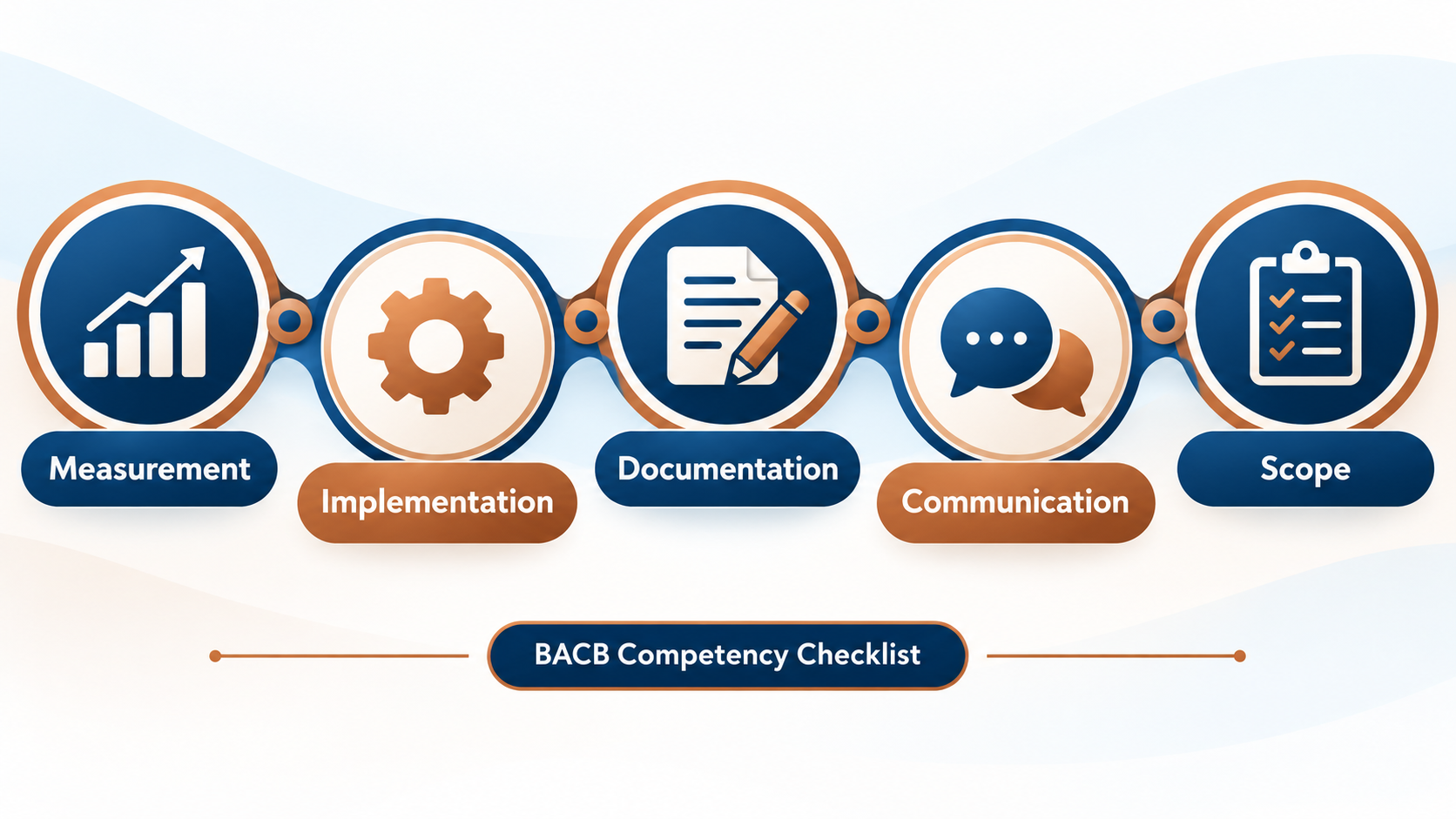
3. Documentation and reporting
Practice writing an objective record that matches what actually occurred. Separate observed events, data, materials, and relevant context from assumptions about personality, motivation, or diagnosis. Check the workplace’s approved system and the required time frame.
Review confidentiality while you practice. Use only necessary identifying information, share records through authorized channels, and correct mistakes through the required process. Do not backdate a note, estimate missing data, or copy a template that creates facts that were not observed.
Reporting also includes raising a concern. Practice a concise message that states what happened, what part of the record or service may be affected, what immediate action was taken, and what direction you need.
4. Communication and feedback
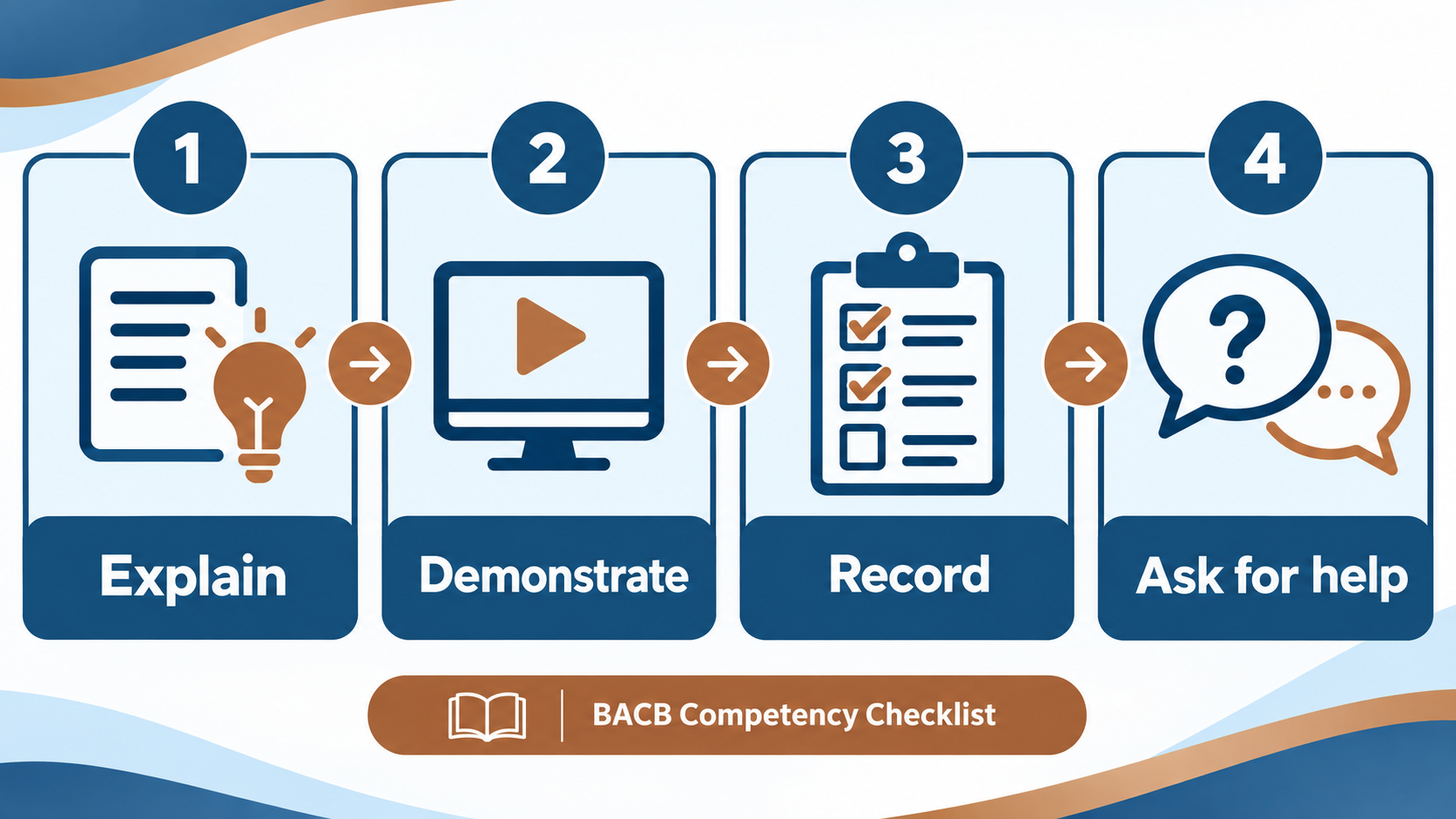
Assessment preparation should include explaining a task to the assessor, asking for clarification, receiving feedback, and restating the next step. You do not need to pretend that an instruction is clear when it is not.
Use factual language: “I recorded the event using the old form because that was the only form available; which current form should I use?” This is more useful than “The data were weird.” Specific language helps the assessor evaluate the task and identify the correct support.
Practice responding to feedback without changing the procedure independently. If the feedback suggests that the plan itself is unclear or needs revision, report that observation to the authorized supervisor or treatment team.
5. Professional conduct and scope
Review the limits of the RBT role. The RBT implements authorized procedures under direction and close supervision; the RBT does not independently create a treatment plan, change an intervention, or decide that an unfamiliar task is authorized simply because it resembles something practiced before.
Know the route for a task beyond certification or competence. The RBT Ethics Code requires prompt communication with the supervisor or another appropriate workplace person and documentation of the communication. Practice saying what you need without blaming the client or hiding the limit.
Professional conduct also includes dignity, safety, confidentiality, punctual records, and honest reporting. A candidate can be technically accurate and still need practice in one of these supporting behaviors.
How to organize practice evidence
Keep a simple practice log that does not replace the official packet:
- Name the task and current procedure.
- Record the context and materials practiced.
- Describe what was demonstrated or rehearsed.
- Note the feedback and correction.
- List the next practice or observation step.
Bring the log to the assessor or supervisor when appropriate. It can help identify patterns, but the assessor decides what evidence counts. One successful rehearsal does not automatically verify performance across all clients, settings, or procedures.
On the assessment day, slow down enough to identify the current instruction, gather the correct materials, and check the response definition before you begin. If you make an error, state the relevant fact and follow the assessor’s direction instead of covering it up. After the assessment, record any feedback or additional practice requested through the approved process. This creates a clearer path from preparation to reassessment and keeps the checklist focused on observable improvement rather than a vague feeling of readiness.
Frequently asked questions
Does this BACB competency checklist replace the official packet?
No. It is an educational preparation guide. Use the current BACB packet and assessor instructions for the formal assessment.
Is memorizing the RBT task outline enough?
No. Knowledge supports performance, but competency assessment focuses on the task-specific evidence selected by the qualified assessor.
What if I cannot perform one task consistently?
Tell the assessor or supervisor and ask for additional instruction, modeling, rehearsal, observation, or a clearer practice condition. Do not hide the pattern.
Does passing the assessment allow independent practice?
No. Certification, competence, authorization, and ongoing supervision remain separate responsibilities. Continue following the current role and supervision requirements.
Sources and scope note
This guide is based on the BACB RBT applying resources, the BACB application-processing updates, the RBT Test Content Outline (3rd ed.), and the BACB RBT Handbook. Requirements and assessment materials can change. Check current official sources and ask the qualified assessor about your situation.
Ready to practice the RBT concepts you just reviewed?
Try an independent, original RBT practice resource with exam-style questions, scoring, and answer explanations.
References
- Behavior Analyst Certification Board. RBT Test Content Outline, 3rd edition.
- Behavior Analyst Certification Board. RBT Handbook.
- Behavior Analyst Certification Board. RBT Ethics Code.