

The best clinical direction examples RBTs use are specific, timely, and connected to a client-care question. They help a supervisor understand what changed without turning an RBT into an independent treatment planner.
Table of Contents
- What clinical direction means for an RBT
- Clinical direction examples RBTs can use
- When data look irregular
- When you need training or modeling
- When a team member raises a concern
- How to write a useful message
- Urgent and safety-related situations
- Common communication mistakes
- Frequently asked questions
- References
RBT KNOWLEDGE GUIDE · SUPERVISOR COMMUNICATION
Clinical Direction Examples RBTs Can Use to Escalate Questions Safely
Turn observations, data changes, training needs, and team concerns into timely supervisor questions without changing services independently.
The best clinical direction examples RBTs use are specific, timely, and connected to a client-care question. They help a supervisor understand what changed without turning an RBT into an independent treatment planner. The BACB RBT Test Content Outline identifies seeking and prioritizing clinical direction from a supervisor in a timely manner as a documentation and reporting task, with examples that include training needs, data irregularities, and following the chain of command.
This guide is educational. Follow your client’s written plan, employer procedures, emergency protocol, and supervisor instructions. The examples below show how to report and ask; they are not permission to diagnose, redesign an intervention, or change a crisis procedure on your own.
What clinical direction means for an RBT
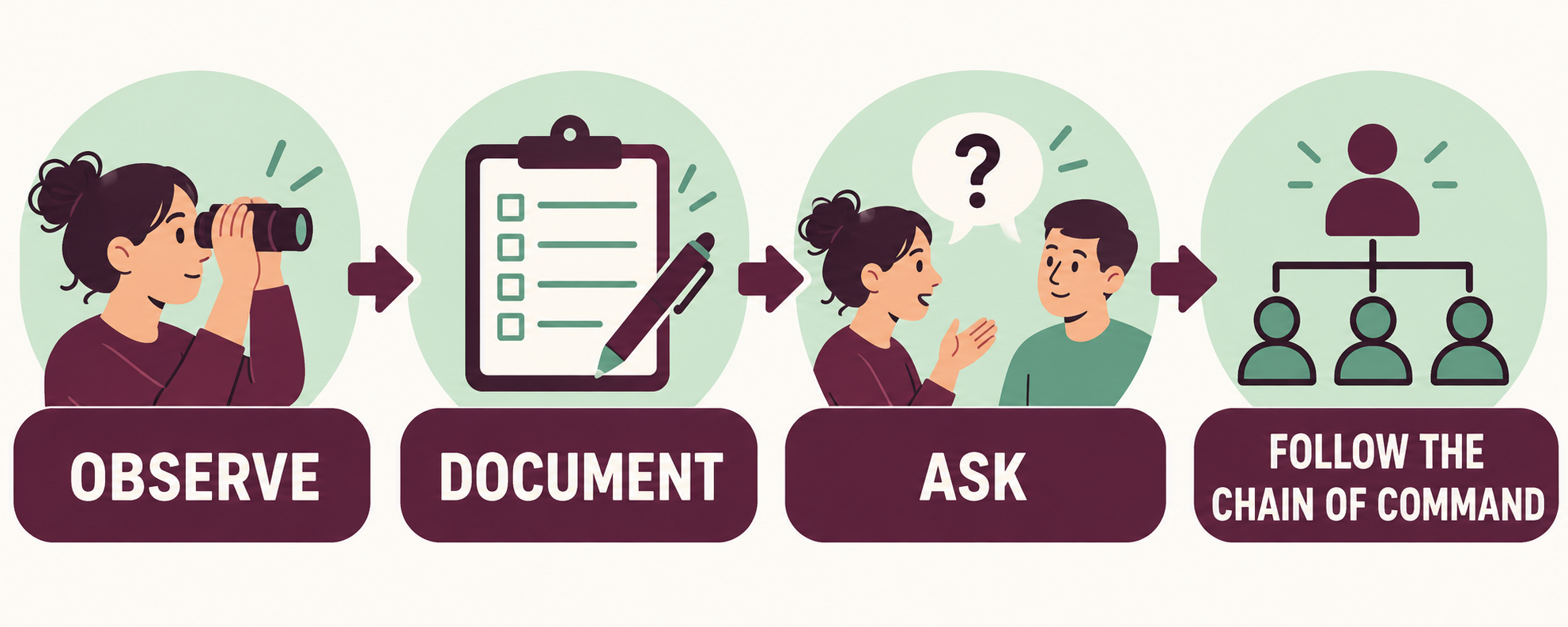
Clinical direction is the guidance an authorized supervisor provides about implementing behavior-analytic services for a client. For an RBT, it usually begins with noticing something relevant, documenting it accurately, and asking the right person what to do next. It does not mean waiting until a problem becomes large, and it does not mean making a clinical change first and explaining it later.
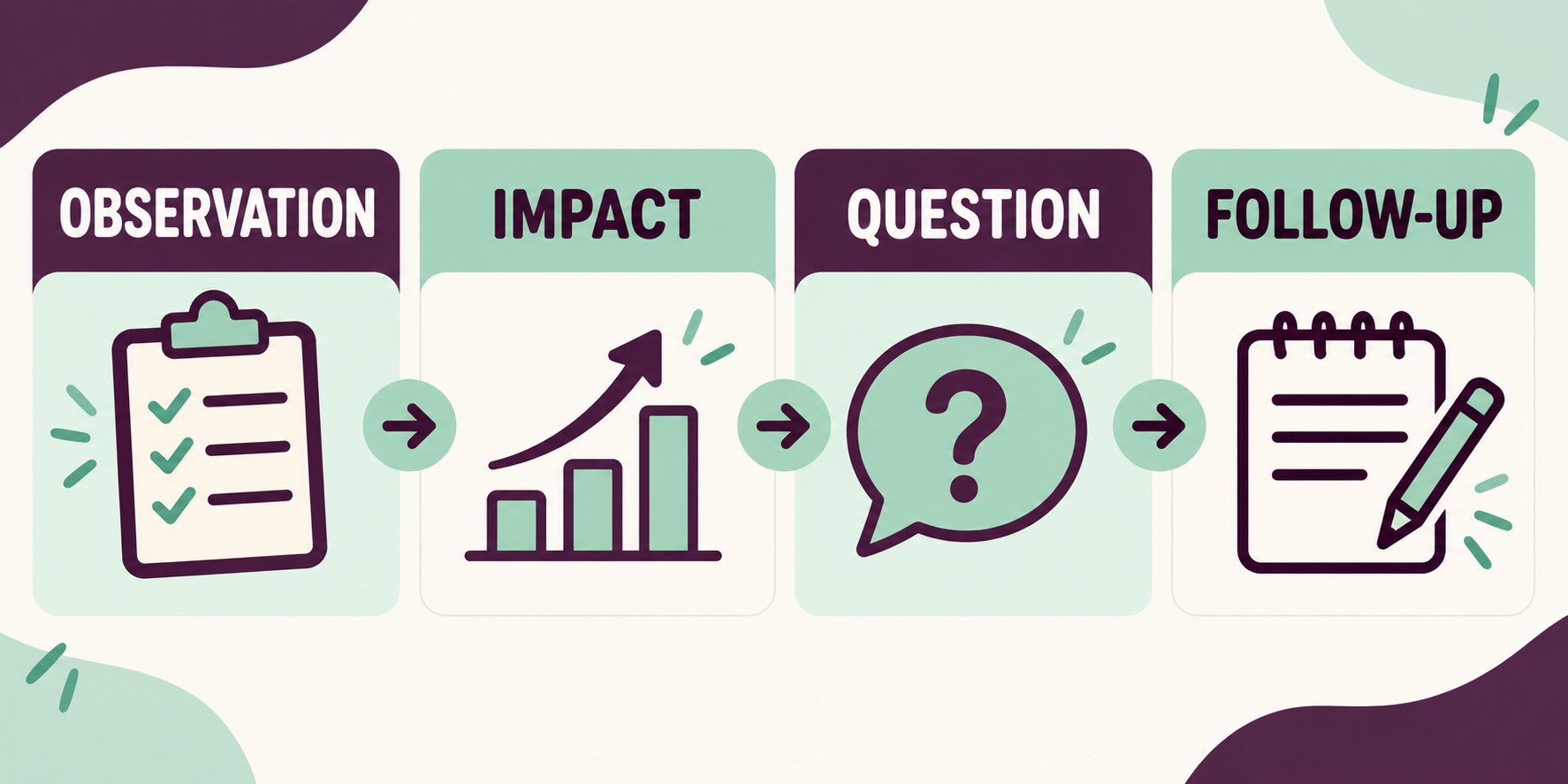
A strong escalation has four parts:
- Observation: What did you see, hear, measure, or receive from the team?
- Context: When and where did it happen, and which part of the written plan applied?
- Impact: How could the issue affect implementation, data quality, client progress, or safety?
- Question: What direction, clarification, training, or next step do you need?
Use objective language. “The client was manipulative” is an interpretation. “The client pushed the materials away three times after the instruction was presented” is an observable report a supervisor can evaluate.
Clinical direction examples RBTs can use
These examples are written as communication models. Replace the details with your employer’s approved channel and the facts from your session.
- Data question: “During today’s session, the frequency count for the target response was 12, compared with 4 and 5 in the prior two sessions. The increase occurred during the afternoon transition. Can you review whether I am applying the operational definition and recording procedure correctly?”
- Implementation clarification: “The written plan says to deliver the programmed prompt, but the materials available today were different from the usual set. Which approved materials should I use, and should I pause this target until I receive clarification?”
- Training request: “I can describe the steps, but I am not yet fluent implementing the new response procedure. Could we schedule modeling, rehearsal, and feedback before I use it independently in a session?”
- Team concern: “A caregiver reported a medication change at drop-off. I documented the report and did not interpret it. Who should receive the update, and are there session variables you want me to record?”
- Chain of command: “The usual supervisor is unavailable, and the schedule changed in a way that affects the session plan. Which designated supervisor or coordinator should I contact before proceeding?”
When data look irregular
A data irregularity is a reason to investigate with your supervisor, not proof that the client, intervention, or technician has failed. A sudden change can reflect a real behavior change, a context change, a recording problem, a materials issue, or a difference in who implemented the procedure.
Before escalating, check the basics without altering the plan: confirm the date and session length, review the operational definition, check that you used the assigned measurement system, and note relevant variables such as illness, sleep, schedule, staffing, setting, or medication information that was reported to you. Do not erase an unexpected value simply because it looks unusual. Correct documentation according to policy and explain what happened.
A useful message might say: “The duration value today was 18 minutes, while the last three sessions were between 6 and 8 minutes. The session occurred in a different room, and the caregiver reported poor sleep. I recorded the value as observed. Can you review the data and tell me whether any implementation check or additional documentation is needed?”
When you need training or modeling
Asking for training is a professional behavior, not an admission that you cannot do the job. If a procedure is new, a learner’s response changes, or you cannot explain why a step is required, ask before improvising.
Be clear about the kind of support you need. You might request a written clarification, a demonstration, rehearsal with feedback, an observation of your implementation, or a review of the data-collection method. The BACB outline describes effective supervision practices such as instructions, modeling, rehearsal, feedback, and observation of service delivery. Your employer may use different names or a different sequence, so follow the system your supervisor provides.
Example: “I can follow the first three steps of the prompting procedure, but I am uncertain about when the next prompt is presented after an incorrect response. Can you model that part and observe my rehearsal before the next client session?” This message names the exact gap and makes it easier to provide targeted direction.
When a team member raises a concern
Caregivers, teachers, and other service providers may share information that could affect the session. Listen respectfully, document the relevant concern through the approved process, and communicate it to the supervisor in a timely manner. Do not promise a new service, explain a diagnosis, or change the plan in the moment unless the plan and your supervisor authorize that action.
Separate the person’s report from your own observation. For example: “The teacher reported that the student left the classroom twice before lunch. I did not observe those events. During today’s session I observed one exit after a group instruction. I documented both sources separately. What information should I add to the team update?” That wording protects accuracy and helps the supervisor decide what needs follow-up.
How to write a useful message
Use the communication channel and response expectations set by your organization. A short message can be more useful than a long narrative when it contains the essential facts:
- Identify the client and session safely. Use only the identifiers permitted by your employer and privacy procedures.
- State the issue in the first sentence. Say “data irregularity,” “training need,” “reported medication change,” or another accurate label.
- Give objective details. Include dates, counts, duration, context, or the exact step you could not implement.
- State what you already did. For example, you followed the current plan, documented the event, or paused an unfamiliar step according to policy.
- Ask one clear question. Request direction, review, training, or the next person in the chain of command.
- Record the response. Keep supervision and implementation documentation according to the employer’s rules.
Urgent and safety-related situations
If there is an immediate safety concern, follow the written emergency and chain-of-command procedure first. Protect the client and others within your role, contact the designated person using the approved urgent channel, and document what happened. Do not wait for a routine supervision meeting when the protocol requires immediate escalation.
For a non-immediate concern, use the timely communication process your supervisor has established. “Timely” depends on the situation: an issue that affects today’s implementation may need direction before the next step, while a routine question may fit the next scheduled supervision contact. When you are unsure, ask the designated supervisor or coordinator how to classify the issue.
Common communication mistakes
- Changing first and reporting later: Do not alter goals, prompts, reinforcement, data systems, or crisis procedures without authorized direction.
- Using labels instead of observations: Replace conclusions with measurable descriptions and relevant context.
- Sending private details through an unapproved channel: Follow confidentiality and communication rules.
- Reporting only the problem: Include the exact question or support you need.
- Skipping the chain of command: Contact the designated person when the usual supervisor is unavailable.
- Treating an unusual data point as a final conclusion: Preserve the record and ask for review.
Frequently asked questions
What is the most important clinical direction example for an RBT?
A concise report of an objective observation followed by a clear request for direction is a strong general model. For example: “This is what I observed, this is what I recorded, and this is the part of the plan I need you to clarify.”
Can an RBT change a procedure when the data look wrong?
Do not independently change the treatment or data-collection procedure. Verify your implementation and report the irregularity to the supervisor through the approved process so the supervisor can provide direction.
Should an RBT ask for training before using a new procedure?
Yes. If you do not understand or cannot competently implement a step, request the instruction, modeling, rehearsal, feedback, or observation your supervisor uses before proceeding.
What if the supervisor does not respond?
Follow the organization’s chain of command and urgent-contact procedure. For a safety issue, use the emergency process immediately. For a routine issue, document the contact attempt and ask the designated backup person how to proceed.
Bottom line: Good clinical direction examples RBTs use do three things: preserve objective facts, identify the impact or uncertainty, and ask the right supervisor for timely direction. Staying within that communication boundary protects the client, improves data quality, and keeps the RBT role aligned with ongoing supervision.
Ready to practice the RBT concepts you just reviewed?
Try an independent, original RBT practice resource with exam-style questions, scoring, and answer explanations.
References
- Behavior Analyst Certification Board. RBT Test Content Outline, 3rd edition.
- Behavior Analyst Certification Board. RBT Handbook.
- Behavior Analyst Certification Board. RBT Ethics Code.