
Effective RBT supervision examples show how a supervisor can move from a clear target to observation, feedback, practice, and a documented follow-up step.
Table of Contents
- What makes a supervision example effective
- Effective RBT supervision examples: the supervision loop
- Example: improving objective data recording
- Example: reviewing prompt timing
- Example: escalating an unclear instruction
- Document the observation and next step
- What weak supervision examples leave out
- Keep examples inside the RBT role
- Frequently asked questions
- References
RBT SUPERVISION GUIDE · PRACTICAL EXAMPLES
Effective RBT Supervision Examples: From Observation to Follow-Up
See how clear targets, direct observation, feedback, practice, and follow-up fit together.
Effective RBT supervision examples show more than a supervisor giving general advice. They show a clear target, an observation or practice opportunity, specific feedback, and a follow-up plan. The example should make it possible to understand what the RBT did, what the written procedure requires, and what will happen next.
The current BACB RBT Test Content Outline connects supervision with instruction, modeling, rehearsal, feedback, observation of service delivery, and timely direction. The exact arrangement depends on the current requirements, organization, supervisor, and written service plan. The scenarios below are educational examples, not official examination questions or a substitute for current direction.
What makes a supervision example effective
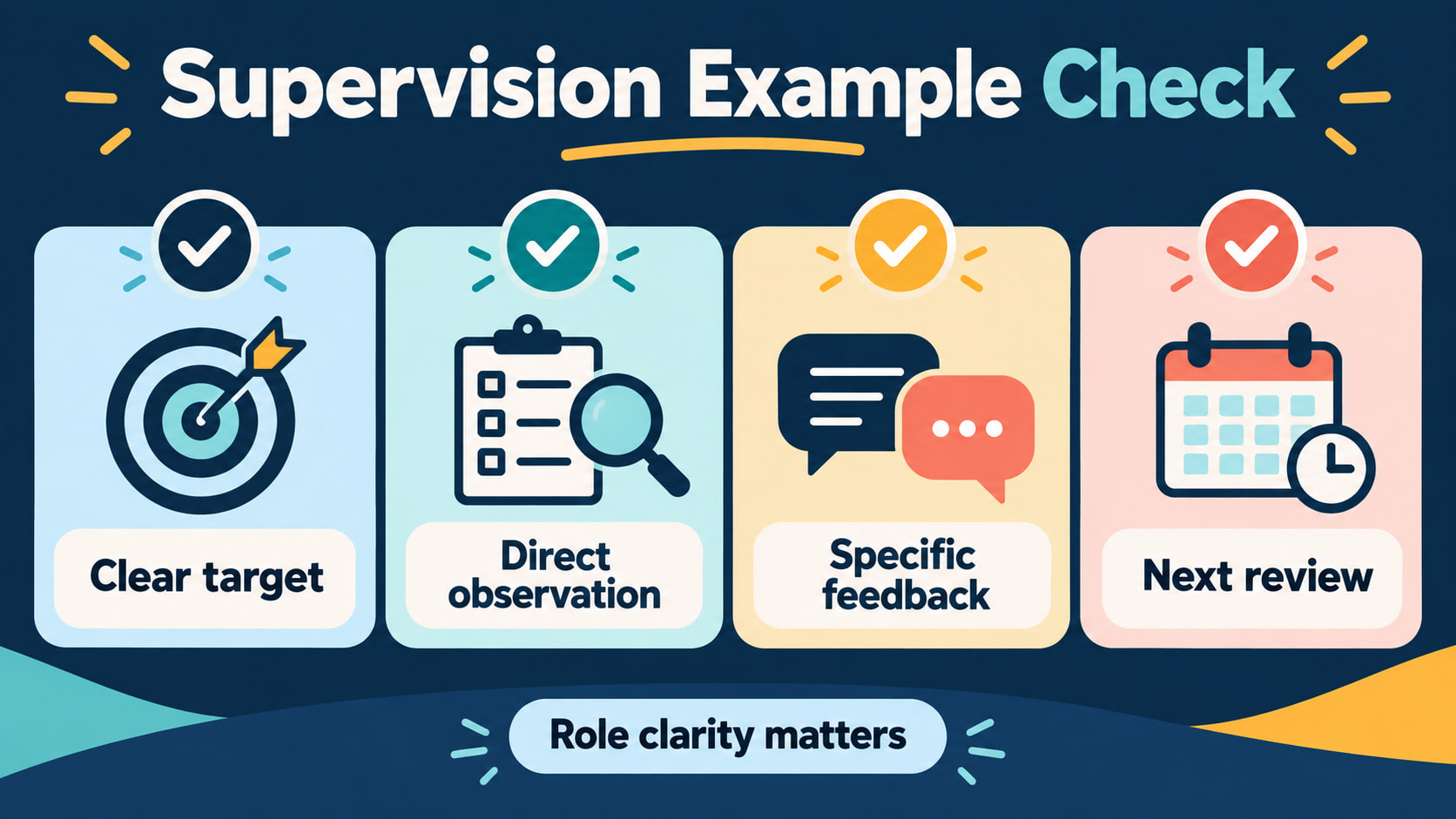
A useful example has an observable focus. “Improve professionalism” is difficult to observe by itself. “State the data question with the date, program step, and response pattern before asking for direction” is easier to practice and review.
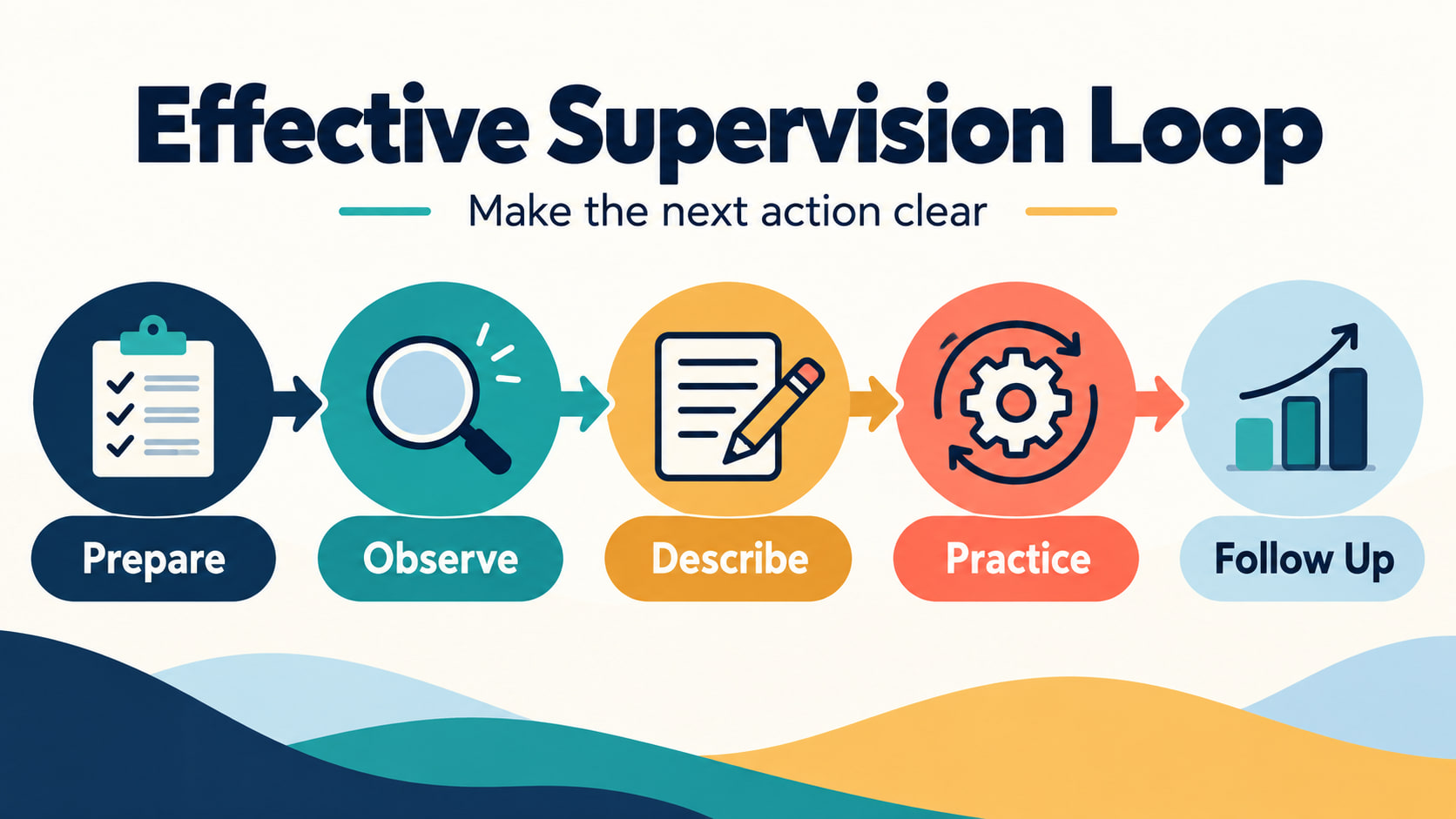
Strong examples also show the full support cycle. The supervisor prepares the target, observes the relevant action, describes the facts, connects them to the procedure, supports practice, and identifies a follow-up check. This does not mean every meeting must be long. It means the next action should be clear.
Effective RBT supervision examples: the supervision loop
- Prepare: identify one skill, procedure, or question.
- Observe: watch the relevant implementation or review a permitted objective record.
- Describe: state what happened without labeling the person.
- Practice: model, rehearse, or guide the next attempt.
- Follow up: document the direction and decide when to check again.
Example: improving objective data recording
Target: record the defined response category after each opportunity using the approved data system.
Observation: the supervisor watches several opportunities and notices that the RBT records the first trials correctly but enters the final category from memory after the activity has ended.
Feedback: “Your entries matched the defined categories on the first opportunities. On the last activity, the entry was delayed. Let’s review the timing rule and practice entering the category immediately after the opportunity.”
Follow-up: the RBT rehearses two examples, then the supervisor schedules another permitted observation. The record identifies the procedure reviewed and the next check without adding unnecessary client details.
This example is effective because it does not call the RBT careless or assume why the delay occurred. It identifies the observable action, links it to the data procedure, and gives a manageable practice step.
Example: reviewing prompt timing
Target: implement the assigned prompt sequence and wait the written interval before moving to the next step.
Observation: the RBT begins the next prompt before the defined interval on two opportunities. The supervisor checks that the written procedure is available and asks the RBT to explain the timing sequence.
Support: the supervisor models one example, asks the RBT to rehearse two examples, and gives feedback tied to the interval. The RBT then practices with guidance before returning to the assigned activity.
Follow-up: the next supervision contact includes a focused observation of the same step. If the instruction or materials are unclear, the responsible clinical process addresses that issue; the RBT does not invent a new prompt rule.
Example: escalating an unclear instruction
Situation: two team messages appear to give different directions about how to record a response. The RBT does not choose one privately or forward the entire client record to an unrelated group.
Action: the RBT records the objective conflict, uses the approved communication route, and asks the responsible supervisor to clarify which current instruction applies. The RBT continues only within demonstrated competence and the safe, approved direction available at the time.
Supervision follow-up: the supervisor reviews the written procedure, identifies the current source of truth, and documents the clarification. If the conflict signals a broader training need, a short instruction and rehearsal step can be added.
Document the observation and next step
A useful supervision record can answer four questions: What was reviewed? What was observed? What direction or practice occurred? What happens next? Use the organization’s approved system and required level of detail.
Objective language improves continuity. “The RBT rehearsed the interval twice and scheduled another observation” is more useful than “the RBT needs confidence.” Keep identifying details to the minimum needed for the approved record, and follow the correction process if an entry must be amended.
What weak supervision examples leave out
- No target: the meeting discusses everything and decides nothing.
- No observation: the feedback is based only on a general impression.
- No practice: the RBT hears a correction but never rehearses it.
- No follow-up: nobody knows when the skill will be checked again.
- Too much interpretation: labels replace observable facts.
Another weakness is treating the supervisor’s example as a universal rule. The written arrangement, current program, service setting, and organization’s policies still control. Examples illustrate a process; they do not replace the responsible professional’s direction.
It is also useful to separate a performance question from a system question. If an RBT knows the procedure but cannot access the approved data system, the next action may be to resolve access through the organization rather than repeat the same correction. If the written instruction is ambiguous, the supervisor may need to clarify the source document before judging implementation. Good supervision looks for the condition that will make correct practice possible.
Follow-up should be proportionate to the concern. A small timing correction may need a brief recheck, while a repeated documentation problem may need additional practice and a more deliberate review. The record should show the decision without overstating what one observation proves.
Keep examples inside the RBT role
An RBT implements assigned services after demonstrating competence and under ongoing supervision. An RBT can report objective observations, ask for clarification, practice an assigned procedure, document approved information, and escalate concerns. An RBT should not independently diagnose, alter a treatment plan, change mastery criteria, select an unapproved intervention, or make a new privacy decision.
Urgent danger, medical needs, safeguarding concerns, and emergencies may require emergency or organizational procedures in addition to supervision. Address immediate risk first, then use the appropriate follow-up route.
Frequently asked questions
Does an effective supervision example need to include a client?
No. The example can focus on an RBT skill, documentation question, communication issue, or role boundary. When client information is relevant, use the approved system and minimum necessary detail.
How many issues should one supervision meeting cover?
There is no universal number. A focused target with an observable next step is usually easier to practice and follow up than a long list of unprioritized concerns.
What if the RBT needs more than feedback?
Add instruction, modeling, rehearsal, or a structured competence check as appropriate. Feedback should reveal the support need, not conceal it.
Can I use these examples as official BACB requirements?
No. They are original educational scenarios. Review current BACB materials, the written arrangement, organizational policy, and supervisor direction for the setting.
Source note: This article is educational and does not provide individualized legal, clinical, employment, or credentialing advice.
Ready to practice the RBT concepts you just reviewed?
Try an independent, original RBT practice resource with exam-style questions, scoring, and answer explanations.
References
- Behavior Analyst Certification Board. RBT Test Content Outline, 3rd edition.
- Behavior Analyst Certification Board. RBT Handbook.
- Behavior Analyst Certification Board. RBT Ethics Code.