
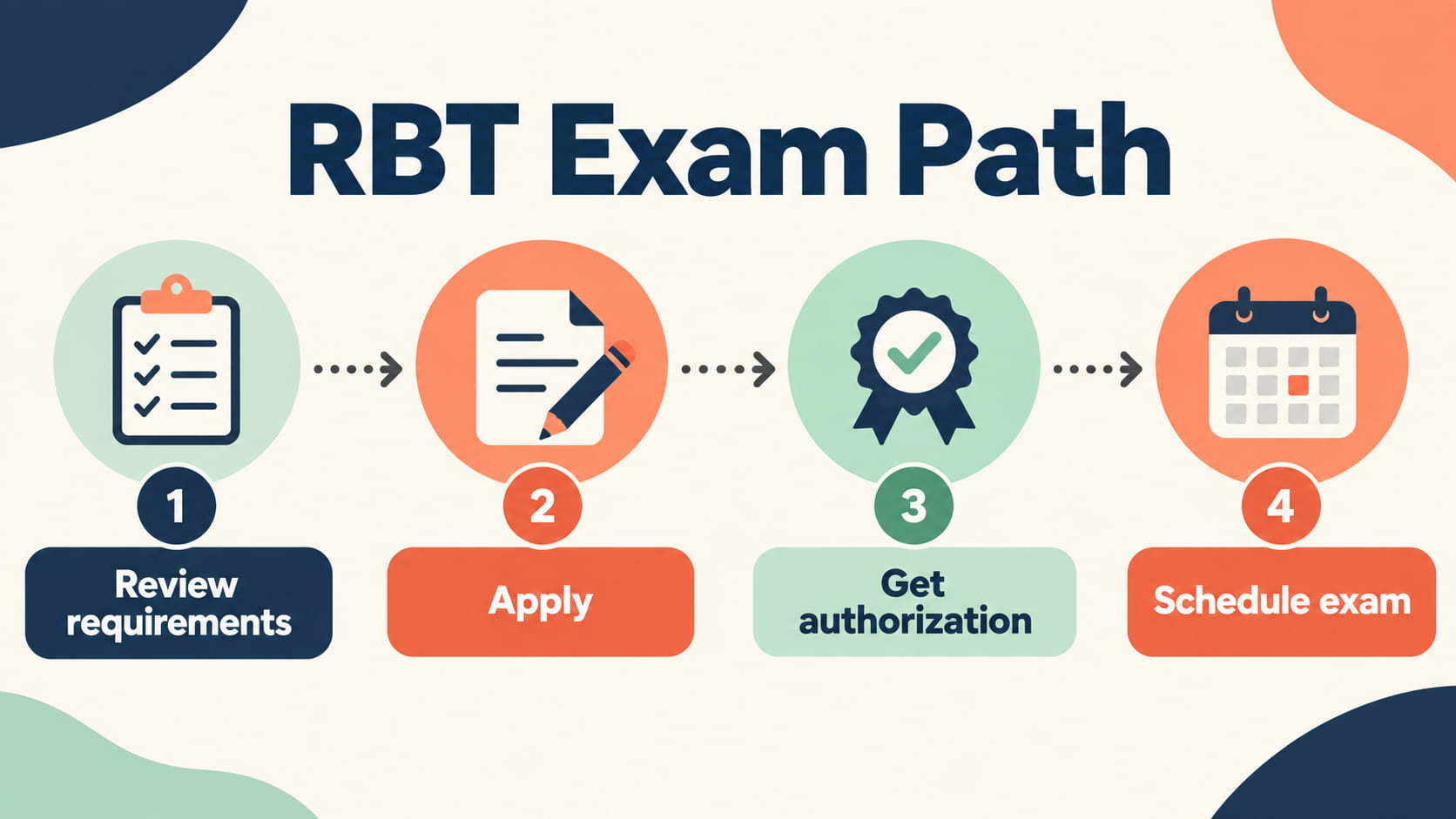
If you are asking how to take the RBT exam, start with the official pathway rather than a course advertisement or an old checklist. The sequence generally involves reviewing current BACB requirements, completing the required preparation and application steps, receiving authorization, scheduling through the approved testing process, preparing from current materials, and following exam-day rules.
Table of Contents
- How to take the RBT exam: the short answer
- Start with current requirements
- Complete the preparation and application steps
- Wait for examination authorization
- Schedule through the approved process
- Prepare with the current outline
- Plan for exam day
- Avoid common process mistakes
- Frequently asked questions
RBT exam requirements, application, authorization, scheduling, preparation, and exam day
How to Take the RBT Exam: A Step-by-Step Path
Use the current official pathway as your checklist, then prepare from the current handbook and content outline.
If you are searching for how to take the RBT exam, begin with the current official pathway rather than a course advertisement or an old social-media checklist. The sequence generally involves reviewing current BACB requirements, completing the preparation and application steps that apply to you, receiving examination authorization, scheduling through the approved testing process, preparing from current materials, and following exam-day rules.
The exact instructions can change. That is why this guide explains the decisions and checkpoints without inventing current fees, appointment windows, score timing, or retest rules. Before acting, open the current BACB RBT examination page, RBT Handbook, examination information, and content outline.
How to take the RBT exam: the short answer
Use this high-level sequence:
- Read the current RBT Handbook and confirm the eligibility and application requirements that apply to you.
- Complete the required training, competency, background or other applicable steps through the correct process.
- Submit the application and supporting information exactly as the current instructions request.
- Wait for the organization’s review and examination authorization; do not assume submission equals approval.
- Schedule an available appointment through the authorized testing route and follow its confirmation instructions.
- Study the current examination content outline, practice retrieval and application, and prepare identification and logistics.
- Follow the testing rules on exam day and read official instructions if you need a retest or other next step.
Start with current requirements
First, identify the version of the official requirements you are using. Open the BACB RBT page and current Handbook directly. Look for the sections covering eligibility, training, competency assessment, application, examination, supervision, and maintenance. Save the official links and the date you checked them so an old download does not become your only reference.
Separate the steps that belong to training from the steps that belong to the examination. A course completion record may document training, but it does not by itself make a person eligible, create examination authorization, or guarantee a passing result. If a provider combines every step into one marketing promise, compare that promise with the official process before paying.
Complete the preparation and application steps
Before submitting anything, make a small evidence folder for your own records. Include the training completion information, competency assessment information when applicable, identity details, application confirmations, and messages from the official organization. Store it securely and avoid putting private client information into a study folder.
Use the current portal and instructions for the application. Enter names, dates, contact information, and supporting details consistently. A mismatch can create avoidable follow-up. Review every upload before submitting it, keep confirmation messages, and note whether the application is pending, returned, approved, or missing information.
Do not rush because a third-party course says an exam seat is guaranteed. The organization reviewing the application controls the authorization decision. If the official instructions request a correction, respond through the correct channel and keep the communication record.
Wait for examination authorization
Application submission and examination authorization are different events. An application can need review, clarification, correction, or additional documentation. Wait for the official notice that tells you what you may do next. Do not rely on a screenshot from another candidate or assume that a training provider can authorize your appointment.
Read the authorization message carefully. Check the name, candidate details, expiration or action dates if shown, scheduling instructions, and contact route for questions. If any information looks wrong, contact the official organization or testing process instead of editing a confirmation yourself.
Schedule through the approved process
Once authorized, follow the scheduling link or instructions supplied by the official process. Availability, locations, remote options, deadlines, fees, rescheduling terms, and identification rules can change, so verify them on the current notice rather than using an old blog post.
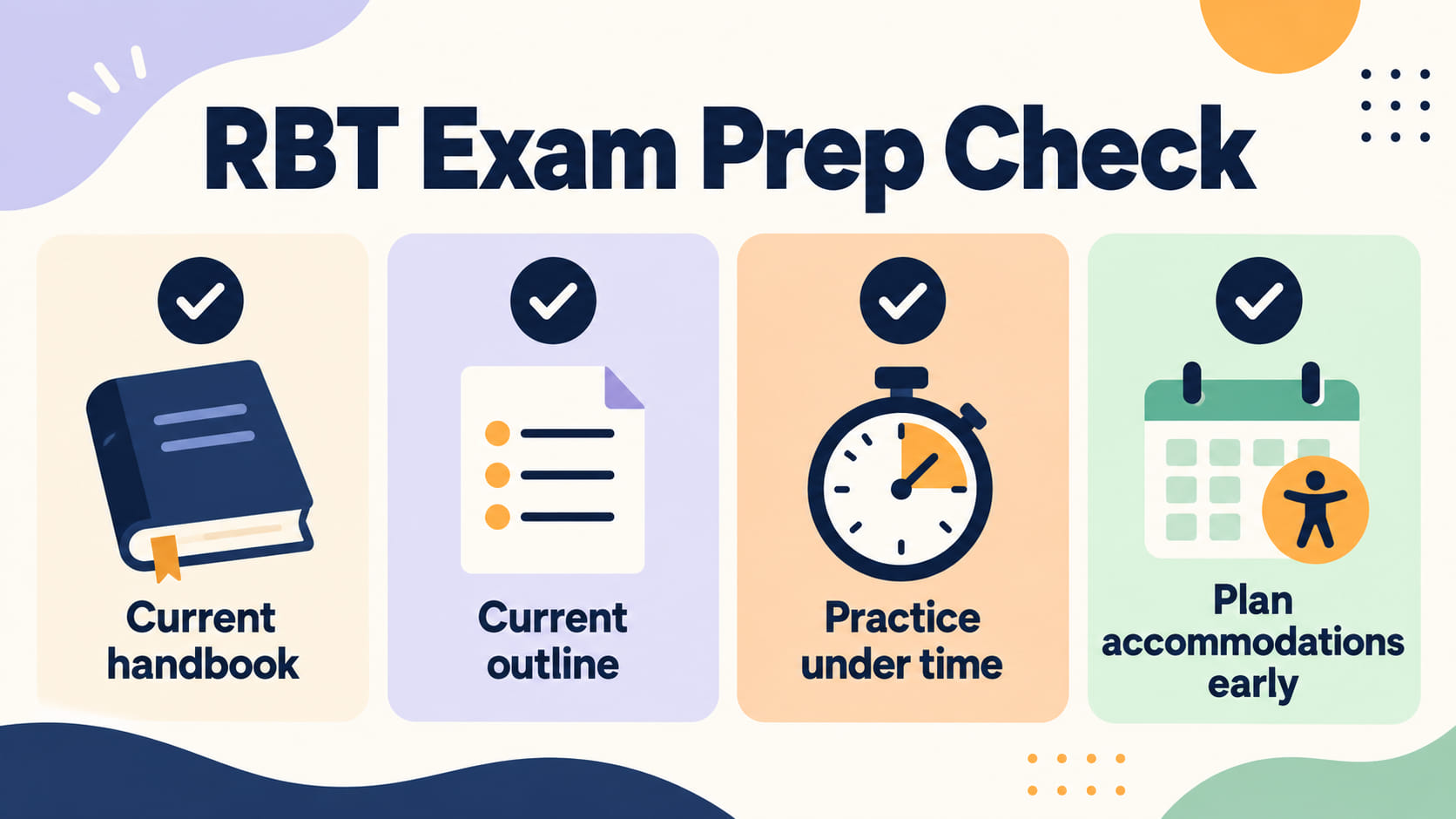
When you book an appointment, record the date, time, time zone, location or delivery method, confirmation number, arrival instructions, and permitted items. Put a reminder on your calendar and leave time for travel or technology checks. If you need an accommodation, do not wait until the day before the appointment; review the current official procedure as early as possible.
Prepare with the current outline
Use the current RBT examination content outline as a map for study, not as a promise that every practice question will resemble the live exam. Break the outline into topics and convert each topic into actions: define the concept in plain language, recognize a correct example, distinguish it from a look-alike, and decide what a technician should do within scope and supervision.
Practice retrieval instead of only rereading. Use short sets of questions, explain why each answer is correct, and write down the reason an attractive wrong answer fails. Include measurement, assessment participation, skill acquisition, behavior reduction, documentation, reporting, professional conduct, and the role boundaries that appear in the current outline.
Use a current handbook and current outline together. If a paid course, flashcard deck, or video conflicts with the official material, pause and verify. Unofficial content can be useful for practice, but it should not replace the organization’s current instructions.
Plan for exam day
Read the current testing instructions before you leave home. Bring only what the testing provider permits, bring the required identification, and allow time for check-in. Keep your confirmation and contact information available without assuming that every digital item is accepted at the site.
During the exam, answer the question that is presented, pay attention to qualifiers, and use role boundaries when two choices sound plausible. A technician should not independently redesign a plan, diagnose, promise an outcome, or ignore a safety or supervision instruction. If you are unsure, choose the response that matches the current role and the stated facts rather than the most ambitious intervention.
Avoid common process mistakes
- Using an old checklist: official handbooks, content outlines, portal steps, and testing instructions can be updated.
- Confusing training with authorization: a course certificate does not automatically create an exam appointment.
- Booking before reading the notice: schedule, identification, accommodation, and rescheduling details belong to the current authorized process.
- Studying only definitions: practice applying concepts to measurement, documentation, supervision, and scope decisions.
- Trusting guarantees: no third party can promise approval, a passing score, certification, or employment.
- Ignoring a mismatch: if your confirmation, name, date, or application status is inconsistent, ask the official channel before proceeding.
Frequently asked questions
Can I take the RBT exam immediately after finishing a course?
Not automatically. Training is one part of the pathway. Follow the current eligibility, competency, application, review, authorization, and scheduling instructions that apply to your situation.
How long should I study for the RBT exam?
There is no universal number that guarantees readiness. Use the current outline to identify weak areas, practice applying concepts, and make a study schedule that allows repeated review and feedback.
Where should I find the exam rules?
Start with the current BACB RBT examination page, RBT Handbook, examination information, and content outline. Use the testing provider’s current appointment and exam-day instructions after you receive authorization.
What if I do not pass?
Read the current official notice and retest instructions. Do not rely on a remembered waiting period or an unofficial post, because the applicable process and timing must be verified in the current materials.
Role reminder: This is educational information, not BACB representation, examination advice, legal advice, or a promise of approval or exam results. Verify the current official instructions before applying or scheduling.
Official starting points: the BACB RBT examination page, examination information, the RBT Handbook, and the current RBT examination content outline.
Ready to practice the RBT concepts you just reviewed?
Try an independent, original RBT practice resource with exam-style questions, scoring, and answer explanations.
References
- Behavior Analyst Certification Board. RBT Test Content Outline, 3rd edition.
- Behavior Analyst Certification Board. RBT Handbook.
- Behavior Analyst Certification Board. RBT Ethics Code.